



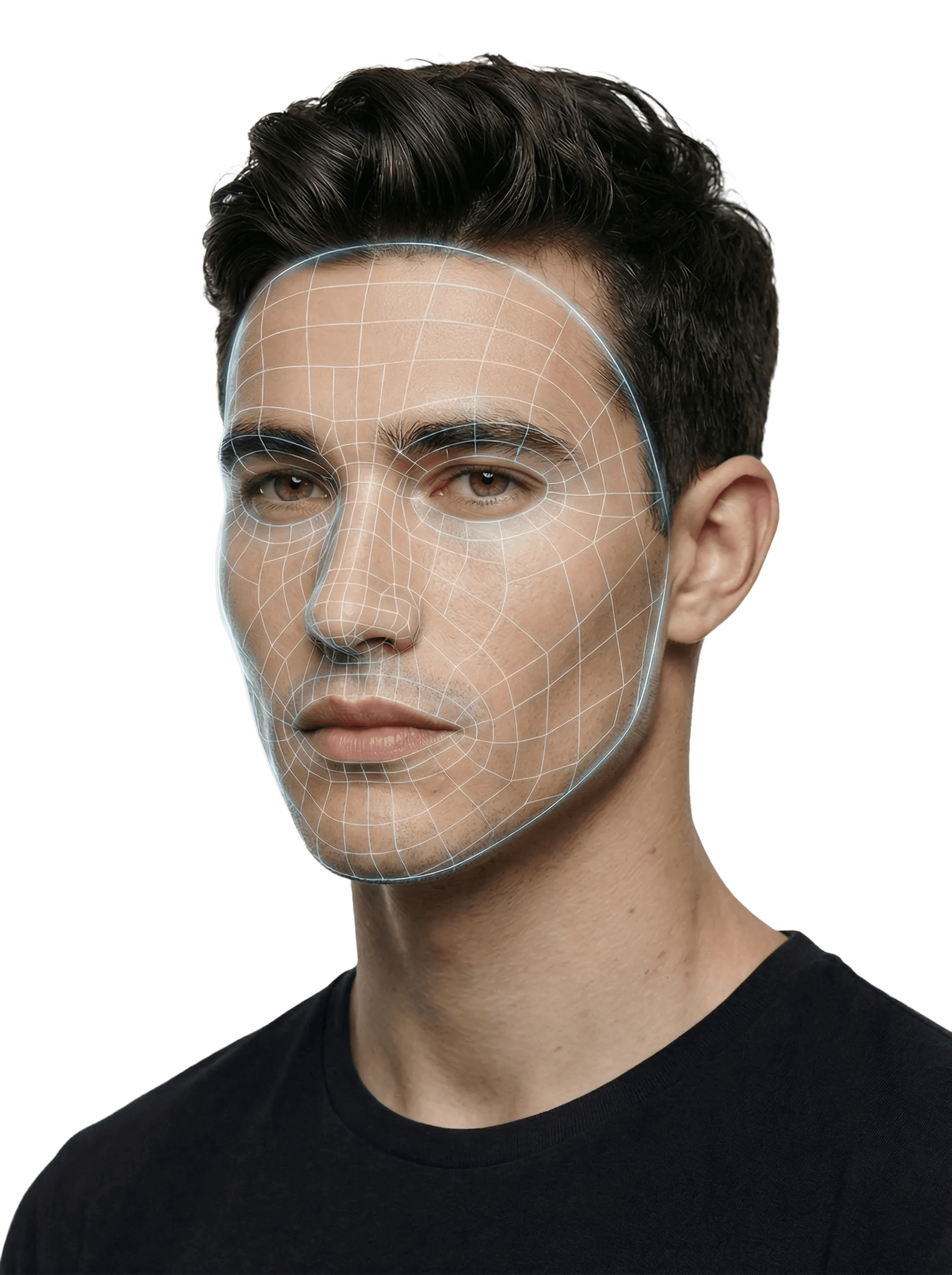
AI Face Analysis: Understanding Your Facial Features and Improving Your Appearance
AI face analysis refers to the use of artificial intelligence to evaluate your facial features and provide objective insights about your appearance. By scanning a photo or a short video, AI algorithms detect key landmarks, measure ratios, evaluate symmetry and skin texture, and then return scores or recommendations based on how your features compare to data from thousands of faces. This technology goes beyond simple attractiveness ratings: it breaks down what makes your face unique and suggests specific areas to improve.
If you’ve ever wondered “What does my face say about me?” or searched for ai facial analysis, face features analyzer or analyze my face, you’re looking for this kind of tool. Maxxing’s AI face analysis is built to give you clarity and direction. It identifies what moves the needle most—face fat, jawline definition, skin quality, eye contrast—and then integrates those insights into a personalized glow‑up plan across face, skin, body, hair and style. You can start your assessment and get tailored advice here: Begin your AI face analysis.
How AI Face Analysis Works
A modern AI face analyzer follows a multi-step process:
Image capture – You upload a clear, frontal photo or record a short clip. High resolution and natural lighting allow the algorithm to detect subtle details.
Landmark detection – The AI identifies facial landmarks: eyes, nose, mouth, jawline and other key points. It then measures distances, angles and ratios between them. This step uses techniques from computer vision and geometry to build a structural map of your face.
Feature extraction – The system evaluates specific attributes: symmetry, facial proportions, skin smoothness, eye size and contrast, lip fullness, cheekbone prominence and jawline definition. It may also assess facial adiposity and age-related cues such as facial contrast or wrinkle depth. Research shows that symmetry and proportionality are universally associated with attractiveness.
Comparison and scoring – Your metrics are compared against large datasets of labelled faces to generate scores or classifications. For example, a deep learning model trained on over 270,000 images can accurately estimate chronological age within roughly ±8 years (source: A Deep Learning Approach to Predict Chronological Age).
Recommendations – Finally, an analysis tool offers personalized guidance: which features to enhance, what hairstyles or grooming practices suit your face shape, and which lifestyle factors will most improve your appearance.
This method provides a more nuanced picture of your face than a simple 1–10 rating. If you’re curious about how specific features impact your overall look, our facial feature analyzer dives deeper into individual traits.
What AI Face Analysis Measures
Facial Symmetry
Symmetry refers to how closely the left and right sides of your face mirror each other. Evolutionary research suggests that symmetry signals developmental stability and health. AI quantifies symmetry by comparing landmark pairs and highlighting asymmetries. Small improvements—like aligning your hairstyle or adjusting eyebrow shape—can make a noticeable difference. Try our face symmetry test for a quick check.
Proportions and Ratios
Tools often reference idealized ratios, such as the “golden ratio,” when assessing facial proportions. Measurements include the distance between eyes, nose length, mouth width and the ratio of face length to width. AI uses these ratios to suggest which features to emphasize or soften through grooming, styling or weight management. Our jawline rating and face shape test provide targeted insights on bone structure.
Research gives that ratio little support — see what a golden ratio face score can and can’t tell you.
Skin Quality
Clear, even skin makes faces appear healthier and more attractive. AI evaluates skin smoothness, texture uniformity and pigmentation. It may detect dark circles, redness, acne and wrinkles. According to research, smooth skin and even tone are important cues for attractiveness and youth. Pair your facial analysis with our beauty analyzer for skincare recommendations.
Eye Size and Contrast
Larger eyes with strong contrast between the iris and sclera (white of the eye) tend to be perceived as youthful and attractive. AI measures eye area and brightness, then compares it to standard ranges. Small changes like brightening the under‑eye area can have a big impact. For practical tips, our rate my face article covers eye framing and grooming.
Lip Fullness and Smile Dynamics
Full lips and a balanced upper‑to‑lower lip ratio (roughly 1:1.6) contribute to youthfulness and appeal. AI assesses lip shape and symmetry, helping you decide whether to enhance lip volume or adjust tooth visibility when smiling. See our am i pretty guide for more on lip aesthetics.
Facial Adiposity and Jawline Definition
Fat distribution in the face affects perceived age and attractiveness. Reduced facial adiposity sharpens jawlines and reveals cheekbones. If you’re concerned about puffiness or lack of definition, our looksmaxxing pillar and how to looksmaxx support will guide you through diet and exercise strategies.
Age and Ethnicity Estimations
Many AI face analysis tools also estimate age and, in some cases, ethnic background. Age estimation helps you understand how others perceive your maturity level. Ethnicity or race detection can provide context for cultural beauty standards, but it’s important to remember these features can be biased by training data. Explore our ai age guesser and ethnicity from face articles for more detail.
Benefits of AI Face Analysis
Objective baseline – Analyzing your face with AI removes personal biases. It tells you which features stand out and how they rank relative to wider populations.
Personalized improvement plan – Once you know your strengths and weaknesses, you can prioritize changes that yield the biggest gains. Maxxing’s system uses face analysis to identify high‑impact areas, such as reducing face fat or enhancing eye contrast.
Better grooming and styling – Understanding your facial proportions helps you choose hairstyles, makeup and facial hair that flatter your features. For example, people with rounded faces might opt for haircuts that add vertical length.
Confidence boost – Seeing measurable improvements over time—from skin clarity to jawline definition—builds confidence and motivation. Our rate my picture tool helps you track progress with periodic photo evaluations.
Informed medical decisions – While Maxxing focuses on non‑medical changes, some users may choose cosmetic treatments. AI face analysis can provide a clearer picture of target areas and realistic outcomes.
Limitations and Ethical Considerations
Like any AI system, face analysis tools have limits:
Data bias – If training datasets lack diversity, the model may misjudge features in under‑represented groups. This can lead to inaccurate ratings or inappropriate suggestions. We actively train on diverse faces to mitigate this, but no system is perfect.
Privacy concerns – Uploading facial images raises questions about data storage and usage. We process images securely and do not store personal photos after analysis.
Emotional impact – Numerical scores can affect self‑esteem. Remember that AI results are guidelines, not verdicts. Focus on actionable insights rather than chasing a perfect score.
Non‑medical nature – Our recommendations cover grooming, lifestyle and style changes—not medical or surgical interventions. Always consult professionals for medical advice.
For more on ethics and fairness in face analysis, see our how normal am i article.
Applying Your AI Face Analysis Results
To make the most of your face analysis:
Review the breakdown – Look at each category (symmetry, proportions, skin, eyes, lips, jawline, etc.) and note your highest and lowest scores.
Prioritize changes – Focus on controllable factors first. For many users, reducing facial adiposity and improving skin quality offer the biggest returns. Our rate my face and beauty test can guide you here.
Align grooming and style – Use the insights to choose hairstyles, facial hair, eyewear or makeup that enhance your strengths. Our how to looksmaxx and style guidance provide detailed advice.
Monitor progress – Reassess every few months with the ai face rater or age detector. Adjust your plan based on new results.
Stay realistic – No tool can change your bone structure overnight. Focus on gradual, sustainable improvements and celebrate small wins.
AI Face Analysis vs AI Face Rater vs Beauty Analyzer
AI face analysis provides a detailed breakdown of your facial features and proportions. It identifies strengths and weaknesses and offers targeted recommendations.
AI face rater focuses on overall attractiveness rating. It gives you a single score based on facial harmony and aesthetic standards. Use it if you want a quick benchmark.
Beauty analyzer concentrates on skin quality, complexion and texture. It helps you identify skincare issues and suggests routine improvements.
All three tools complement each other. Combining them gives a holistic view of your face and guides your glow‑up journey. Pair them with our attractiveness calculator for body composition insights and the celebrity look alike tool for fun inspiration.
Conclusion: Use AI Face Analysis to Unlock Your Best Look
AI face analysis offers a powerful way to understand your facial features and take control of your appearance. By evaluating symmetry, proportions, skin quality and other traits, it provides actionable insights that help you prioritize improvements. Remember that the goal is not perfection but progress. Each step—reducing facial fat, refining your grooming routine, improving posture or choosing better hairstyles—builds toward a more confident and attractive you.
Ready to see what your face reveals? Start with a full assessment using our AI face analysis tool, then follow up with specialized tools like the facial feature analyzer and beauty analyzer for deeper insight. As you implement changes, watch your scores and self-confidence rise. Your glow‑up journey starts here.