

AI Jawline Rating & Jawline Score
A jawline rating is a structured way to estimate how defined, balanced, and “strong” the lower face looks in a photo. A good jawline score usually comes down to bone shape + facial fat distribution + skin/neck contour + how the jawline is framed (hair, beard, angle, lighting). If you want the fastest, most consistent answer, use a face scan that measures landmarks instead of relying on one random selfie — start here: Try Maxxing.
A jawline score also matters because jaw/cheek structure is one of the facial regions people use when judging attractiveness and masculinity (source: The Relative Contribution of Jawbone and Cheekbone Prominence to Facial Attractiveness).
If you want the full picture (not just jawline), start with an AI face analysis and then interpret jawline inside your overall facial balance.
What is a Jawline Rating?
A jawline rating is an estimate of how your lower face reads at first glance, usually based on:
Jawline definition (how clean the “line” is from ear to chin)
Mandible width and shape (how wide the jaw looks relative to cheekbones)
Chin projection (how forward the chin looks vs the lips/nose)
Gonial angle (the angle at the back corner of the jaw)
Neck–jaw transition (how sharp the neck angle looks under the jaw)
Symmetry and proportionality (how even both sides look)
A lot of people think “jawline = genetics only.” In practice, facial adiposity (how much fat the face holds) heavily changes how visible the jaw actually is (source: Facial Adiposity, Attractiveness, and Health: A Review).
Jawline Score vs Jawline Rating (and why people search both)
Jawline score usually implies a number (like 1–10 or 0–100).
Jawline rating is often a category (weak / average / strong) plus notes.
Jawline tester or jawline test implies a tool or quiz.
In reality, they’re trying to answer the same thing: “How does my jawline look to other people?” If you also want an overall score, do an attractiveness test — jawline is one input, not the whole verdict.
Jawline Rating AI: How AI Jawline Tests Work
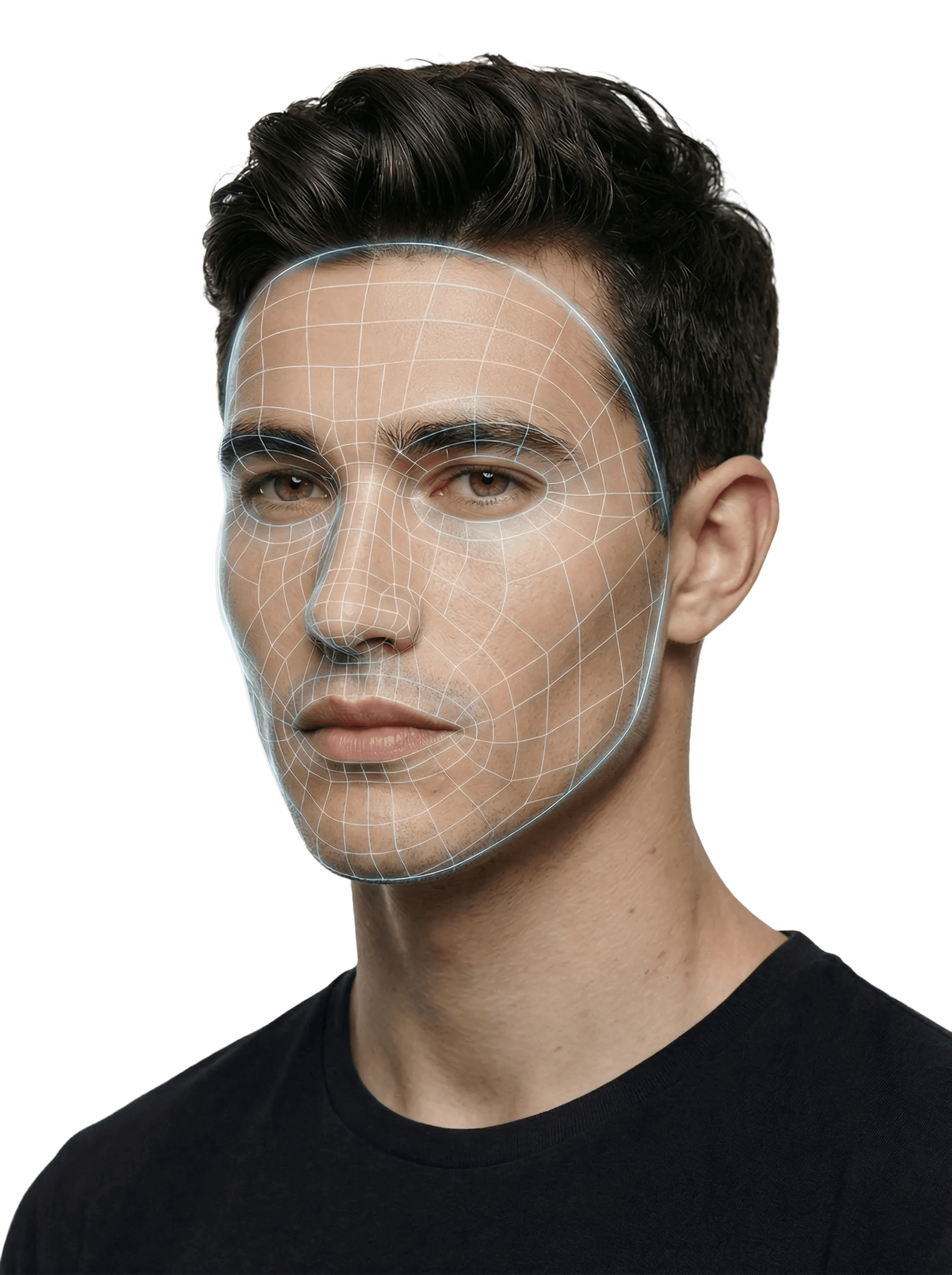
A jawline rating AI tool typically does four things:
Detects face + landmarks (chin, jaw corners, lips, nose base, cheekbones)
Normalizes pose (tries to correct tilt/rotation)
Measures geometry (ratios, angles, distances, curvature)
Maps features to an output (score, category, or “definition” rating)
This is why AI can feel more consistent than human “rate me” opinions — it uses the same measurement rules every time. If you want measurement-style breakdown instead of vibes, you’ll get more value from a dedicated facial feature analyzer than from random comments.
What a Jawline Tester Usually Measures (the core metrics)
A solid jawline tester focuses on a few repeatable signals:
1) Jaw width and lower-face proportions
How wide the jaw appears relative to the midface/cheekbones, and whether the lower third looks balanced.
2) Gonial angle
A more “defined” jaw corner often reads sharper, especially in men; in women, the “ideal” angle preferences can differ by aesthetic context and culture (source: The ideal shape of the female jaw angle: An online survey).
3) Chin projection and chin shape
Not just “big chin = good.” Projection should match the rest of the face. Over-projection can look harsh; under-projection can look recessed.
4) Neck angle + submental fullness
A clean transition under the jaw can make an average jaw look strong, while soft tissue under the chin can blur even a good bone structure.
5) Symmetry
Jaw asymmetry is common. The question is whether it’s noticeable at normal viewing distance. If you want to isolate that piece, do a beauty symmetry test.
Jawline Test: How to Take Photos That Don’t Lie
Most “jawline score” results are garbage because the photo is garbage. Use this mini protocol:
Camera: back camera if possible
Lighting: bright, even, front-facing; avoid overhead-only light
Distance: step back; avoid wide-angle distortion up close
Angle: neutral head position, then a slight 10–15° turn each side
Expression: relaxed face, lips neutral
Background: plain; no hard shadows on jaw/neck
Shots: front + left 3/4 + right 3/4 + side profile
Then run your scan. If you’re testing multiple tools, always reuse the same set. For rating your whole face (not just jaw), use rate my face style scoring and compare.
What Creates a “Strong” Jawline Look (without pretending it’s one trait)
A strong jawline look is usually a combination of:
Visible mandibular border (the line is clear)
Good lower-third proportions (jaw/chin isn’t too short or too long)
Crisp under-jaw angle (neck transition looks clean)
Balanced cheekbones to jaw (not “jaw-only,” not “cheek-only”)
Skin quality (texture and elasticity can change how sharp edges look)
Broadly, facial attractiveness is predicted by multiple traits together (including sexual dimorphism, symmetry, averageness, and adiposity) rather than one “magic” feature (source: Predictors of facial attractiveness and health in humans).
Jawline Rating for Men vs Women (what people usually mean)
People often search jawline rating expecting a single standard. In reality, the “ideal” differs by the look someone is going for:
Men (common preference patterns)
More angular jaw corners
Wider lower face relative to midface
Stronger chin projection (but still proportionate)
Preferences for facial masculinity aren’t identical across contexts and populations (source: Women’s preferences for men’s facial masculinity are condition-dependent).
Women (common preference patterns)
Cleaner jawline definition (but not always extremely angular)
Softer jaw corner can still be “high-rated” if proportions and skin/neck contour are strong
Chin shape and harmony matter more than brute width
If you’re trying to understand your current baseline and where you land, it’s usually easier to start with am i pretty or how hot am i and then drill into the jawline sub-score.
The Biggest Jawline Rating Mistakes (that tank your score on photos)
1) Close-up selfie distortion
Wide-angle makes the jaw look weird and the chin look bigger/smaller depending on distance.
2) Beard/hair hiding the jaw border
A beard can help or hurt depending on shape. If you’re testing the jaw itself, you want at least one clean-shaven baseline shot.
3) Bad posture and head position
Forward head posture can blur the neck angle and make the jawline look softer.
4) Harsh overhead lighting
It can create false shadows or hide the real jaw contour.
5) “One-photo conclusions”
Your jawline can look different across angles. That’s why a multi-shot scan beats a single “jawline tester” selfie.
If you want “one number” for your overall look, use an attractiveness calculator — but treat jawline as one piece of a stack.
How to Improve a Jawline Score (the levers that usually move the needle)
This isn’t medical advice — it’s appearance logic. The high-impact levers are:
Improve facial definition
If facial adiposity is high, jawline definition is usually the first thing to blur. That’s why fat distribution shows up so strongly in perception research (source: The effects of facial adiposity on attractiveness and perceived leadership ability).
Fix the framing
Haircut, facial hair, and photo angles can change jawline perception fast. If you don’t know what frames your face best, start with a face shape test and use that as the logic for haircut/beard direction.
Improve skin and “edge clarity”
Texture and inflammation can reduce the crispness of facial contours in photos. If skin is your main blocker, run a broader glow-up plan through looksmaxxing rather than obsessing over jaw-only.
Build the right “order of operations”
Most people waste time on low-impact tweaks. The real value is prioritization: what to fix first, second, third. That’s exactly what Maxxing is for — Try Maxxing and get a prioritized plan based on your actual face.
For a bigger step-by-step approach, use how to looksmaxx as the framework and treat jawline as one module inside it.
Jawline Rating AI vs Humans: Why Reddit “Rate Me” Often Feels Brutal (and inconsistent)
Human raters are inconsistent because they mix:
Personal preference
Mood/context
Culture and subculture standards
Bias toward the photo quality instead of the face
That’s why people bounce between “rate me” communities and AI tools — they want something more stable than comments. If you want the “human perception” side, you can still use communities as signal, but don’t treat them as objective. For a structured baseline, run rate my attractiveness style scoring first, then compare what Reddit says.
If you also care about how your face reads on dating apps specifically, use tinder appeal instead of a generic jawline test.
Jawline Tester FAQs (quick, direct answers)
What is a good jawline score?
A “good” jawline score usually means your jaw border is visible, proportions are balanced, and the neck–jaw transition is clean. The exact number depends on the tool’s scale.
Why does my jawline rating change between photos?
Angle, lighting, camera distance, facial expression, and water retention can all change definition and shadowing. Use a consistent photo protocol (front + 3/4 + profile).
Does chewing/mewing change jawline rating fast?
Not fast. Photo framing and body composition changes usually move the needle earlier than niche exercises. If you want a full reality check on what matters most for your face, start with how attractive am i and look at the highest-impact blockers first.
Can AI accurately measure jawline?
AI can measure geometry and landmark ratios reliably in good photos. “Attractiveness scoring” is still an interpretation layer — but measurement quality is strong when the input photo is strong.
How Maxxing Uses Jawline Rating (without making it your whole personality)
Maxxing treats jawline as one part of a multi-domain system: face, skin, hair, body composition, style, and confidence behaviors. The point isn’t “your jawline is X/10.” The point is: what is holding you back most, and what should you fix first.
Start with a scan, get your priority roadmap, and stop guessing: Try Maxxing.
If you’re also curious how your look reads overall (not just jawline), pair it with a beauty test or an overall normality baseline like how normal am i so you don’t tunnel-vision on one feature.
Key Takeaways
A jawline rating is mostly definition + proportions + framing, not one “genetic trait.”
Jawline rating AI works best with consistent photos (front + 3/4 + profile).
Facial fat distribution is a major driver of whether the jawline reads sharp. (source: Facial Adiposity, Attractiveness, and Health: A Review)
The fastest progress comes from fixing the highest-impact blockers first, not obsessing over tiny flaws — that’s what Try Maxxing is built to do.