



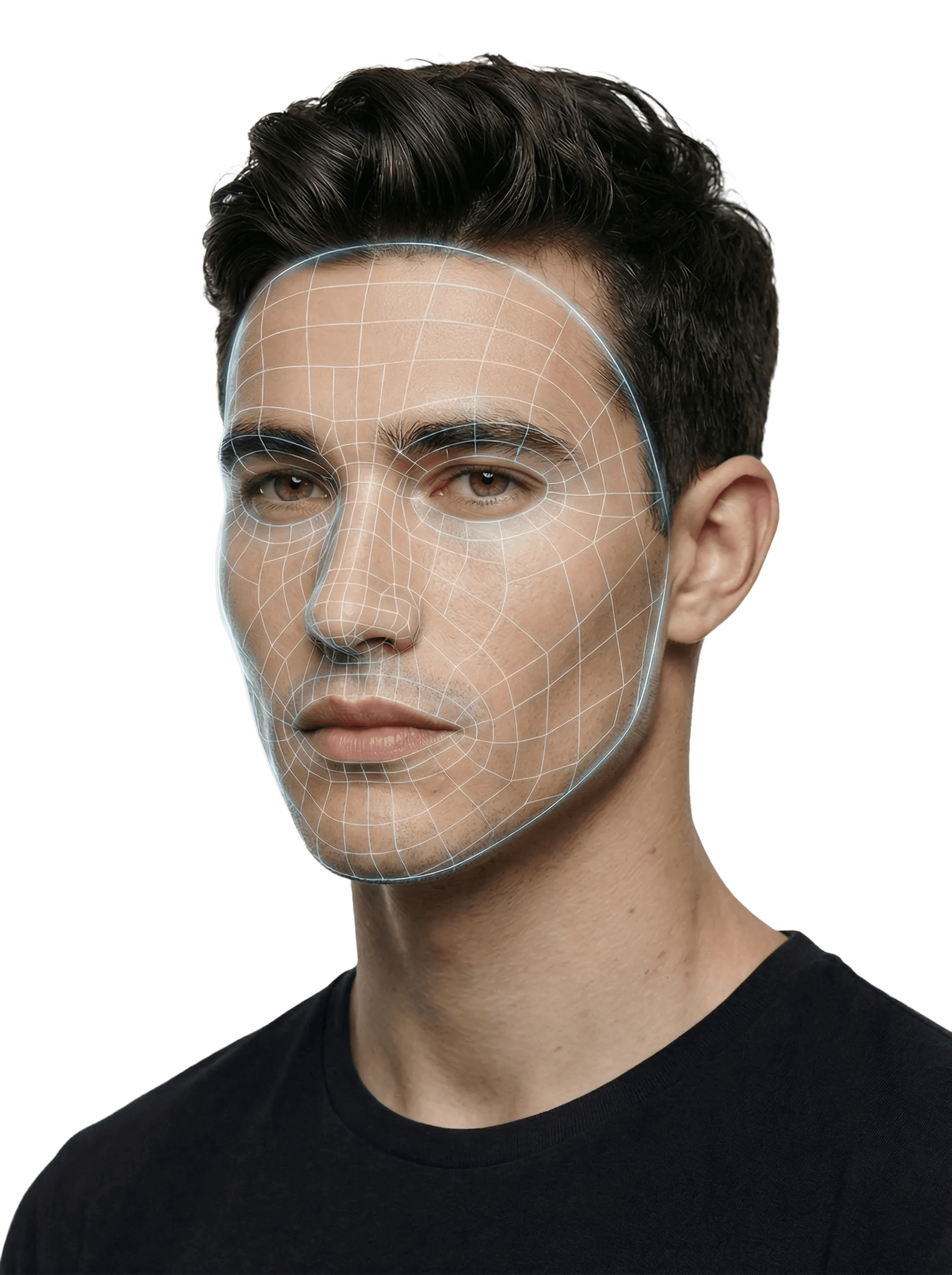
What Do I Look Like? See Your Real Appearance
Answering the question "What do I look like?" is difficult because self-perception is biased by memory, emotion, mirrors, lenses, and social feedback. In practical terms, seeing what you actually look like requires controlled photos, external reference points, and objective comparison tools. This guide explains how people form distorted self-images, how to see yourself more accurately, and how modern photo and AI tools are used to answer the question.
If you want a fast, personalized answer using a photo-based assessment, you can try a structured facial analysis early in the process through Maxxing. It focuses on identifying specific appearance factors rather than giving vague reassurance. Try Maxxing’s face scan.
What does “What do I look like?” really mean
When people ask “what do I look like,” they are usually asking one of three things: how others see their face and body in real life, how attractive they appear relative to others, or whether their self-image matches reality. These are related but not identical questions. Human perception is context-dependent, meaning lighting, distance, expression, posture, and grooming can change impressions significantly.
Psychology research shows that people build a mental image of themselves that is not updated in real time. This mental image is influenced by older photos, mirrors (which reverse the face), and emotional states rather than current, neutral observations (source: Self-perception and facial familiarity research).
Why you don’t see yourself the way others do
Most people rely on mirrors to understand how they look. Mirrors reverse the face, which subtly changes asymmetry and feature dominance. Because you see your mirrored face every day, it feels more familiar and often more attractive than photos.
Cameras, on the other hand, show how you actually look to other people. Different focal lengths exaggerate or flatten features. Smartphone front cameras often distort facial proportions at close range, making noses look larger and faces rounder.
Lighting and angle also matter. Overhead lighting emphasizes eye circles and skin texture, while flat frontal lighting reduces contrast. This is why one photo can feel “ugly” and another taken minutes later can feel acceptable.
What you really look like in photos vs mirrors
A useful rule: mirrors shape self-identity, photos shape social perception. If you want to understand what others see, neutral photos are more informative than mirrors.
To get a realistic reference photo:
Use the rear camera, not the selfie camera
Stand 1.5–2 meters away
Use eye-level framing
Neutral expression
Indirect daylight from a window
This method reduces distortion and makes proportions more accurate. These are the conditions most face analysis tools rely on when generating results.
What people usually mean by “rate my photo”
Search queries like "rate my photo," "rate my face," or "rate my picture" reflect a desire for external validation and ranking. People want to know where they fall on an attractiveness scale and which features help or hurt them.
Attractiveness perception is surprisingly consistent across cultures when it comes to symmetry, skin clarity, facial adiposity, and proportional balance (source: Facial attractiveness and symmetry research). However, rating photos without context can be misleading. Grooming, expression, and lifestyle cues matter as much as bone structure.
If the question behind "rate my photo" is "what should I fix first," tools that break appearance into components are more useful than a single number. This is where an attractiveness test becomes more actionable.
How AI tools answer “What do I look like?”
AI face analysis systems evaluate measurable traits rather than feelings. These include facial symmetry, relative proportions, skin quality indicators, estimated age appearance, and feature balance. The output is not a verdict on worth but a structured approximation of how a face is likely perceived.
Modern systems work best when they are used to map problem areas rather than assign labels. For example, identifying that facial puffiness and hairstyle framing are higher-impact issues is more useful than an abstract attractiveness score.
Many people start with tools that estimate age from a photo. If you are specifically curious whether you look younger or older than your age, a how old do I look assessment focuses on perceived age rather than raw beauty.
What do I look like according to others
External feedback shapes perception more than mirrors. Compliments, rejections, dating outcomes, and social reactions form a feedback loop. People who consistently receive neutral or negative reactions often internalize a harsher self-image than objective measurements would suggest.
Social psychology research shows that first impressions are heavily driven by visible, fixable traits such as skin condition, facial expression, and grooming before deeper personality cues matter (source: First impression formation research).
This is why improvement-focused systems emphasize changing visible signals first. If you want to understand how your appearance translates into dating or social outcomes, guides like how hot am I are framed around perceived desirability rather than self-esteem.
What do I actually look like compared to average
Many people secretly ask whether they look normal. This curiosity shows up in searches like "what do I actually look like" or "how normal am I." Normality is statistical, not moral. Most faces cluster around average proportions, with variation in standout features.
Understanding where you fall on a population spectrum can be grounding. A neutral reference point reduces catastrophic thinking and comparison spirals. Articles like how normal am I address this directly without sugarcoating.
Does “What do I look like” change with age
Appearance is dynamic. Weight changes, sleep quality, stress, and skincare habits can noticeably alter facial appearance within months. Bone structure is stable, but facial fat distribution, skin clarity, and posture are not.
People asking "what do I look like old" are usually worried about early aging. Perceived age is influenced more by skin quality and facial leanness than wrinkles alone. Tools like an AI age guesser isolate those signals.
What to fix first if you don’t like what you see
If the question "what do I look like" leads to frustration, the next question is usually where to start. Effective prioritization focuses on high-impact, controllable changes:
Skin clarity and routine consistency
Body composition changes that affect facial definition
Haircut and facial hair framing
Clothing fit and cleanliness
This prioritization logic is explained in the broader concept of looksmaxxing, which is about sequencing improvements instead of obsessing over unchangeable traits.
Why self-perception is often harsher than reality
Negativity bias makes people overweight flaws they believe are permanent. Research on self-face perception shows that people identify imperfections on their own faces more readily than on others, even when the faces are equally symmetrical (source: Self-face bias research).
Structured feedback reduces this distortion. When appearance is broken into categories with relative impact, users stop spiraling on low-impact details.
A clearer way to answer “What do I look like?”
The most reliable way to answer the question combines neutral photos, objective breakdowns, and prioritization. Instead of asking whether you are good-looking in general, ask what visible factors are shaping how you are perceived right now.
Maxxing is built around this idea. It does not promise confidence through affirmation. It identifies specific appearance blockers, ranks them by impact, and shows what improving them would change socially and in dating contexts.
If you want a structured answer based on your own photo rather than generic advice, you can start here: Get your personalized face analysis.
Related questions people usually ask next
People who search "what do I look like" often continue with related questions such as how attractive am I, whether they are pretty or hot, or how others rate their face. These questions are covered in guides like how attractive am I and rate my attractiveness.
Each of these reframes the same curiosity through a different lens: comparison, desirability, or normality. The key is using the question as a starting point for clarity, not self-judgment.