



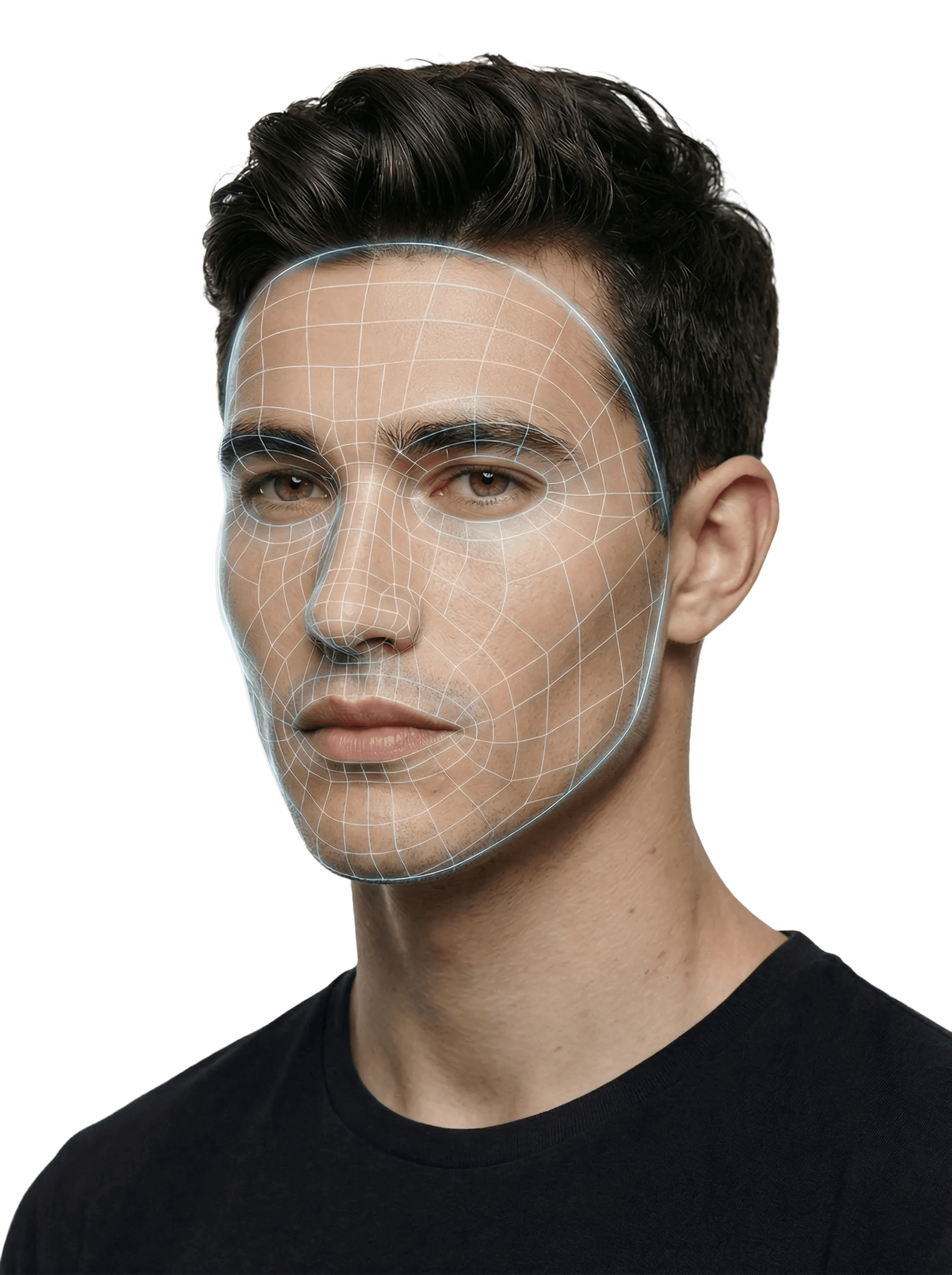
Age Detector: How Old Do I Look Based On A Photo
An age detector estimates how old you look based on your facial appearance, not your actual birth age. In practice, it analyzes visible cues like skin texture, facial fullness, proportions, and contrast to predict perceived age from a photo.
If you want a personalized result based on your own face — not an average guess — you can use a structured age and face assessment via Maxxing. It focuses on why you look a certain age and what affects that perception. Try the age detector.
What is an age detector
An age detector is a system that estimates age from a face image. It is often called an age estimator, face age detector, or AI age detector. These tools do not read biological age; they predict perceived age — how old a person looks to others.
Most modern age detector tools rely on computer vision models trained on large datasets of labeled face images across age groups. The output is usually a number or small range rather than an exact age.
How an AI age detector works
AI age detection models analyze patterns that statistically correlate with age perception. These include skin smoothness, wrinkle distribution, facial fat loss, eye area contrast, and overall facial proportions.
Research in face perception shows that skin texture and facial adiposity influence perceived age more strongly than bone structure alone (source: Facial cues to age perception).
Because perceived age is contextual, results vary depending on lighting, expression, camera distance, and image quality.
Age detector by photo vs real age
Age estimation from a photo answers a different question than “how old are you.” It answers “how old do you look right now.” Many people are surprised when results differ from their chronological age by several years.
Someone can biologically be 28 but look 34 due to skin quality and lifestyle factors. Another person can be 35 but look younger because of favorable facial structure, lower facial fat loss, and consistent skincare.
This distinction is why age-related tools are usually paired with a how old do I look assessment rather than medical age metrics.
Face age detector accuracy and limitations
Face age detectors are directionally accurate, not precise instruments. They are best at identifying age brackets and relative differences, not birthdays.
Common limitations include:
Poor lighting or heavy shadows
Extreme expressions
Filters or retouching
Unusual camera angles
Age estimation apps work best with neutral, front-facing photos taken in natural light. This is also how standalone tests like a face age test are designed.
Age detector online vs camera-based tools
Online age detector tools analyze uploaded photos. Camera-based age detectors estimate age in real time. Both rely on the same principles but differ in stability.
Uploaded photo analysis is usually more reliable because the image can be controlled for lighting and angle. Camera-based age detection often fluctuates frame by frame.
If you are comparing multiple images or want consistency, online age estimation from photo tools are generally preferred.
What affects age detection results most
Perceived age is driven by a small number of high-impact factors:
Skin texture and tone consistency
Facial puffiness vs leanness
Eye area contrast and under-eye darkness
Hairline and grooming choices
Studies on facial aging show that changes in skin quality and fat distribution explain most differences in age perception between individuals of the same age (source: Perceived age and facial aging research).
This is why age estimation is often integrated into broader systems like an AI age guesser instead of existing as a standalone novelty.
Age estimation app vs simple age calculator
An age detector app that uses photos differs from age calculators that rely on lifestyle questions. Photo-based age estimation reflects appearance, while calculators estimate biological or statistical age.
If your concern is social perception or attractiveness, age estimation from photo is the relevant metric. This is also why age perception is closely linked with perceived attractiveness in tools like an attractiveness test.
Why age detection matters for attractiveness
People are generally perceived as more attractive when their face looks healthy and age-appropriate rather than prematurely aged. Looking older than your age can affect dating outcomes, confidence, and first impressions.
Age perception interacts with symmetry, skin quality, and overall facial harmony — the same factors evaluated in an AI face analysis.
Can you influence how old you look
Unlike genetics, perceived age is partially controllable. Improvements in skincare consistency, body composition, sleep, and grooming can noticeably change age estimates over time.
This prioritization approach is part of looksmaxxing, which focuses on high-impact appearance changes rather than chasing minor flaws.
What to use instead of random age detector apps
Random age detector apps often provide unstable or exaggerated results. A more useful approach is a structured system that explains why you look a certain age and what influences it.
Maxxing integrates age detection into a broader appearance assessment. It maps facial age perception alongside skin, face shape, and presentation factors, then prioritizes what to fix first.
If you want a clear answer to how old you look — and what’s driving that result — start here: Get your age estimate from a photo.
Related age and appearance questions
People who use age detector tools often explore related questions such as guess my age, estimate age from photo, or broader appearance topics like what do I look like.
Age detection is best used as a signal — not a label — to guide improvement and track visible change over time.