



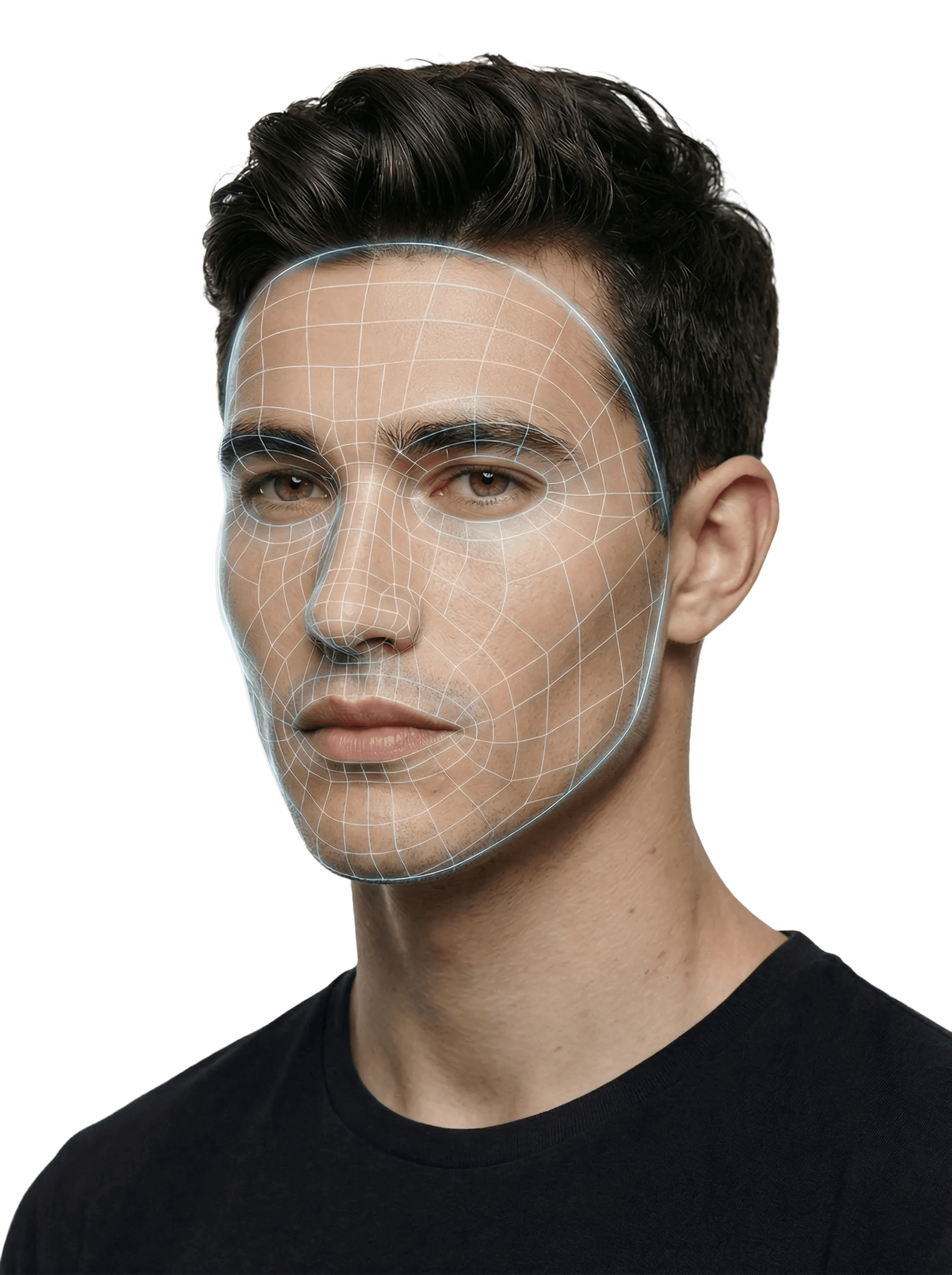
Attractiveness Test: Get Your Attractiveness Score (AI Face Rating)
An attractiveness test is a structured way to estimate how attractive your face appears by analyzing visual cues people reliably respond to—like facial proportions, skin clarity, and facial weight cues. Research finds significant cross‑cultural agreement in facial attractiveness judgments, even though some differences exist by familiarity and population (source: Cross-Cultural Agreement in Facial Attractiveness Preferences: The Role of Ethnicity and Gender).
If you want a fast baseline, take the attractiveness test now—then use the result as a starting point for targeted improvements, not as a final “verdict.” Try Maxxing here: Try Maxxing.
What an Attractiveness Test Measures (and What It Doesn’t)
An attractiveness test typically outputs an attractiveness rating (often a 1–10 or 0–100 score) based on patterns linked to common attractiveness judgments.
Most tests measure some mix of:
Facial proportions & feature balance (relative placement/shape of eyes, nose, mouth)
Skin quality cues (tone uniformity, texture, visible blemishes)
Facial adiposity cues (how lean or “puffy” the face appears)
Harmony/averageness (how “prototypical” facial structure appears in a population)
Presentation factors (lighting, angle, expression—especially for photo-based tests)
What an attractiveness test does not fully measure:
Real-life charisma, voice, humor, and social presence
Style and grooming outside the face (unless the tool is multi-domain)
How different audiences respond to you in different contexts
If you’re looking for a broader read than a simple face score, a full ai face analysis gives you more actionable detail than a single number.
Why “How Attractive Are You?” Can Be Measured at All
Attractiveness ratings are not random. Studies show facial attractiveness influences how people behave toward others in areas like education, hiring, and social interactions (source: Attractiveness of Human Faces: Norms by Sex, Sexual Orientation, Age, Relationship Stability, and Own Attractiveness Judgements).
That matters because an attractiveness test isn’t just vanity—it’s feedback on a signal people already respond to, often quickly and automatically.
AI Attractiveness Test vs Human Rating: What’s the Difference?
Human face rating
A human rating is usually a score given by multiple people. It reflects “real perception” but can vary with rater preferences and culture.
AI attractiveness test
An AI test predicts how a crowd might rate a face by learning patterns from large datasets.
Important limitation: facial expressions can confound AI attractiveness scoring, and model training choices can change results (source: Scoring facial attractiveness with deep convolutional neural networks: How training on standardized images reduces the bias of facial expressions).
That’s why consistent photo setup matters—and why you should treat AI scores as directional, not absolute truth.
If you want a more “human-like” feedback loop, pair your score with a structured photo rating like rate my attractiveness that focuses on what changes your score most.
Face Attractiveness Test: How the Score Is Usually Calculated
Most face attractiveness tests follow a predictable pipeline:
Face detection & alignment
The system finds your face, then standardizes orientation and scale.Landmark mapping
Key facial points (eyes, nose, lips, jawline) are detected.Feature extraction
The model captures proportions, symmetry signals, texture/skin signals, and shape cues.Scoring / prediction
The system maps these signals to an attractiveness score based on training data.Output + (sometimes) sub-scores
Some tests also give “face score” subcategories like jawline, symmetry, or skin.
If you want a breakdown beyond one score—what’s hurting you and what’s already strong—use an attractiveness calculator style approach that ranks issues by impact.
How Reliable Is an Attractiveness Score?
A key reason attractiveness tests can work is that many people agree on attractiveness rankings, even across cultures—though agreement is often higher for familiar face types (source: Cross-Cultural Agreement in Facial Attractiveness Preferences: The Role of Ethnicity and Gender).
Another reliability point: attractiveness research commonly uses rating scales like 1–10, 1–7, or 0–100. A psychometrics paper comparing multiple scales found little evidence that one common rating scale is dramatically “better” than others, meaning scores can be comparable across typical formats (source: The psychometrics of rating facial attractiveness using different response scales).
Practical takeaway: reliability improves when you:
Use a neutral expression
Use front-facing lighting
Avoid filters
Compare multiple photos (not one)
If you’re unsure whether you’re photographing yourself fairly, a face age test can help you spot issues like lighting, skin texture, and under-eye cues that distort perception.
Attractiveness Score: What “1–10” Usually Means
Different tools use different baselines, but people typically interpret scores like this:
1–3: noticeably below average; often fixable “big blockers” (skin, weight, grooming, photo quality)
4–6: average to slightly above; improvements compound fast
7–8: clearly attractive; smaller refinements matter more
9–10: top-tier; usually requires strong baseline + strong presentation
If you want a more “socially realistic” framing than a single number, a pretty scale style explanation helps you understand how people mentally bucket attractiveness in everyday settings.
What Most Strongly Moves a “Face Score” Up (Evidence-Based)
1) Skin homogeneity and clarity
Faces with more even, radiant skin tend to be perceived as healthier and more attractive, while visible blemishes can cue negative impressions (source: Facial skin homogeneity effects on facial attractiveness perception).
If you’re wondering “am i pretty” but your skin is actively breaking out, improving skin often yields a surprisingly large jump in perceived attractiveness.
2) Facial adiposity (face fat / puffiness)
People can often infer body fat cues from the face alone, and a meta-analysis found observers could estimate BMI from facial cues with a strong relationship (r = 0.71) (source: Facial Adiposity, Attractiveness, and Health: A Review).
If your score feels lower than expected, fixing body composition is frequently a higher ROI move than obsessing over minor facial details.
3) “Averageness” and femininity cues (not just symmetry)
A large open-access study found attractiveness was predicted by averageness in male and female faces and femininity in female faces, not necessarily by symmetry in their models (source: Further evidence that averageness and femininity predict facial attractiveness judgments).
This is why “perfect symmetry” is rarely the best obsession—overall harmony matters more.
Common Questions (Quick Answers)
“How attractive is my face?”
A face attractiveness test can estimate your attractiveness score by comparing your facial cues to patterns that predict crowd ratings. For the most practical results, use multiple photos and focus on the biggest changeable factors first—skin, facial adiposity, grooming, and presentation.
“Am I good looking?”
“Good looking” usually means you fall above average in real-world perception. Cross-cultural research shows people often agree on attractiveness rankings more than they expect (source: Cross-Cultural Agreement in Facial Attractiveness Preferences: The Role of Ethnicity and Gender).
“How handsome am I / how hot am I?”
These are usually the same question, just framed socially. If your score is “average,” improvements in photo selection and grooming can move you up quickly—especially for dating profiles. If you care about dating outcomes specifically, start with tinder appeal and then refine.
How to Improve Your Attractiveness Score After the Test (What to Fix First)
A good attractiveness test should lead to a plan, not just a number.
A high-impact order of operations:
Skin → reduce active acne, improve texture and tone consistency
Body composition → reduce facial puffiness, improve definition
Hair + grooming → better face framing, cleaner presentation
Style → fit and coherence, not trends
Behavior calibration → confidence that matches your new baseline
If you want the most direct path from score → improvements, use looksmaxxing as the framework—but personalize it to your traits and priorities.
Maxxing is built to answer the question that generic quizzes can’t: what should you fix first to move the needle most? Start here: Try Maxxing.
Final Takeaway
An attractiveness test is most useful when it gives you a repeatable baseline and turns a vague feeling into actionable priorities. Reliable attractiveness judgments exist across populations, rating scales are broadly comparable, and AI scoring can be helpful when you control photo quality and understand its limitations (source: The psychometrics of rating facial attractiveness using different response scales).
If you want a score you can actually improve—not just read—start with a personalized roadmap and track progress over time.