



Am I Pretty? What Science Says About Self‑Perception vs. Reality and How to Improve Your Looks
Am I Pretty? What Science Says About Self‑Perception vs. Reality and How to Improve Your Looks
Wondering “am I pretty?” is a natural but tricky question. Judging our own attractiveness isn’t as straightforward as looking in the mirror because people tend to overestimate or underestimate their looks. Research shows that while there’s strong agreement among observers about who is attractive, self‑ratings of attractiveness often diverge from objective assessments(source: Unattractive people are unaware of their (un)attractiveness). This article breaks down what prettiness really measures, why self‑perception can be misleading, and how to use objective tools and evidence‑based strategies to look and feel better.
If you’d like an immediate, impartial baseline, you can start by taking our attractiveness test — it provides an objective score based on facial cues and helps prioritize what to improve. Try it here: Try Maxxing.
Why We Misjudge Our Own Attractiveness
People rarely see themselves the way others do. A meta‑analysis of 21 studies found that the correlation between how attractive people think they are and how attractive strangers rate them is only r = 0.24, indicating that subjective self‑assessments only moderately agree with objective ratings. In six experiments involving over 1,100 participants, researchers discovered that unattractive individuals significantly overestimate their own attractiveness, whereas highly attractive people tend to underestimate their looks. Participants who were rated as less attractive also differentiated less between attractive and unattractive faces when judging others and chose less attractive comparison targets, which partly explains their inflated self‑view.
This self‑serving bias aligns with a broader psychological pattern known as the Dunning–Kruger effect, where people with lower skill or status overestimate their ability. Applied to appearance, those who are objectively less attractive not only misjudge their own looks but also have less sensitivity in judging attractiveness in others. In contrast, attractive individuals are often more accurate or slightly underestimate their attractiveness, suggesting better self‑awareness.
Objective vs. Subjective Attractiveness
Attractiveness isn’t entirely subjective. Studies on cross‑cultural agreement find that observers from different ethnic backgrounds largely agree on who is considered attractive (source: Cross-Cultural Agreement in Facial Attractiveness Preferences). Meta‑analyses show that judges with no formal training achieve high inter‑rater reliability when rating attractiveness, with reliability coefficients around r = 0.90 for adults and r = 0.85 for children. Agreement between raters from different cultures can be even higher (r ≈ 0.94), contradicting the old adage that beauty is purely “in the eye of the beholder”.
What drives this agreement? Research points to several consistent cues:
Facial proportions and averageness: Faces closer to the population average tend to be rated as more attractive because they signal developmental stability and genetic diversity.
Skin clarity and homogeneity: Smooth, even skin tone strongly influences perceptions of health and attractiveness.
Facial adiposity: The amount of fat stored in the face affects attractiveness. People can estimate body mass index from facial cues with a strong correlation (r ≈ 0.71), and moderate leanness is generally perceived as more attractive.
Symmetry and harmony: Symmetric faces are often rated higher, but overall harmony and proportional balance matter more than achieving perfect symmetry.
These cues are supported by evidence showing that facial adiposity and skin homogeneity strongly influence perceived attractiveness (source: Facial Adiposity, Attractiveness, and Health: A Review; source: Facial skin homogeneity and its link to perceived health and attractiveness).
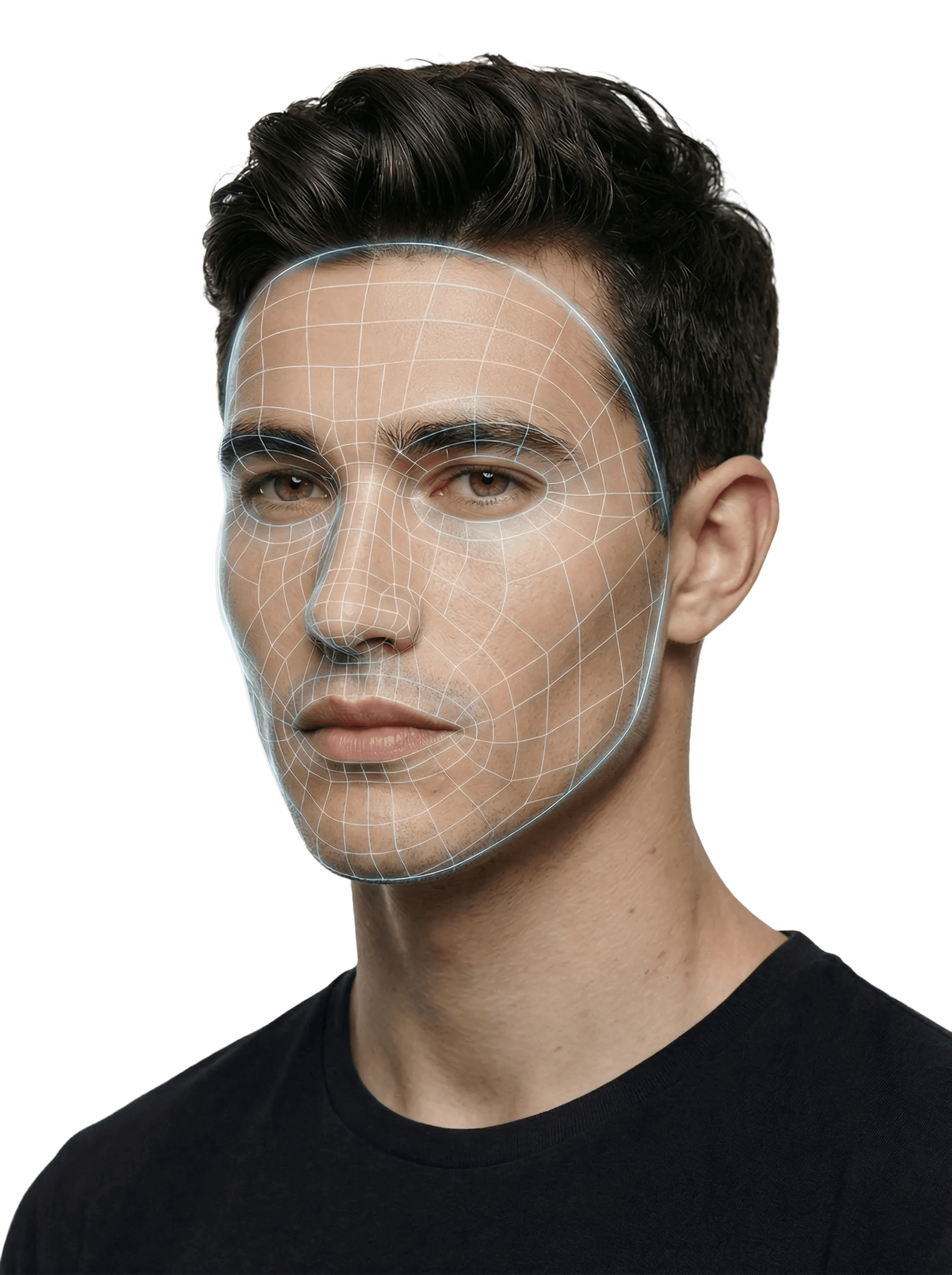
These cues are central to any credible am I pretty test. Tools that offer face scoring or prettiness calculators analyse these markers using facial landmarks and trained models to predict crowd ratings. Our own attractiveness test uses similar cues but also provides a breakdown of which traits help or hurt your score so you can take targeted action.
“Am I Pretty?” vs. “Am I Attractive?”
The question “am I pretty?” is often framed around beauty or cuteness, while “am I attractive?” encompasses broader social signals such as charisma, style and grooming. An individual may have delicate or “pretty” features but still rank lower in overall attractiveness due to poor skin, unhealthy body composition or weak presentation. Conversely, someone can be conventionally attractive without fitting narrow beauty norms.
If you’re curious about how you rank in broader attractiveness terms, our how attractive am I guide explores the differences between prettiness and overall attractiveness and provides context on scoring scales. For a numerical breakdown of your looks, the beauty test offers a stand‑alone facial score. These resources complement each other: one focuses on subjective self‑perception, and the other provides objective analysis.
Why Self‑Perception Matters for Well‑Being
Your belief about your own attractiveness affects more than vanity. Negative self‑evaluations are associated with higher depressive symptoms, independent of objective attractiveness ratings. In a nationally representative sample of nearly 5,000 young adults, researchers found that subjective appearance evaluations predicted depressive symptoms far more strongly than objective ratings. In other words, how you see yourself matters more for your mental health than how attractive you actually are.
At the same time, objective attractiveness influences social experiences. Attractive people receive more help, are punished less, perform better in job interviews and are more desired as romantic partners. Even small improvements in perceived attractiveness can translate into better social outcomes. Recognising these dual influences—self‑perception and objective cues—is key to answering “am I pretty?” in a way that leads to positive change.
Should You Trust an AI “Am I Pretty” Test?
Online prettiness tests and AI face analyzers can give instant feedback, but it’s important to understand how they work. Most systems detect your face, map landmarks, extract proportions and skin/shape signals, then compare them to training data to predict an attractiveness score. Artificial intelligence can approximate human ratings but isn’t perfect: expressions, camera angles and lighting can bias results, and models may carry biases from their training data. Yet these tools provide a consistent baseline that can help you see where you stand relative to broad population norms.
When using any prettiness test, pay attention to:
Photo quality: Use clear, front‑facing images with neutral expressions and natural lighting. Filters distort your true appearance and can inflate or deflate scores.
Multiple photos: Scores vary by angle and expression. Uploading several images and averaging the results yields a more reliable estimate.
Sub‑scores: Some tests provide category scores (e.g., symmetry, skin, jawline) that identify specific strengths and weaknesses. Focus on categories with the lowest scores first.
Our own platform blends AI analysis with human‑validated models, delivering a transparent attractiveness score along with actionable steps for improvement.
Can You Improve How Pretty You Are? Evidence‑Based Tips
Yes, prettiness isn’t fixed. While genetics set the framework, many appearance cues are modifiable. Based on research and our analysis of thousands of face ratings, here’s what moves the needle most:
Improve skin health. Even skin tone, reduced acne and a radiant complexion significantly boost attractiveness. Dermatological studies show that homogeneous skin is linked with higher attractiveness ratings. Use a gentle skincare routine, avoid excessive sun exposure and stay hydrated. Our beauty analyzer provides personalized advice for addressing specific skin issues.
Optimize body composition. Excess facial fat can lower your prettiness score. Studies show that people often infer body fat from facial cues, and moderate leanness is judged most attractive. Adopting a balanced diet and regular exercise plan to lose excess fat and build lean muscle will sharpen your features. See the looksmaxxing guide for a comprehensive plan.
Enhance grooming and hair framing. A flattering haircut, well‑groomed brows and clean beard line (if applicable) can dramatically change how your face is perceived. Hair frames the face, and research shows that even when hair is considered task‑irrelevant, it influences attractiveness judgments. Experiment with styles that suit your face shape and maintain consistent grooming habits.
Adopt a cohesive style. Clothing that fits well and complements your complexion and body type can elevate your overall attractiveness. This isn’t about following trends—simple, clean and well‑fitting outfits project confidence and polish. If you’re unsure where to start, our how hot am I article explains how outfit choices and presentation impact hotness perceptions.
Work on posture and expression. An upright posture, relaxed shoulders and genuine smiles increase perceived attractiveness by signalling confidence and approachability. Avoid slouching or forced expressions that make you look uncomfortable.
Use an objective assessment. Combine self‑reflection with tools like our prettiness calculator, which highlights areas for improvement. Remember that modest gains across several domains add up faster than obsessing over one trait.
“Prettiness Scale” and Understanding Your Score
Many tests categorize attractiveness into brackets. A typical “prettiness scale” might classify scores roughly as follows:
Score Range | General Interpretation | What to Focus On |
|---|---|---|
1–3 (below average) | Significant room for improvement; often due to poor skin, unhealthy weight or grooming issues | Prioritize skin care, weight management and grooming fundamentals |
4–6 (average) | Average or slightly above average; improvements can substantially raise your perceived attractiveness | Address the weakest categories and refine style and presentation |
7–8 (attractive) | Clearly attractive; small refinements make incremental gains | Maintain healthy habits and focus on details like symmetry, grooming and style |
9–10 (highly attractive) | Top tier; often a combination of good genetics and excellent grooming | Maintain what works; experiment cautiously with style; avoid overcorrection |
These categories aren’t rigid. They exist to help you interpret where you stand relative to broad norms. More important is understanding which specific traits influence your score. Tools like our attractiveness calculator break down your score by category and suggest targeted steps.
How to Ask “Am I Pretty?” in a Healthier Way
It’s easy to fixate on a number. A better approach is to frame the question as “how can I become my most attractive self?” Here are some healthy mindsets:
Use objective feedback as guidance, not judgment. A low prettiness score isn’t a verdict on your worth—it simply highlights areas you can improve.
Avoid comparisons. Everyone has unique features; focus on maximizing your own strengths rather than replicating someone else’s look.
Balance physical and non‑physical traits. Warmth, humor and confidence are powerful attractiveness boosters that tests can’t capture. Improving your appearance should go hand‑in‑hand with cultivating social skills and self‑respect.
Set realistic expectations. Genetics limit what you can change. Aim for gradual, sustainable improvements rather than drastic overhauls.
Where to Go Next
If you’re ready for a personalised plan that moves you closer to objective attractiveness standards, begin with our attractiveness test, which objectively rates your current appearance and maps out your priorities. Then explore targeted guides such as our how attractive am I article for context on rating scales, the beauty test for a focused facial score and the how to looksmaxx tutorial for a step‑by‑step glow‑up roadmap.
Remember: prettiness isn’t a fixed trait—it’s a combination of objective cues and how you carry yourself. By combining objective assessments with evidence‑based improvements, you can boost both your appearance and your confidence, leading to better social and romantic outcomes.