



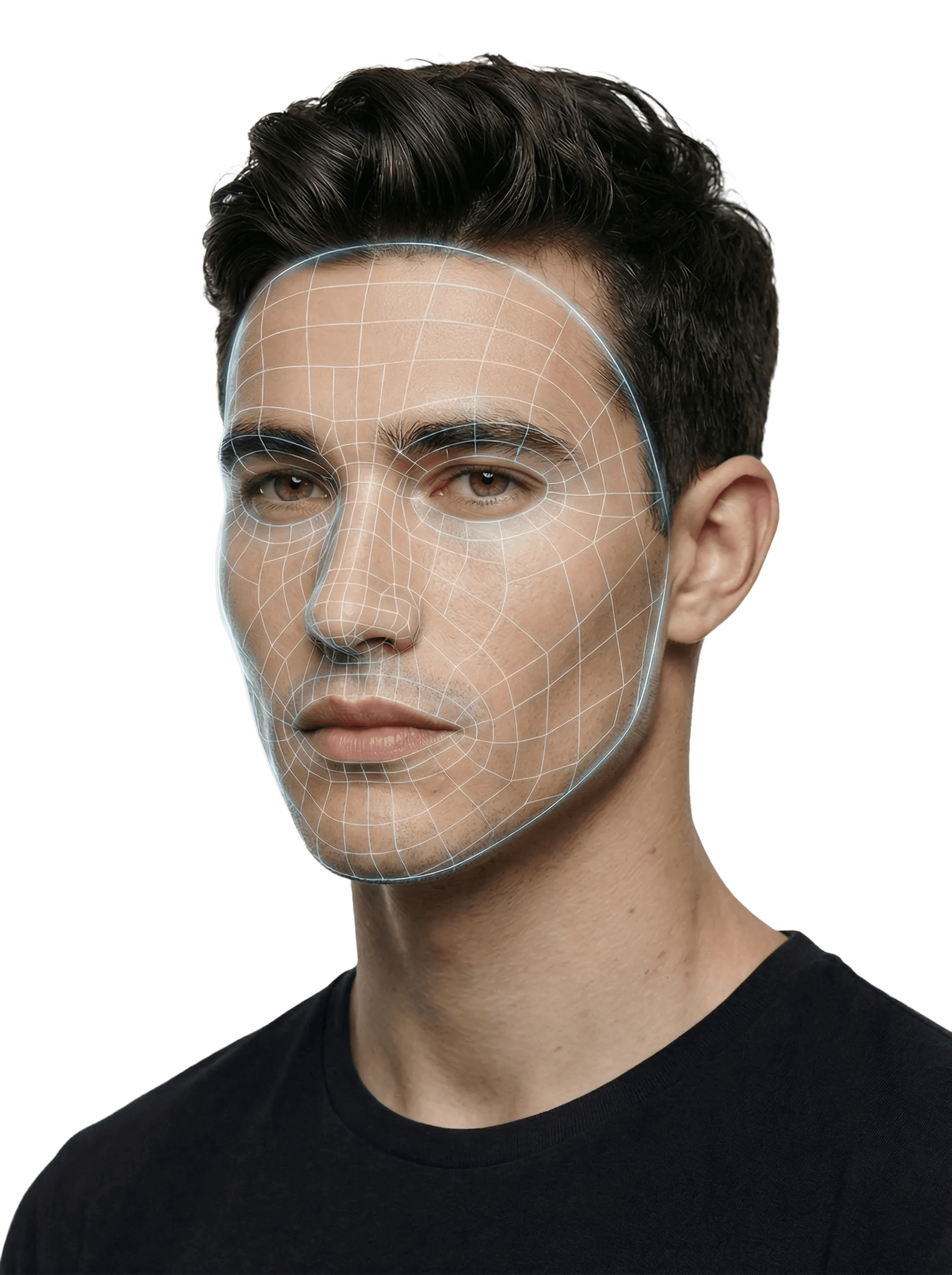
Looksmaxxing Guide – What It Really Takes to Improve Your Looks
What Is Looksmaxxing?
Looksmaxxing refers to the deliberate, step-by-step improvement of physical attributes that influence how attractive you appear to others. It isn’t about chasing unrealistic influencer aesthetics or faking confidence — it’s about making tangible changes that have measurable effects on how people respond to you. Objective traits such as skin clarity, facial adiposity (fat distribution in the face), body fat percentage and grooming directly affect perceived attractiveness (source: Facial Adiposity, Attractiveness, and Health review). When these traits improve, so does your social confidence.
Why Objective Appearance Matters
Social psychology research shows that attractive individuals are judged more positively across many domains: they are perceived as healthier, more trustworthy and more competent. These favorable judgments are part of the broader “attractiveness halo effect,” where appearance shifts how people interpret traits like competence or trustworthiness (source: What is beautiful is still good: the attractiveness halo effect in experimental settings). Because objective appearance influences such judgments, improving visible traits can meaningfully improve how others view you.
To get an unbiased baseline of your current appearance, you can take our attractiveness test or explore the beauty test. These tools use objective scoring models to give you a starting point.
The Science of Facial Adiposity and Body Composition
Facial adiposity — how much fat is visible in your face — has a strong relationship with perceived attractiveness and health. A meta-analysis compiled data from multiple studies and found that participants could reliably estimate a person’s body mass index (BMI) from facial cues alone (correlation r = 0.71) (source: Facial Adiposity, Attractiveness, and Health review). In practical terms, observers can often tell whether someone carries excess body fat just by looking at their face.
Optimal Facial Fat Levels
People across cultures tend to prefer facial adiposity that corresponds to a healthy BMI. Research found that female raters considered women with a BMI around 19.76 to be most attractive, while male raters preferred women with a BMI around 20.01 (source: Judging the health and attractiveness of female faces). Another study showed that participants favored facial adiposity corresponding to a BMI of ~19.11 for female faces and ~23.79 for male faces (source: Facial Adiposity, Attractiveness, and Health review). These values fall within the World Health Organization’s normal BMI range and illustrate that moderate leanness — rather than extreme thinness — is perceived as most attractive.
Excess facial fat does more than affect looks — it correlates with health risks. Perceived facial adiposity has been reported to associate with cardiovascular health markers and reported infections (source: Facial adiposity: a cue to health?). In a longitudinal analysis using adolescent yearbook photos, facial characteristics linked to adiposity were examined for associations with adult health outcomes (source: Predicting Adult Health and Mortality from Adolescent Facial Characteristics in Yearbook Photographs). Thus, improving your body composition not only enhances appearance but also benefits long-term health.
Action step: If you’re unsure how your facial fat and body composition affect your attractiveness, the how to looksmaxx guide explains strategic weight loss and muscle gain to sharpen facial features while maintaining overall health.
Skin Quality and First Impressions
Skin is often the first thing people notice. Studies on facial skin homogeneity show that faces with radiant and smooth skin are perceived as healthier and more attractive, while blemished skin can cue negative impressions (source: Facial skin homogeneity and its link to perceived health and attractiveness).
Beyond homogeneity, dermatology research highlights specific skin attributes associated with attractiveness. Smooth texture, elasticity (supported by collagen and elastin), hydration, and radiance are frequently discussed as cues of youth and vitality (source: On the Quest for Beautiful Skin: A Review of Skin Attributes Linked to Perceived Attractiveness).
Action step: Begin with consistent skin-care habits — gentle cleansing, sun protection and hydration. For a structured approach, our beauty analyzer offers AI-based feedback on your skin’s current state and suggests improvements.
Symmetry and Facial Features
Symmetry has long been considered an aesthetic ideal. Research tested whether perfect symmetry increases attractiveness by comparing original vs symmetrized facial images; evaluators favored the symmetrized versions in 91.2% of cases (source: Is a symmetrical face really attractive?).
Symmetry isn’t the only feature that matters. Attractiveness judgments reflect a bundle of cues — facial weight/adiposity, skin condition, and shape features — rather than a single “magic” trait (source: Facial Adiposity, Attractiveness, and Health review). Soft looksmaxxing focuses on improving these visible features through grooming, weight management and skincare rather than resorting to risky procedures.
Related reading: If you’re curious about your own facial proportions, the beauty symmetry test uses facial landmarks to show how symmetrical your features are and recommends areas to address.
Hair, Grooming and Presentation
Hair frames the face and influences attractiveness in subtle ways. Experimental work shows that hair can still influence face attractiveness judgments even when it is “task-irrelevant,” and that the influence can be asymmetric between face → hair vs hair → face (source: Visual attractiveness is leaky: the asymmetrical relationship between face and hair).
That means grooming choices — haircuts, color, beard trimming for men — can improve your overall appearance with little effort. Choose hairstyles that complement your face shape and hairline, and keep your hair healthy and clean. Our hair and face analysis explains how different cuts and facial hair can sharpen jawline and improve proportions.
Style and Clothing
Looksmaxxing also addresses style and presentation. Clothing that fits well and suits your body type can accentuate your strengths and hide weaknesses. Simple, well-fitting attire typically outperforms loud or trendy fashion. Combine this with good posture and hygiene to project confidence. For a deeper dive into how style influences your appearance, see our jawline rating and facial feature analyzer articles.
Building a Personal Looksmaxxing Plan
Improving your appearance should not be random or obsessive. A personalized glow-up plan begins by identifying the highest-impact issues and addressing them in order. Maxxing’s system offers a comprehensive self-assessment that breaks down your appearance into domains — face, skin, body, hair, style and behavior — and ranks problems by their impact. By focusing on high-impact changes first, you avoid wasting time on minor flaws.
Step-by-Step Framework
Assess and prioritize. Use an objective tool like our facial feature analyzer or rate my photo to identify your main appearance blockers.
Address high-impact changes. Focus on reducing excess facial fat, clearing skin issues and improving grooming. Simple lifestyle changes — diet, sleep, hydration and light exercise — often deliver the biggest returns.
Frame and present. Choose hairstyles and clothing that highlight your best features, and maintain good posture and hygiene. A neat beard or sharper haircut can improve the perception of your jawline.
Calibrate behavior and confidence. Confidence should emerge from real progress. As you see tangible improvements and positive feedback, practice engaging more comfortably in social situations. Avoid faking confidence until physical changes support it.
Monitor and iterate. Track your progress and update your priorities. Our lookmax AI can help you see before-and-after comparisons and suggest next steps.
Soft vs. Hard Looksmaxxing
Looksmaxxing can be categorized into soft and hard approaches. Soft looksmaxxing encompasses realistic, reversible changes such as weight management, skincare, grooming, hairstyle adjustments and style improvements. Hard looksmaxxing involves permanent or medical interventions like surgery or implants. Start with soft looksmaxxing, because research shows that many perceived flaws (facial fat, skin texture, grooming) can be corrected without invasive procedures. Use hard looksmaxxing sparingly and only after professional consultation.
Realistic Expectations and Risks
Looksmaxxing aims to reduce insecurity, not create new obsessions. Warning signs that you might be taking it too far include constantly comparing yourself with others, fixating on minor flaws and considering extreme measures without addressing basics first. Remember that even in symmetry research, the “more attractive” faces were created by digital manipulation; no human face is perfectly balanced (source: Is a symmetrical face really attractive?).
Focus on incremental progress: each improvement compounds your attractiveness and confidence. Cross-cultural research finds meaningful agreement in facial attractiveness ratings while also noting finer, context-dependent differences (source: Cross-Cultural Agreement in Facial Attractiveness Preferences (PLOS ONE)). Your goal is to optimize within your genetic framework, not to chase a single, universal standard.
Conclusion
Looksmaxxing is more than a trend — it is a systematic way to enhance objective attractiveness by improving controllable traits. Scientific evidence shows that observers can infer body weight from facial cues (source: Facial Adiposity, Attractiveness, and Health review), that certain facial adiposity ranges are judged as more attractive (source: Judging the health and attractiveness of female faces), that skin quality strongly shapes perceived health/attractiveness (source: Facial skin homogeneity and its link to perceived health and attractiveness), and that symmetry and grooming cues can shift first impressions. By focusing on these high-impact areas and following a priority-based plan, you can meaningfully improve how others perceive you — and how you feel about yourself.
If you’re ready to start your own looksmaxxing journey, take a personalized assessment today to see what to improve first and receive a tailored glow-up roadmap.