



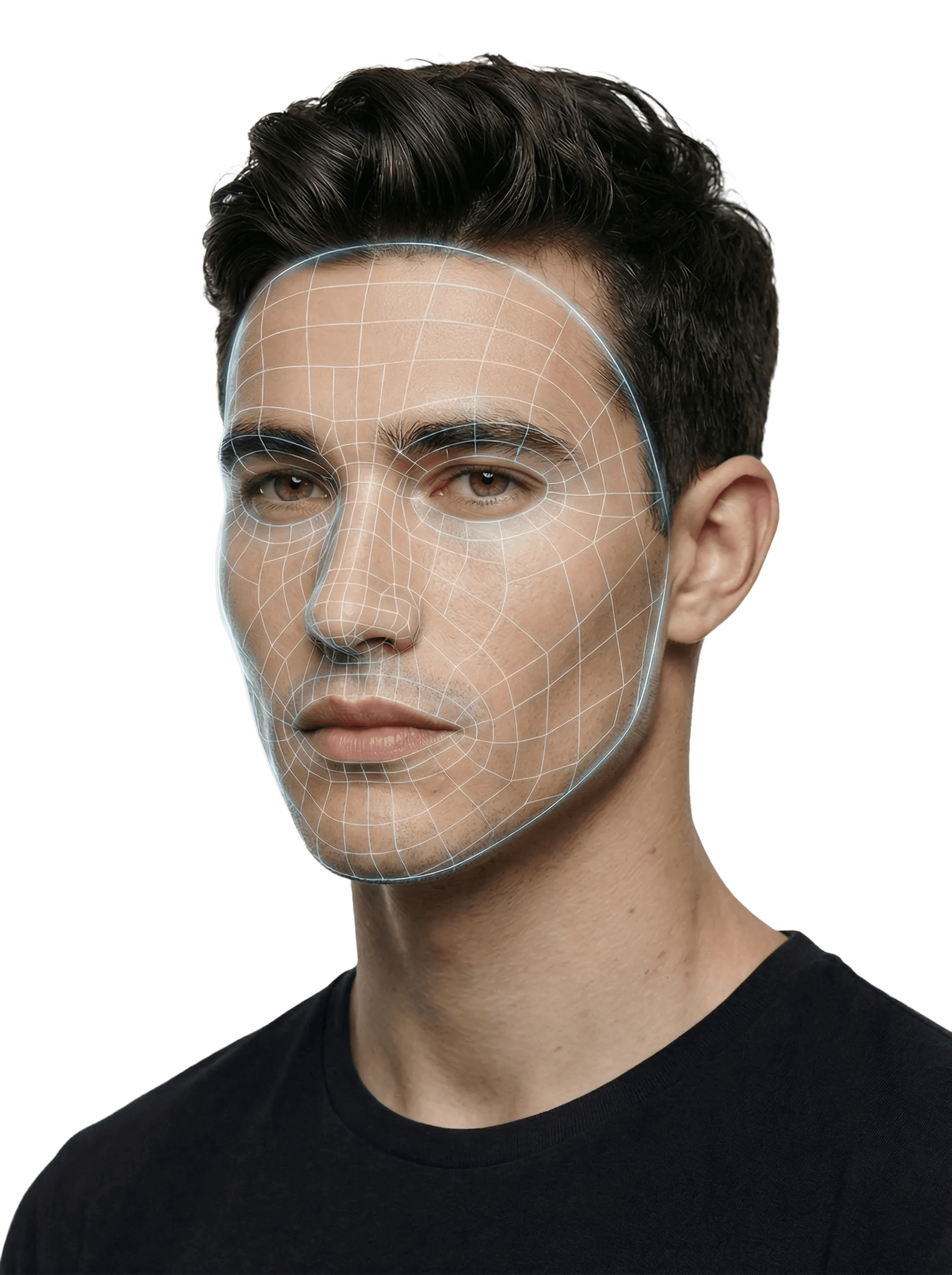
Estimate Age From Photo: How Old Do You Look
To estimate age from a photo means predicting how old a person looks based on visible facial features, not their real age. Photo-based age estimation focuses on perceived age — the age most people would guess when seeing the face in real life.
If you want a personalized age estimate using your own photo — with context on why you look that age — you can start with Maxxing’s photo-based assessment. It goes beyond a single number and highlights what drives age perception. Estimate your age from a photo.
What does “estimate age from photo” mean
Age from photo tools are also called photo age calculators, picture age calculators, or AI photo age estimators. They analyze a face image and output an estimated age or small age range.
Importantly, these tools do not detect biological or chronological age. They estimate perceived age — how old a person appears to others based on facial cues.
How age estimation from a photo works
AI systems that estimate age from photos rely on computer vision models trained on large sets of labeled face images. The system learns correlations between facial patterns and age labels.
Commonly analyzed features include:
Skin texture and smoothness
Wrinkle distribution
Facial fullness and fat loss
Eye area contrast
Overall facial proportions
Research on facial aging consistently shows that skin quality and soft tissue changes influence perceived age more than bone structure (source: Facial cues to age perception).
Age by photo vs real age
Estimating age by photo answers a different question than asking how old someone is. A photo age estimate reflects how a face is interpreted visually, not how long someone has lived.
Lifestyle factors such as sleep, stress, sun exposure, and skincare habits can shift photo-based age estimates by several years in either direction.
This is why many people compare their results with a how old do I look assessment rather than focusing on their birth age.
How accurate is age estimation from photos
Photo age estimation is generally accurate within age ranges, not exact years. It works best when images are clear and conditions are controlled.
Accuracy drops when:
Lighting creates strong shadows
The face is heavily angled or expressive
Filters or retouching are applied
The image is very low resolution
For stable results, most systems recommend neutral photos similar to those used in a face age test.
Best photo conditions for estimating age
To get a reliable age estimate from a photo:
Use a front-facing, neutral expression
Stand in natural, indirect daylight
Avoid makeup filters or beauty modes
Keep the camera at eye level
These conditions reduce distortion and make features easier to analyze.
Age from photo vs age detector tools
An age detector typically labels age continuously in real time or from a single photo. Photo age calculators are usually more stable because they analyze a static image.
If your goal is a one-time estimate or comparison across different photos, static estimation tools are more useful than live camera detection. This distinction is explained further in the age detector guide.
AI photo age estimation and attractiveness
Perceived age is closely tied to attractiveness and first impressions. Faces that appear healthy and age-appropriate are generally rated more favorably in social and dating contexts.
Because of this, age estimation is often paired with tools like an AI face analysis or an attractiveness test rather than used in isolation.
Why two photos can give different age results
A single person can look noticeably different across photos taken days apart. Small changes in lighting, facial expression, hydration, and grooming can shift perceived age.
Research on age perception shows that contrast around the eyes and mouth significantly alters age judgments, even when wrinkle patterns stay constant (source: Perceived age and facial aging research).
Can you lower your estimated age from a photo
While you cannot change chronological age, perceived age can change. Improvements in skin consistency, body composition, sleep, and grooming often reduce photo-based age estimates.
This approach aligns with looksmaxxing, which prioritizes controllable appearance factors rather than unchangeable traits.
Why random photo age calculators are misleading
Many photo age calculators provide unstable or exaggerated results because they treat age as a novelty metric. Without context, a number alone offers little guidance.
A structured approach explains why a face looks a certain age and which changes would most affect perception. This is the logic behind Maxxing’s integrated system.
If you want clarity instead of a random guess, start with a personalized assessment: Calculate your age by photo.
Related questions people search next
Users who estimate age from photos often explore related topics like guess my age, AI age guesser, or broader appearance questions such as what do I look like.
Photo-based age estimation works best when used as a signal to guide visible improvements, not as a fixed label.