



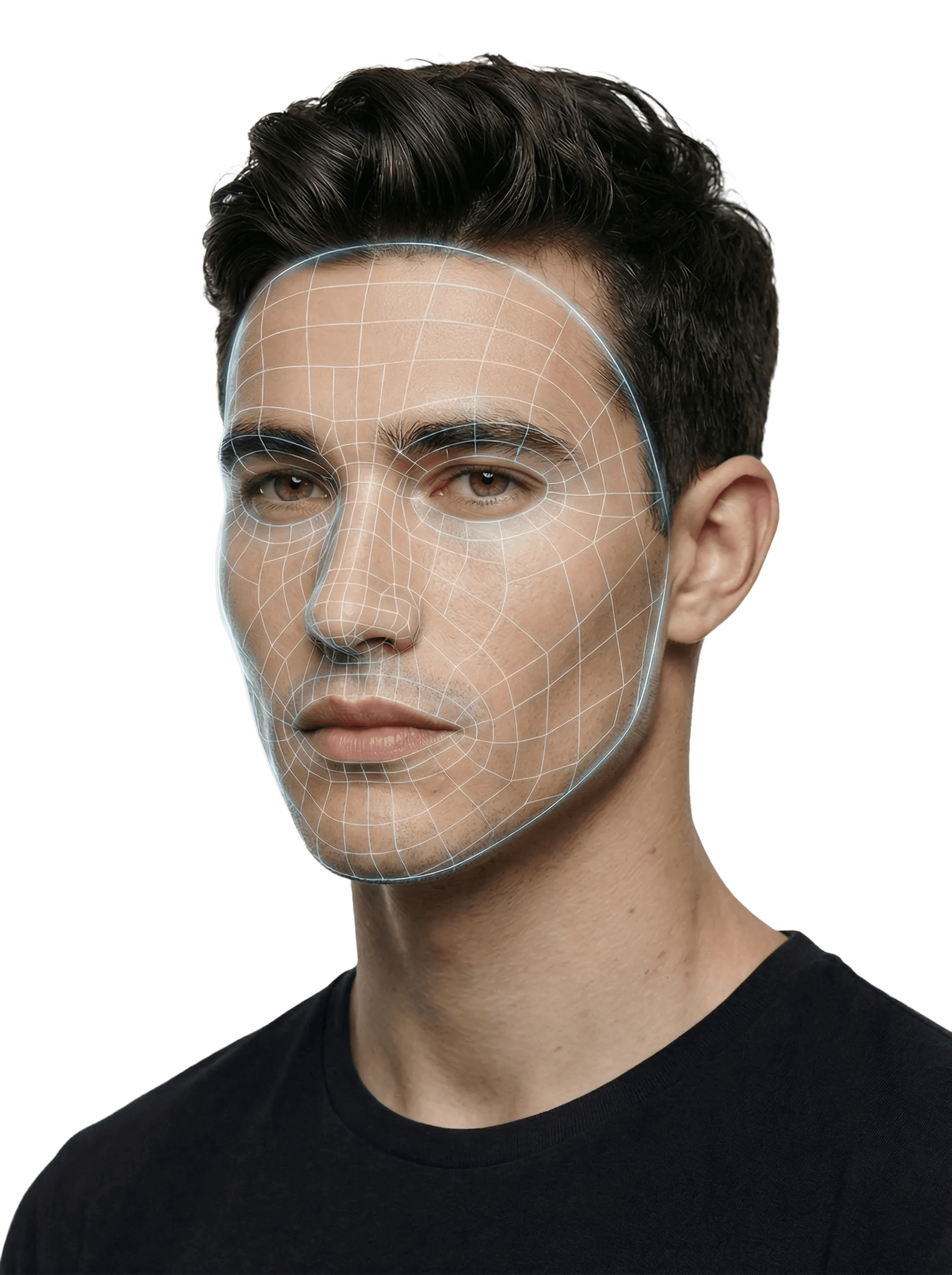
AI Face Rater — Analyze Your Face and Attractiveness with an AI Face Analyzer
An AI face rater analyzes a photo of your face and breaks down how your appearance is perceived — including facial balance, attractiveness cues, and visible strengths or weaknesses. Instead of guessing why photos or first impressions do not work, an AI face analyzer gives structured feedback on what actually affects attractiveness.
This is not about labels or validation. It is about clarity — understanding what matters most for your face and what changes would realistically move the needle.
If you want a personalized breakdown right away, you can try the Maxxing AI face analyzer here: Try Maxxing.
What Is an AI Face Rater and How Does It Work?
An AI face rater is a system that evaluates a face photo using visual patterns that consistently influence human perception. These systems do not rely on opinions or social feedback. They extract measurable cues from the face and compare them to patterns associated with attractiveness and age perception.
An AI face rater typically evaluates:
Facial proportions and balance
Symmetry and alignment
Jawline clarity and lower-face structure
Midface fullness and face fat distribution
Skin quality and visible texture
Overall facial harmony
These cues align closely with what humans subconsciously judge when forming impressions, especially in dating and social contexts (source: Facial symmetry and attractiveness).
For users who want a broader baseline first, starting with an attractiveness test can provide helpful context before deeper facial analysis.
What an AI Face Analyzer Actually Tells You
A good AI face analyzer is not just a score generator. The value is in identifying which traits matter most for your face specifically.
An AI face analysis usually answers questions such as:
Why does my face look different in photos vs real life?
Which facial features help me and which hurt me?
Is my issue face shape, skin, weight, or grooming?
What should I fix first instead of obsessing over everything?
This is why tools focused on how attractive am I without breakdowns often leave users more confused than before.
Free AI Face Analyzer vs Personalized Analysis
Many people search for an AI face analyzer free or a free face analysis tool. These can be useful for curiosity, but they usually stop at surface-level ratings.
Free tools typically:
Provide a general attractiveness score
Highlight obvious features only
Do not prioritize improvements
Do not connect analysis to real changes
A personalized system, by contrast, maps facial traits into a broader improvement plan — similar to what a rate my face or rate my attractiveness workflow should do when done properly.
Face Analysis and Attractiveness — What Actually Matters
Facial attractiveness is not random. Decades of perception research show consistent patterns in how faces are judged across cultures.
Key contributors include:
Facial balance and proportional harmony
Clear facial structure in the lower third
Even skin tone and texture
Moderate symmetry (not perfection)
Importantly, these traits interact with each other. A strong jawline matters less if face fat obscures it. Good symmetry matters less if skin quality signals poor health (source: Facial attractiveness and health cues).
This is why an AI face rater that evaluates traits in isolation is less useful than one that integrates them.
How AI Face Rating Differs From Human Feedback
Human feedback is emotional, inconsistent, and biased by context. An AI face rating system removes social noise and focuses on what consistently affects perception.
Compared to human opinions:
AI does not care about personality or confidence claims
AI does not inflate or soften feedback
AI applies the same criteria every time
This makes AI face rating especially useful for users who feel stuck comparing themselves online or receiving mixed signals from others.
Face Analysis Test vs AI Face Rater
A face analysis test is often a questionnaire or image-based quiz that gives a general result. An AI face rater focuses on visual features extracted directly from your photo.
The difference:
Face analysis tests classify
AI face raters diagnose
For users unsure where to start, combining AI analysis with a broader ai face analysis article can give additional context on how these systems work together.
Common Misconceptions About AI Face Analysis
Myth 1: AI face analysis is cosmetic surgery advice
Reality: Non-medical AI systems focus on controllable changes — grooming, body composition, presentation, and habits.
Myth 2: A low score means you are unattractive
Reality: Scores reflect current presentation, not potential. Many users score lower due to fixable issues like skin, weight, or haircut.
Myth 3: Facial symmetry is everything
Reality: Symmetry matters, but it is only one variable. A dedicated beauty symmetry test shows how limited symmetry is on its own.
What Can You Actually Improve After an AI Face Rating?
A good AI face rater helps you focus on high-impact improvements, such as:
Reducing facial puffiness through body fat changes
Improving skin clarity and routine consistency
Adjusting haircut to better match face shape
Correcting grooming choices that hide structure
Understanding whether face shape or jawline is the real limiter
This connects directly to a facial feature analyzer approach rather than chasing random tips.
Why Personalization Matters More Than Scores
Two people with the same AI face score can need completely different changes. One might need skin improvement. Another might need weight loss. Another might already have a strong face but poor presentation.
This is why Maxxing treats face rating as a starting point, not an endpoint. The system connects face analysis to a structured glow-up roadmap instead of leaving users with abstract numbers.
To understand how this fits into broader improvement logic, reading about looksmaxxing provides useful framing without promoting unrealistic expectations.
AI Face Rater and Dating Outcomes
Dating success is probabilistic. Appearance influences whether people swipe, respond, and engage. An AI face rater helps improve those odds by addressing the visual factors that create attraction signals.
This is especially relevant for users optimizing profiles through tinder appeal analysis or general photo selection.
An AI face rater does not promise results — it improves your starting position.
Who Should Use an AI Face Rater?
An AI face rater is most useful for:
People unsure why photos do not reflect how they feel in real life
Users stuck comparing themselves to others online
People who want objective feedback without social bias
Anyone looking for clarity instead of validation
For users who want a simple comparison baseline, tools like how normal am I can also provide useful context.
How Maxxing Uses AI Face Rating Differently
Maxxing does not stop at face rating.
The system integrates:
AI face analysis
Skin and habit guidance
Body composition direction
Hair and grooming framing
Style and presentation clarity
This allows users to understand not just how they look now, but what to fix first and why.
If you want to go beyond a static score and get a plan tailored to your face, body, and goals, you can start here: Try Maxxing.
Final Takeaway
An AI face rater is not about judging worth or locking you into a number. It is a tool for diagnosing why your appearance is perceived the way it is — and how to improve it efficiently.
Used correctly, AI face analysis reduces confusion, saves time, and replaces guesswork with structured clarity.
If you are tired of vague advice and want feedback that actually applies to your face, an AI face analyzer is one of the most practical starting points available today.