



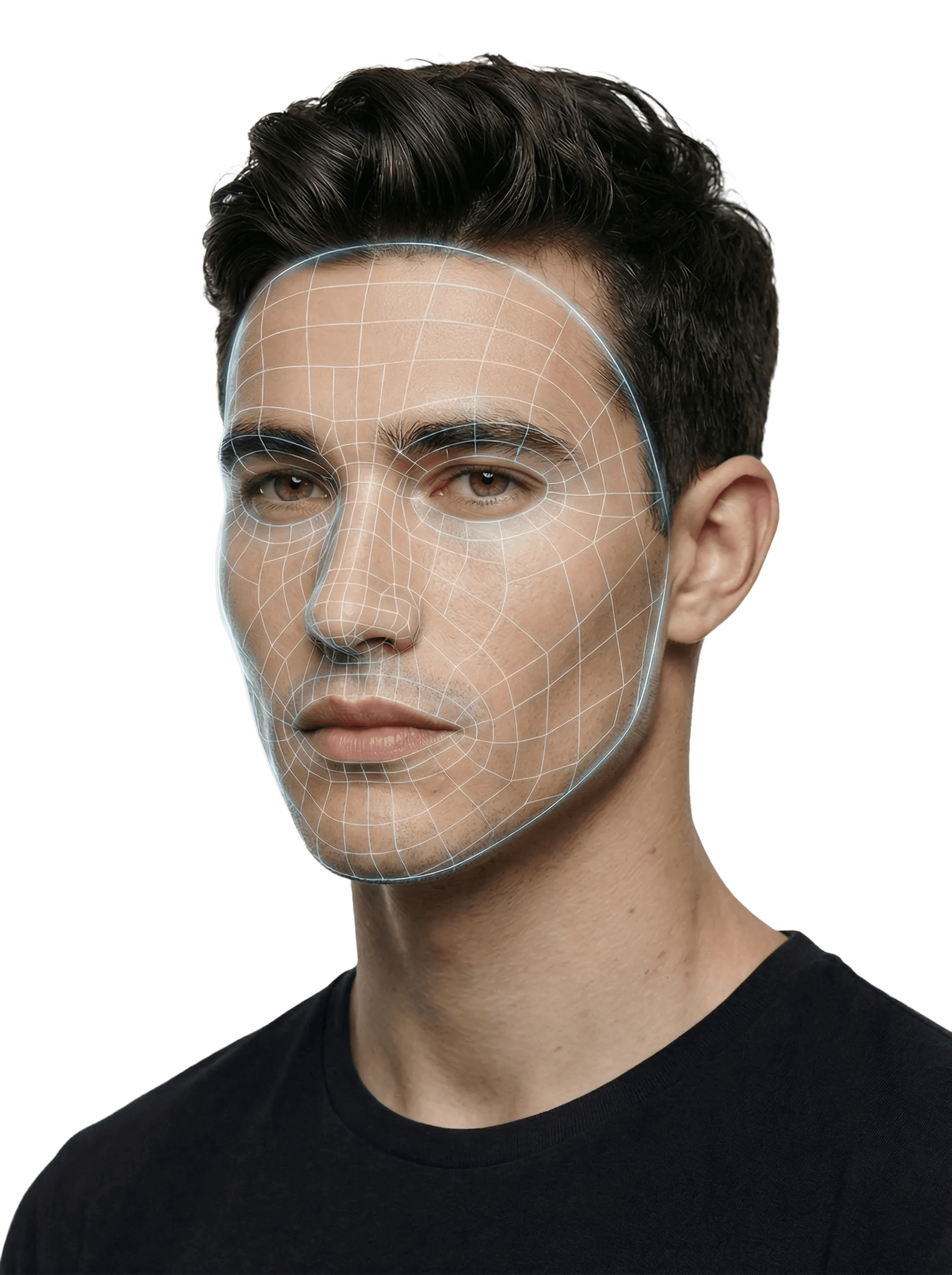
AI Beauty Analyzer: Facial Beauty Analysis
An AI beauty analyzer is a tool that analyzes facial features from a photo to estimate perceived attractiveness using measurable visual traits. A face attractiveness analyzer looks at symmetry, proportions, feature balance, skin clarity, and facial structure, then compares those signals to large reference datasets to produce a beauty analysis score or breakdown.
People searching for AI beauty analyzer, face attractiveness analyzer, beauty analysis, facial beauty analysis, or beauty analysis face test want a clear answer to one question: how attractive does my face look objectively, and why? This guide explains exactly how AI beauty analysis works, what facial beauty analyzers measure, how accurate these tools are, and how to turn the results into practical improvement steps instead of vague reassurance.
What an AI Beauty Analyzer Actually Measures in a Beauty Analysis
A facial beauty analyzer does not judge personality, style, or confidence. It focuses on visual facial traits that consistently influence human perception across cultures.
Most AI beauty analysis systems evaluate:
Facial symmetry — alignment between left and right facial halves
Proportions — spacing between eyes, nose, mouth, and overall facial ratios
Feature balance — how dominant or recessed individual features appear
Skin quality — smoothness, texture consistency, visible irritation
Jawline and facial contour — clarity of structural definition
Research consistently shows that symmetry and proportional balance are major drivers of perceived attractiveness, independent of cultural preferences (source: Facial symmetry and attractiveness research).
This is why beauty analyzers rely on facial landmarks rather than subjective opinions.
AI Beauty Analyzer vs Face Attractiveness Analyzer vs Facial Beauty Analysis
The terms are often used interchangeably, but they describe the same category of tools:
AI beauty analyzer — emphasizes machine-learning evaluation
Face attractiveness analyzer — focuses on perceived attractiveness outcomes
Facial beauty analysis — refers to the breakdown of contributing features
Regardless of naming, all serious beauty analysis face tests rely on computer vision models trained on labeled facial datasets, not user voting or random scoring.
These systems analyze how your face compares statistically — not how confident you feel, not how stylish you dress, and not how photogenic you are in one image.
How a Face Beauty Analysis Test Works Step by Step
A standard facial beauty analysis test follows a predictable pipeline:
Face detection and alignment
Landmark mapping (eyes, nose, lips, jaw, brows)
Measurement of ratios, angles, and distances
Pattern comparison to attractiveness-labeled datasets
Output of scores or category explanations
Modern systems rely on deep neural networks trained on thousands to millions of annotated faces, allowing them to detect subtle visual cues humans notice subconsciously (source: Deep neural networks for face analysis).
This approach explains why AI beauty analyzers are often more consistent than crowdsourced rating sites.
Face Attractiveness Analyzer Accuracy: What the Scores Mean
A beauty analyzer does not give a permanent or absolute value. Results reflect visual perception under standardized conditions.
Accuracy depends on:
photo quality and lighting
neutral facial expression
camera angle and distance
dataset diversity used in training
Importantly, beauty analysis scores are comparative, not moral judgments. A change in skin condition, body fat, grooming, or hairstyle can alter measurable facial signals significantly — which is why attractiveness is not fixed.
This is also why users often combine facial beauty analysis with tools like an attractiveness test or a deeper AI face analysis to get context instead of a single number.
Facial Beauty Analysis vs “Am I Pretty?” or “How Hot Am I?”
Questions like am I pretty or how hot am I are emotionally loaded and subjective. Facial beauty analysis answers a different question:
“Which visual traits of my face raise or lower perceived attractiveness?”
That difference matters. Objective analysis focuses on what can realistically be changed — skin clarity, facial definition, grooming choices, presentation — instead of reinforcing vague insecurity.
This practical framing aligns with how attractiveness calculator models work across populations.
Key Facial Traits Most Beauty Analyzers Weight Heavily
Across multiple studies and visual perception models, the same traits repeatedly appear:
Symmetry and proportional balance
Clear skin texture
Defined facial structure (especially jawline)
Eye spacing and eye openness
Mid-face harmony
Facial structure and body composition are strongly linked: changes in body fat percentage noticeably affect facial attractiveness metrics (source: Body weight and facial perception research).
This connection explains why facial beauty analysis overlaps with glow-up planning instead of existing in isolation.
Beauty Analysis Face Results Inside Broader Face Evaluation
A beauty analyzer is one layer of perception. The same facial signals affect:
perceived age
normality and distinctiveness
race and ethnicity appearance
dating photo performance
This is why advanced systems integrate beauty analysis with AI face analysis, face symmetry tests, jawline rating, and even tools like what do I look like instead of giving a single isolated score.
When combined, the output becomes more useful and less psychologically misleading.
First CTA: Turn Beauty Analysis Into Personal Guidance
If your beauty analysis score highlights weak areas but doesn’t tell you what to do next, the analysis stops short.
You can move from static scoring to priority-based improvement guidance by starting a personalized analysis with try Maxxing. Instead of asking whether your face is attractive, the system answers what changes would improve perception fastest.
How Maxxing Uses Facial Beauty Analysis Differently
Maxxing does not treat beauty analysis as a pass/fail test. Facial beauty signals are used to:
identify the highest-impact improvement areas
avoid over-fixating on low-impact flaws
build a clear glow-up order (skin → body → hair → style)
connect appearance changes to real-world outcomes like dating
The key shift is from validation-seeking to decision clarity.
Facial Beauty Analyzer vs Celebrity Look-Alike Tools
Some users expect facial beauty analysis to compare them to celebrities. That is a separate task.
A celebrity look alike tool focuses on resemblance.
A facial beauty analyzer focuses on structural attractiveness patterns.
Resemblance alone does not determine attractiveness. Structure, proportions, and harmony matter more — which is why beauty analysis is predictive even without famous reference faces.
Beauty Analyzer Results and Real-World Perception
Facial beauty analysis aligns closely with how strangers form first impressions:
dating app swipe behavior
social reactions and attention
professional presence
This is why beauty analysis often correlates with tinder appeal scores and perceived confidence — not because confidence is “fakeable,” but because visible improvement changes feedback loops.