



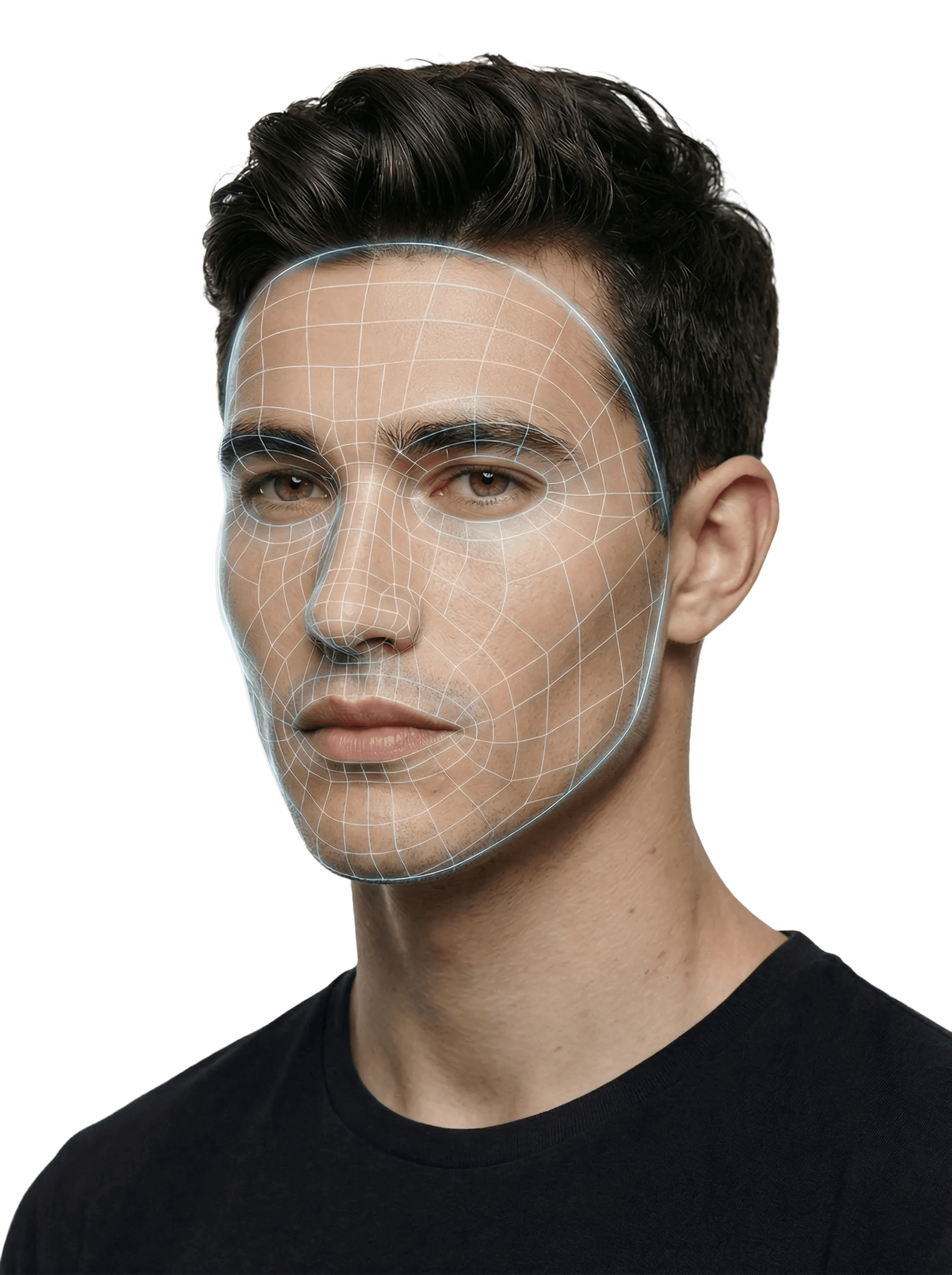
Rate My Face: True Face Rating
A face rating is an analysis of how your facial features are perceived at first glance. When people search "rate my face" or "AI face rater," they are usually looking for an objective read on symmetry, proportions, facial harmony, and how these cues shape attractiveness judgments — not a personal opinion or social feedback.
A proper face rating explains why a face scores the way it does and what matters most to improve. If you want a personalized breakdown instead of guesses, you can start here: Try Maxxing.
What Does “Rate My Face” Actually Mean?
To rate a face accurately, the system must look at structural traits, not expression or mood. Humans form judgments based on consistent visual signals like balance, feature spacing, and clarity rather than personality (source: Rapid facial impression formation).
A real face rating focuses on:
Facial symmetry and balance
Relative feature proportions
Jawline and lower face definition
Skin clarity and evenness
Facial framing from hair and grooming
This is why face ratings differ from full appearance ratings covered in a broader attractiveness test.
Face Rating vs Photo Rating
Many people confuse face rating with general photo or profile scoring. A face rating isolates facial structure and traits, while a photo rating mixes in lighting, angle, lens distortion, and styling choices. This distinction matters when users compare results from tools like rate my face versus a broader rate my picture assessment.
Someone evaluating overall presentation or social perception may benefit from a rate my attractiveness analysis, but users trying to understand bone structure, symmetry, and feature balance should focus on face-only evaluation.
Many tools blur the difference between rating a photo and rating a face. A photo rating includes lighting, angle, and camera distortion. A face rating isolates facial structure as much as possible.
This distinction matters. People asking rate my face AI usually want insight into their face itself, not whether a selfie was taken from the wrong angle. Readers focused on overall image impact may want a rate my attractiveness analysis instead.
How AI Face Raters Work
An AI face rater does not copy human opinions. It models patterns in how humans consistently respond to facial traits across populations.
Research shows that symmetry, averageness, and perceived health strongly influence facial attractiveness judgments (source: Facial attractiveness and biological signals).
Modern face rating systems estimate:
Symmetry deviations
Feature alignment
Face shape category
Skin signal consistency
This process overlaps with ai face analysis but focuses narrowly on attractiveness impact.
What Face Scores Actually Represent
A face score represents relative facial perception under neutral conditions, not overall desirability or social success. Scores reflect how a face aligns with common human pattern recognition around balance, clarity, and proportional harmony.
When contextualized properly, a face score helps users:
Understand strengths versus weak points
Compare changes over time
Avoid fixation on irrelevant details
This structured interpretation mirrors how an attractiveness calculator works when it explains contribution factors instead of producing a single opaque number.
A face score is not a verdict on worth or potential. It is a snapshot of current facial perception under neutral conditions.
Used correctly, a face score helps:
Identify high-impact improvement areas
Track visual changes over time
Avoid obsessing over low-impact flaws
This mirrors how structured facial feature analyzer tools prioritize signal strength instead of minor imperfections.
Common Misunderstandings About Face Rating Apps
People often expect face rating apps to work like filters or beauty standards. That expectation causes confusion.
Face rating apps do not:
Judge personality
Predict dating success directly
Account for confidence or charisma
They only measure facial signals. Broader attraction factors appear later in full systems like looksmaxxing frameworks.
Free Face Rating vs Structured Analysis
Free face rating tools often provide a number without explanation. That creates anxiety, not clarity.
A structured face rating system:
Explains which traits matter most
Shows relative importance
Connects results to improvement paths
This approach aligns with how how normal am i assessments provide context instead of raw labels.
AI Face Rating and Dating Context
Interest in queries like “AI rate my face” or “chatgpt rate my face” often comes from dating anxiety rather than curiosity. Facial perception strongly influences first impressions on dating platforms, which is why face-focused analysis frequently overlaps with tinder appeal research.
However, face rating only influences the opening moments. Long-term attraction also depends on body language, style, and behavior, areas typically explored later through looksmaxxing or how to looksmaxx guides.
Many searches such as "chatgpt rate my face" or "AI rate my face" reflect dating concerns. Facial perception affects first impressions on apps, but it is not the only factor.
Face rating helps with initial attention, which then interacts with behavior, presentation, and body signals. That is why users exploring tinder appeal often benefit from face-focused insights first.
Why Face Shape and Jawline Matter
Face shape and jawline structure influence perceived maturity, health, and masculinity or femininity. Changes in body composition can significantly alter lower-face definition, which is why jawline rating analysis is often part of face rating systems.
Hair framing and grooming choices also modify perceived face shape, tying into insights from face shape test tools.
How Maxxing Approaches Face Rating
Maxxing treats face rating as problem mapping, not validation.
Instead of labeling a face as good or bad, the system:
Breaks facial perception into components
Ranks issues by visual impact
Connects analysis to realistic change paths
Face rating integrates with broader tools such as ai face analysis, beauty symmetry test, and facial feature analyzer to ensure users focus on changes that actually move perception.
Maxxing treats face rating as diagnosis, not judgment.
The system:
Separates primary blockers from secondary traits
Shows what matters now, not everything at once
Connects facial analysis to actionable steps
Face rating is only the starting layer of a multi-domain improvement plan that also considers skin, body, hair, and presentation.
Face Rating and Long-Term Change
Faces are not static. Weight changes, skin health, grooming choices, and aging all influence face scores over time. Tracking matters more than raw numbers.
People curious about aging effects often combine face rating with face age test and how old do i look tools to understand trajectory rather than fixate on a single score.
When Face Rating Is Useful
A face rating is most useful when:
You feel unsure what to improve first
You want objective feedback without social bias
You want to measure progress instead of guessing
It becomes harmful only when treated as a verdict instead of a guide.
How Face Rating Fits Into a Full Glow-Up
Face rating becomes most powerful when combined with other appearance dimensions. Changes in skin health, body composition, hair framing, and style all feed back into how a face is perceived.
This is why users often pair face rating with tools like beauty test, how hot am I, or even exploratory features such as what do i look like for a complete picture.
Final Takeaway
“Rate my face” is not about approval or labels. It is about direction.
A proper face rating explains how your facial structure is read, which traits matter most, and where effort produces visible returns. When paired with prioritization and personalization, face rating becomes a starting point for progress rather than something to obsess over.
If you want face rating tied to a structured improvement system instead of a raw score, start here: Try Maxxing.
“Rate my face” is not about approval. It is about clarity.
A real face rating explains how your facial structure is perceived and where effort has the highest return. When combined with prioritization and personalization, it becomes a powerful starting point instead of a number to obsess over.
If you want face rating connected to a structured improvement plan, not just a score, start here: Try Maxxing.