



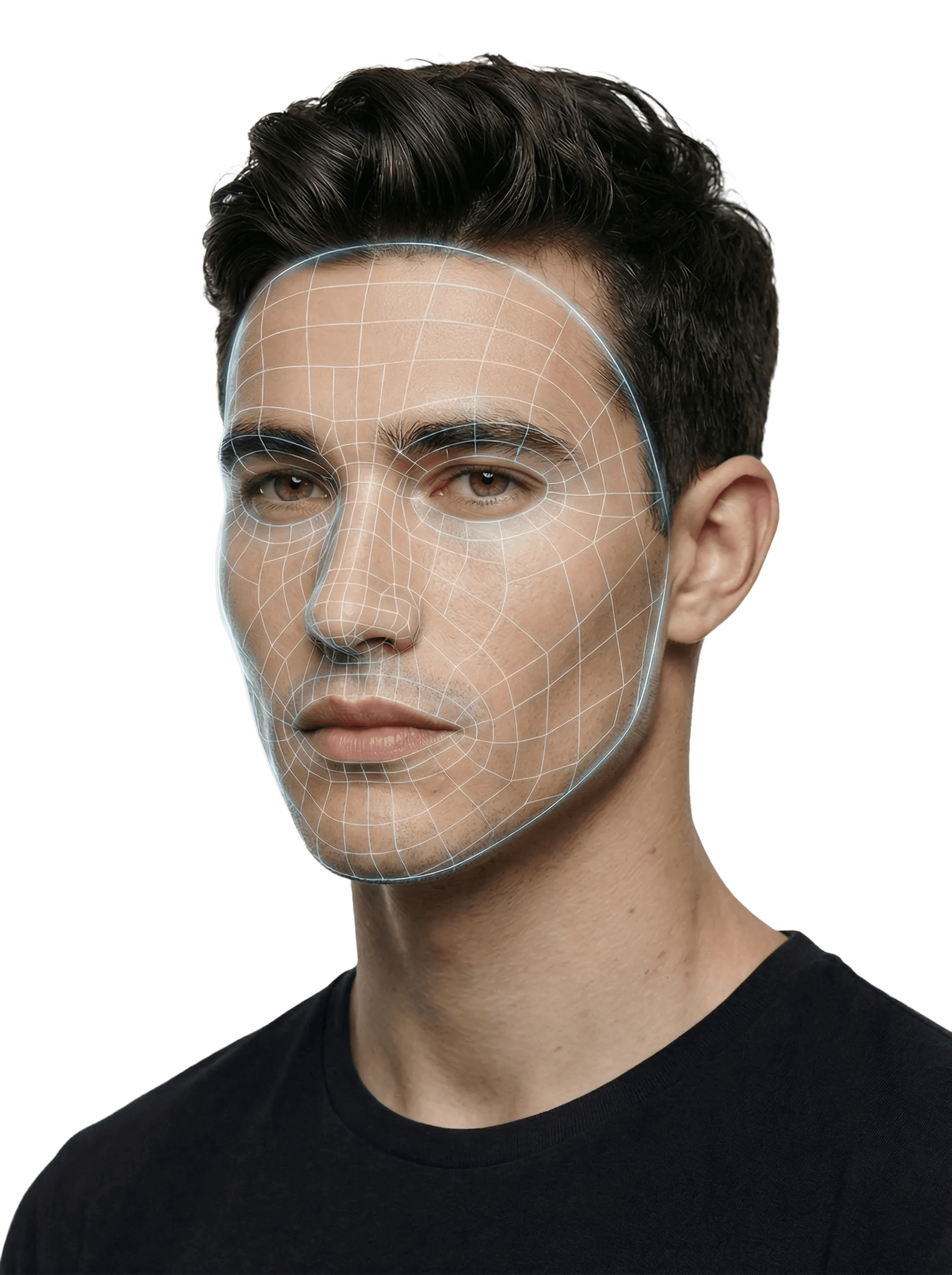
Race From Face Test, Race Guesser, AI Race Detector, Race Scanner & Race Identifier: What Race Do I Look Like?
Race From Face Test, Race Guesser, AI Race Detector, Race Scanner & Race Identifier: What Race Do I Look Like?
Race‑from‑face tools use artificial intelligence to estimate broad racial appearance based on visible facial features. These systems analyze facial structure, proportions, and texture patterns and compare them to large datasets labeled by population groups. The result is a probabilistic estimate of how a face is visually categorized by appearance — not ancestry, DNA, or nationality.
People searching for race from face, race guesser, race guess, what race do I look like, guess my race, race by picture, or AI race detector want to understand how others visually classify their appearance at first glance. This guide explains exactly how AI race detection works, what a race identifier measures, how accurate race scanners are, and how race estimation fits into broader facial analysis.
For deeper context, race estimation is best understood alongside AI face analysis and a full facial feature analyzer.
Race Guesser Explained: What a Race From Face Test or Race Scanner Actually Measures
A race‑from‑face test estimates visual categorization, not ancestry or identity. The AI looks at facial landmarks such as nasal width, orbital shape, cheekbone prominence, facial height‑to‑width ratio, eye spacing, and jaw contour, then compares those patterns against training data labeled by broad population groups.
Human observers use similar cues instinctively. Research in biological anthropology shows that human facial variation exists on continuous gradients, not discrete racial boxes, which is why race guesser outputs are inherently probabilistic rather than definitive (source: Human genetic variation and the concept of race).
This is why most AI race detectors return a primary category along with secondary probabilities instead of a single fixed answer.
Race, Ethnicity, and Nationality: Difference Between Nationality and Race
Many searches mix these concepts, but they refer to different classifications:
• Race — a social visual category inferred from physical appearance
• Ethnicity — shared cultural, linguistic, and historical background
• Nationality — legal citizenship or country affiliation
Population research consistently shows that visible facial traits do not map cleanly onto cultural or national boundaries. This explains why a race identifier may label appearance while ethnicity and nationality remain separate concepts (source: Genetic structure of human populations).
AI Race Detection: How an AI Race Detector Guesses Race by Picture
Modern AI race detectors follow a computer‑vision pipeline:
Face detection and landmark localization
Pose and lighting normalization
Extraction of geometric and texture features
Pattern comparison against labeled population data
Computer‑vision research shows that facial morphology contains weak but measurable signals correlated with population‑level appearance patterns, allowing coarse race guessing when features are aggregated across the face (source: Computer vision approaches to facial morphology).
No single facial feature determines the output. The race scanner evaluates subtle combinations distributed across multiple regions of the face.
AI Race Detector Accuracy: Race Identifier Confidence, Scores, and Limits
Race‑from‑face tools typically return:
• a highest‑probability race guess
• secondary or alternative probabilities
• a confidence score
Academic benchmarks emphasize that these outputs reflect visual resemblance to training groups, not personal identity. Accuracy depends strongly on image quality, lighting, angle, and dataset composition (source: Benchmarking face analysis algorithms).
For this reason, results should be interpreted as appearance signals, not definitive labels.
What Race Do I Look Like? Guess My Race, Guess the Race, and Race Guesser Quiz Searches
People using race guesser quizzes are usually trying to understand:
• how strangers visually categorize them
• why their appearance is frequently misidentified
• how facial structure influences perception in social or dating contexts
Facial cues associated with race perception often overlap with cues used in age estimation, attractiveness judgments, and symmetry scoring. This is why users commonly move between a race‑by‑picture test and tools like a beauty test or attractiveness calculator.
Race Estimation Inside Facial Analysis Systems
Race estimation is one component of appearance analysis. Traits that influence race perception — eye shape, nasal structure, cheekbone position, and facial proportions — also affect perceived age, attractiveness, and overall normality.
This overlap explains why advanced systems integrate race estimation with AI face analysis, face symmetry testing, jawline rating, and facial feature analysis instead of presenting race in isolation.
Using Race Detection Together With Maxxing
Maxxing does not treat race as a score or endpoint. Race‑related facial structure signals are used only to improve personalization around grooming, hairstyle selection, facial framing, and presentation decisions that align with an individual’s natural features.
Instead of focusing on what race am I, most users gain more value by understanding how their facial traits are read by others and what changes would have the highest visible impact.
You can begin with structured facial analysis and move directly into personalized guidance by trying Maxxing.
Key Takeaways for Race Guesser and AI Race Detection
• Race‑from‑face tools estimate broad visual categories
• Race guessers work on probability, not certainty
• Race detection reflects appearance patterns, not identity
• Best results come from integrating race analysis with full facial evaluation
Used correctly, AI race detection adds context to how appearance is perceived without defining who someone is.