


What Eye Shape Do I Have? Eye Shape Test & How to Tell
Your eye shape comes down to four things: how round or almond-shaped the eye outline is, whether the outer corners tilt up or down, how much of the upper eyelid you can see, and how far apart your eyes sit. Check these four on a front-facing photo or in a mirror, and you can name your eye shape in about a minute.
This page walks through the four checks, then shows how to match the result to a type. Most people end up with a mix of traits rather than one clean label, and that is normal. If you want every type laid out first, start with the eye shapes chart.
Eye shape is only one feature of the face. For the bigger picture, the attractiveness test looks at the whole face.
How to Tell Your Eye Shape in 4 Steps
To find your eye shape, take one front-facing photo and check four features: the opening of the eye, the upper eyelid, the tilt of the outer corners and the gap between the eyes. Together they give you a description such as almond, double eyelid, upturned, average spacing.
Photo. Take one front-facing photo with a neutral face, even light and your hair off your eyebrows. Look straight into the lens with your head level. A mirror works for a first check, but a photo removes head tilt.
Opening and upper lid. For the opening, check whether the white of the eye shows above or below the iris. If the eye is clearly wider than it is tall and the iris touches both lids, it is almond. If the white shows around the iris and the eye looks nearly as tall as it is wide, it is round (almond eyes versus round eyes). For the upper lid, open your eyes with a relaxed brow. A visible crease with a strip of lid above the lashes is a double eyelid. A fold of skin that covers the crease is hooded (how to identify hooded eyes). No crease at all is a monolid.
Tilt. Imagine a line through the inner and outer corners of each eye. If the outer corner sits higher, the tilt is upturned. If it sits lower, the tilt is downturned. If both corners are level, the tilt is neutral. This angle is called canthal tilt, and it is separate from the opening: an almond eye can be upturned, level or downturned.
Gap and depth. Compare the gap between your inner corners with the width of one eye. A gap of about one eye width is the usual styling yardstick for average spacing: clearly smaller reads as close-set, clearly larger as wide-set. It is a rule of thumb from styling and photography, not a medical measurement. Depth is separate: eyes that sit far back under the brow bone are deep-set, and a side photo shows it best.

Write down the result of each check. Your eye shape is the combination, for example "almond, double eyelid, slightly upturned, average spacing."

Eye Shape Flowchart: From What You See to Your Result
Follow the flowchart from top to bottom: start with the opening of the eye, then the upper lid, the corner tilt and the spacing, and stop at the label that fits at each level. You end up with one label per feature, and that combination is your eye shape.

If two labels seem to fit at one level, pick the closer one and check again on a second photo. If your two eyes differ, run the flowchart once for each eye.
Mistakes That Skew an Eye Shape Test
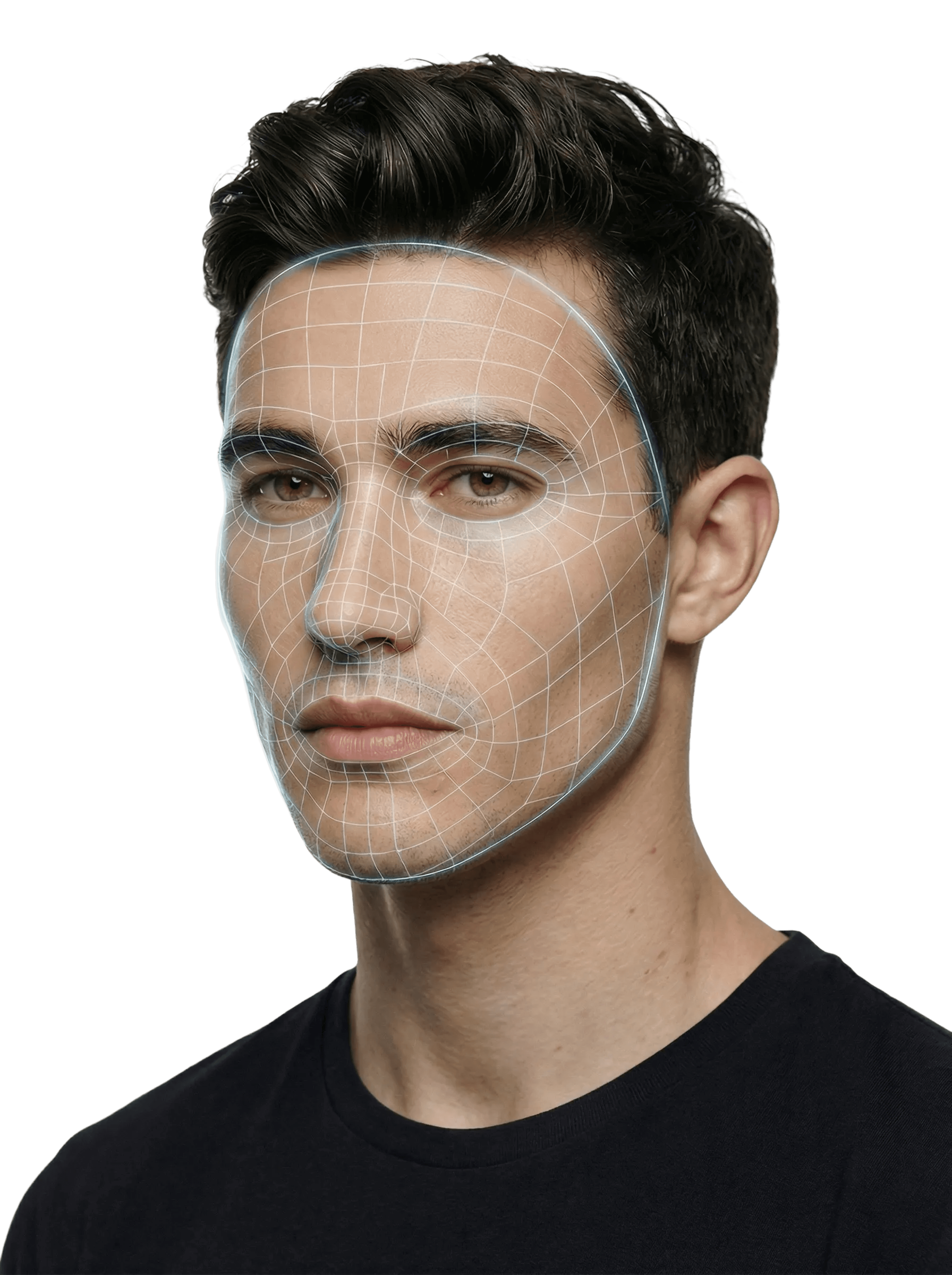
Most wrong results come from the photo, not from your eyes. Camera distance, head angle, filters and makeup change how open the eye looks and where the corners sit, so fix the photo before you trust a result, whether you read it yourself or use a scanning tool.
Holding the camera too close. In a 2018 model of the face, a photo from 12 inches made the nose look about 30% wider than one from 5 feet. That study did not test the eyes, but it shows why very close selfies are a poor basis for measuring any feature. Shoot from farther back and crop in afterward.
Tilting your head. A tilted head shifts the line between the corners and makes the tilt read as upturned or downturned. Keep both pupils on a level line.
Using filters or retouching. Beauty filters can change eye size and corner position. Use an unedited photo.
Leaving makeup and lashes on. Eyeliner wings, lash extensions and eyeshadow change the visible outline and the crease. Judge the corners themselves, or take the photo bare-eyed.
Wearing glasses, squinting or smiling. Frames hide the crease and the corners, and a squint or a wide smile narrows the opening. Keep a relaxed, neutral face.
Treating a scan as a verdict. An AI tool gives a model's estimate from one image, and a different photo can give a different result. Run two photos and compare.
If two photos give different answers at the same step, retake both before you decide.
What to Read Next for Your Result
Each label from the four checks has its own guide. Pick the one that matches your result to see what the feature looks like in detail and how it differs from similar ones.
Almond or round opening. The almond eyes guide shows how to tell the two apart.
Hooded upper lid. Hooded eyes explained: what the fold is and how to check for it.
Deep-set eyes. Deep-set eyes and how they differ from hooded.
Upturned, neutral or downturned tilt. How canthal tilt is measured in more detail.
Close-set, average or wide-set spacing. Eye spacing and the midface ratio covers how spacing fits into face proportions.
Makeup for Your Eye Shape
Makeup does not change your eye shape. It shifts where the eye looks longer, lifted or deeper, so the placement of eyeliner and shadow depends on your result. Pick the guide that matches it:
After a face scan, the Advice tab in your Maxxing report adds personalized care and makeup tips.
FAQ
Can I find my eye shape in a mirror, or do I need a photo?
A mirror works for a first check, but a photo is better. It removes head tilt and the small expressions you make without noticing, and it lets you compare both eyes side by side.
How accurate are AI eye shape detectors?
They give an estimate from one image, and the result depends on angle, light and expression. Eye shape names also have no single standard, so two tools can label the same eyes differently. Treat a result as a starting point and confirm it with the four steps above.
Does makeup change my eye shape result?
Makeup does not change your eye shape, but it changes what you see. Eyeliner wings, lashes and eyeshadow alter the visible outline and crease, so take the photo with bare eyes.
Which eye shape is the most attractive?
None is. Studies measure proportions rather than named shapes, and each result holds for one group of people. In one experiment with edited photos of Caucasian women's faces, faces looked most attractive when the gap between the eyes was about 46% of face width, close to the average of the faces tested (Pallett et al.).