


Almond Eyes: What They Look Like and How to Tell If You Have Them
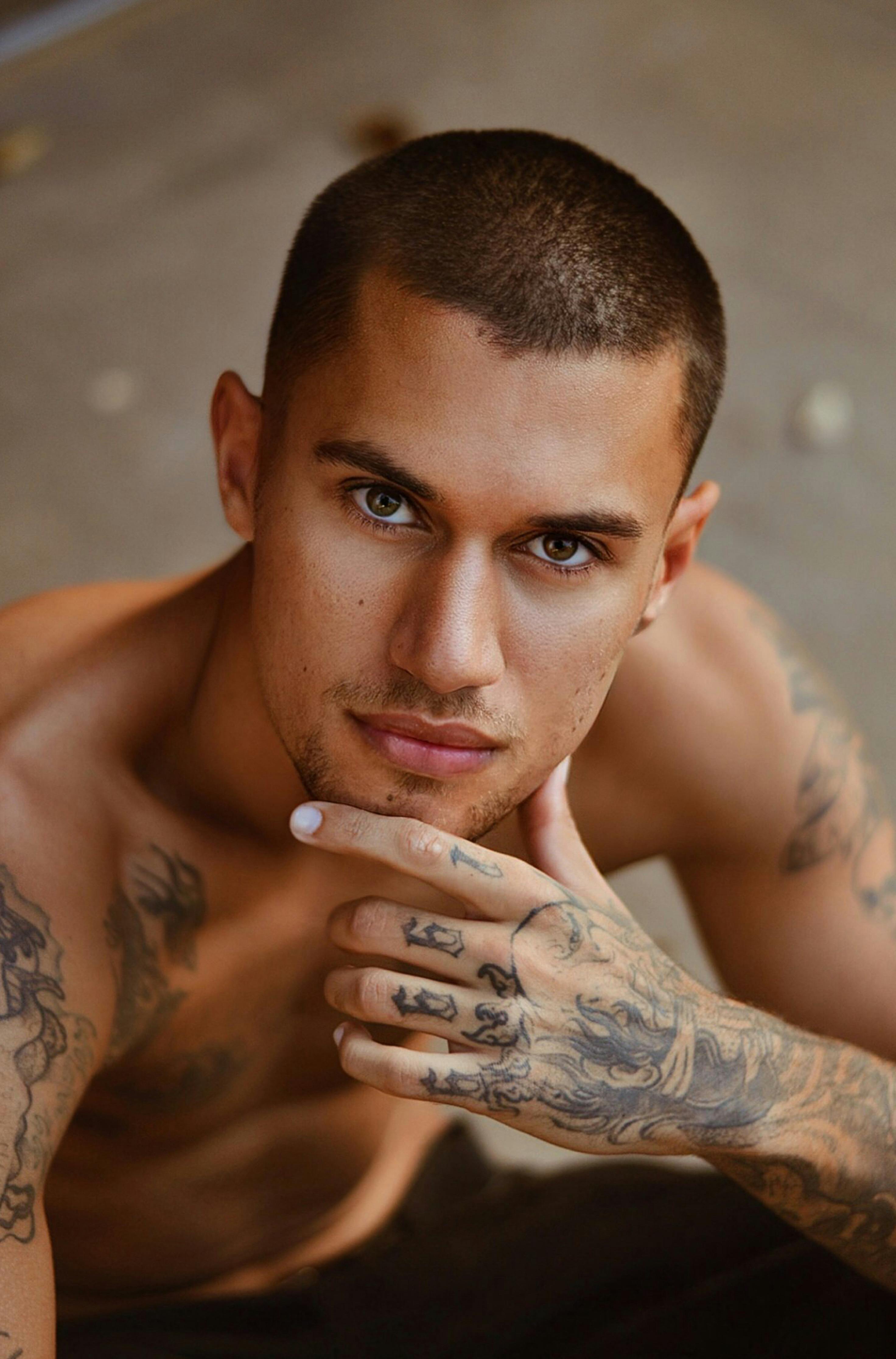
Almond eyes are longer than they are tall, with tapered corners and lids that slightly cover the iris at the top and bottom. If your iris touches both lids and no white shows above or below it, that's the classic almond look. It's a styling label, not a medical category.
In looksmaxxing circles, almond eyes usually come up next to canthal tilt and hunter eyes. But almond only describes the opening of the eye. It says nothing about tilt or how deep the eyes sit. This guide shows how to check yours, how almond differs from round, doe, and hooded eyes, and what the shape does and doesn't say about you.
Almond is one of the types in our eye shapes guide, and eyes are only one part of the face. An attractiveness test looks at the whole picture. If you want to style the shape, see our guide to almond eyes makeup.
What Are Almond Eyes?
Almond eyes are an eye shape where the opening is longer than it is tall, the inner and outer corners taper to soft points, and the lids slightly cover the iris at the top and bottom. The name comes from the outline, which looks like an almond lying on its side. It's a cosmetic label, not a clinical one.
What almond eyes look like in practice:
Outline: longer than tall, pointed at both corners
Iris: touches or is slightly covered by both lids, with little or no white above or below
Corners: often a slight lift at the outer corner, though it's not required
Lids: a visible crease is common, but hooded lids can still have an almond opening

There's no official cutoff. Doctors measure eye width, height, and corner angle instead of naming shapes, and guides disagree on where almond ends and round begins. If your eyes sit between the two, that's normal.
How to Tell If You Have Almond Eyes
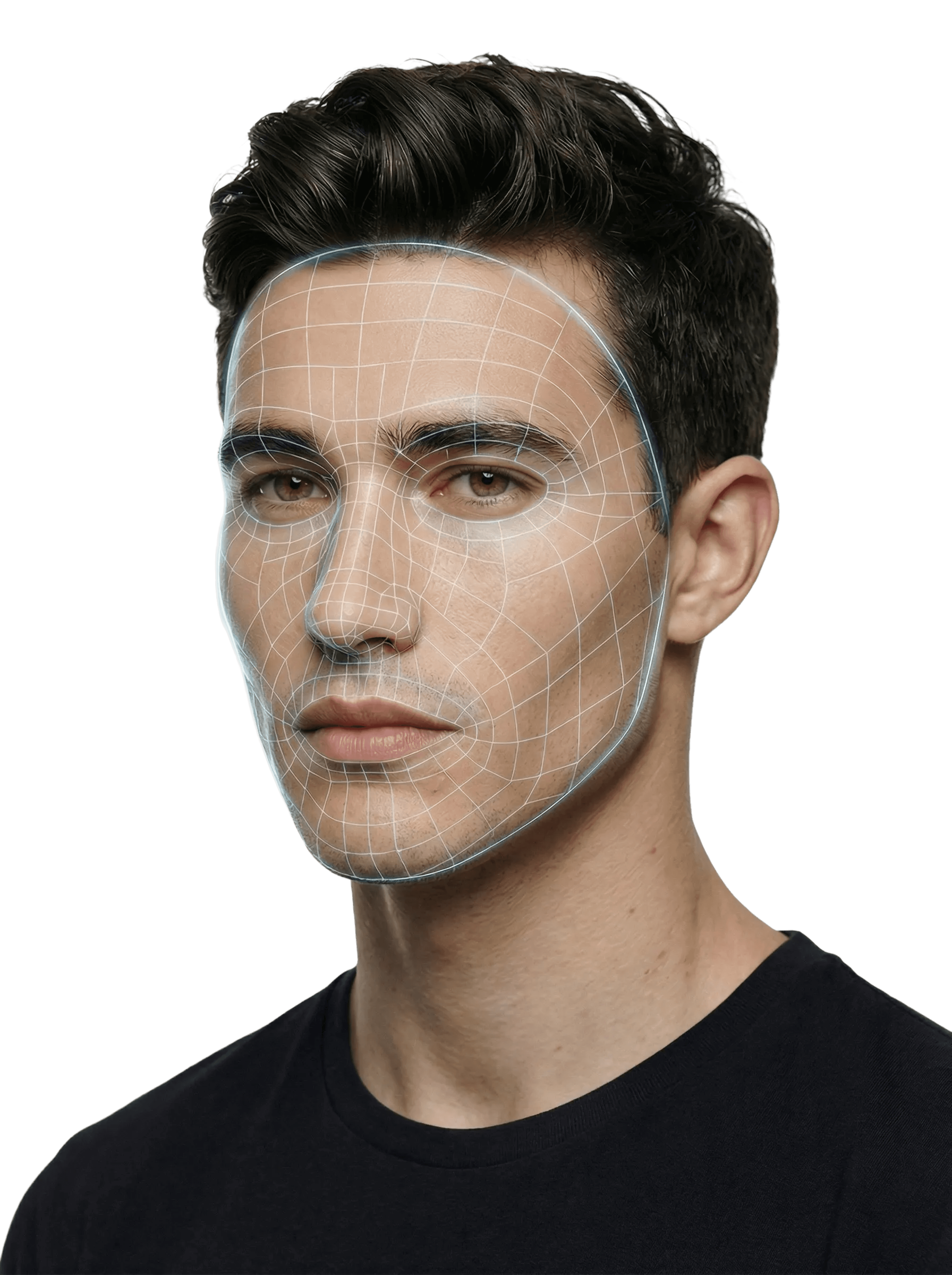
Use a photo, not a mirror. A mirror lets you tilt your head and change your expression without noticing.
Take the photo. Face the camera straight on at eye level, neutral face, even light, looking into the lens.
Zoom in on one eye and check the iris. If the lids touch or slightly cover it at the top and bottom, you lean almond. If a strip of white shows above or below it, you lean round.
Check the outline. Longer than tall with tapered corners is almond. A near-circular opening is round.
Look at the corners. A slightly higher outer corner is common on almond eyes, but it's a separate feature. It's called canthal tilt, and an almond eye can be upturned, level, or downturned.
Check each eye separately. Your two eyes are rarely identical. If one reads almond and the other rounder, that's not a mistake in your photo.

Quick comparison:
Almond | Round | Hooded | |
|---|---|---|---|
Opening | Longer than tall, tapered corners | Closer to circular | Any shape |
White around the iris | Little or none above and below | Often visible above or below | Varies |
Crease | Usually visible | Usually visible | Covered by a skin fold when eyes are open |

These traits overlap. Write your result as a combination, like "almond, slightly hooded." If you want every feature checked at once, a facial feature analysis goes through the whole face.
Almond Eyes vs Round, Doe, and Hooded Eyes
Most "almond vs" questions come down to one thing: is the difference in the opening, the lid, or the overall impression?
Almond Eyes vs Round Eyes
The difference between round vs almond eyes is how much of the eye is exposed.
Round eyes: a rounder opening, often with white visible above or below the iris. They tend to read as wider and more open.
Almond eyes: a more elongated opening, with the lids touching or covering the iris. They tend to read as narrower and more tapered.
The two sit on a spectrum, so many eyes land in between.
Doe Eyes vs Almond Eyes
"Doe eyes" is a beauty and styling term, not an anatomical one. It usually describes large, wide-looking, soft eyes, like a deer's. There's no clinical definition.
Almond describes the outline. Doe describes the impression: big, open, soft. Some almond eyes get called doe eyes when they're large and soft-looking.
Hooded Almond Eyes
Hooded describes the lid, and almond describes the opening, so one eye can be both. Hooded almond eyes have the elongated outline, but a fold of skin from below the brow covers part or all of the crease when the eyes are open.
If that sounds like you, our hooded eyes guide goes into the full breakdown.
Almond Eye Variations

Almond describes only the opening of the eye, so it combines with tilt, lid, and depth. Almond eyes can be upturned, level, or downturned, hooded or not, and deep-set or average. Here's how the common combinations look.
Upturned Almond Eyes
Upturned almond eyes have an almond opening and an outer corner that sits higher than the inner corner. In looksmaxxing terms, that's a positive canthal tilt. A slight upward slant is common, so a lift alone doesn't make an eye distinctive: in a 2024 study of 540 healthy people in China, the outer corner sat higher than the inner corner in every age group, by roughly 5 to 8 degrees on average. That's one population, not a universal norm.
Downturned Almond Eyes
Downturned almond eyes have the same opening, but the outer corner sits lower than the inner corner. That's a negative tilt, and it's a normal variation, not a flaw. What causes it and what does and doesn't change how it looks is covered in our negative canthal tilt guide.
Deep-Set Almond Eyes
Deep-set describes how far the eyeball sits back under the brow bone, not the outline. Almond and deep-set often go together: the outline is almond, but the upper lid area looks shadowed. Deep-set eyes are one of the features usually tied to hunter eyes, a term from the looksmaxxing community rather than a clinical one.
Thin, Big, and Round Almond Eyes
These are size descriptors, not separate shapes, and none has a cutoff:
Thin almond eyes: a narrow opening that's much wider than it is tall
Big almond eyes: a larger opening, or more of the eyeball showing
Round almond eyes: an almond outline with a rounder opening, so they sit between almond and round
If you land in between two shapes, that's the norm, not an exception.
Almond Eyes in Men
Almond eyes look the same on men and women: same outline, same check. The shape isn't masculine or feminine. What changes how eyes read on a male face is usually what sits around them: brow position, tilt, lid, and depth.
Brows: in a 3D study of young adults (101 of European descent, 46 Chinese), men's brows sat closer to the upper lid than women's in the European group, about 9.5 mm vs 10.9 mm. The difference wasn't significant in the Chinese group.
Tilt: differences between men and women are small and don't hold across age groups. In the 2024 study of 540 people in China, men and women had nearly the same tilt in their 20s.
Depth: the look people often call hunter eyes combines several traits: deep-set eyes, a low brow ridge, little visible upper lid, and a level or slightly upturned tilt. An almond opening can fit that look, but it doesn't create it.
Eye shape is one feature of many. AI face analysis looks at the whole face, so you can see how the eyes sit with everything else.
Almond Eyes and Ethnicity
Almond is a shape label, not an ethnic trait. People of every background have almond eyes, and the shape can't tell you where someone's family comes from. The narrower, lifted look people often link to Asian eyes comes from other features, not from the almond outline.
Which Race Has Almond Eyes?
None in particular. Almond is a styling category based on the outline, and it shows up in every population. There's no reliable data on how common it is in any group, because the label has no standard definition.
Why Do Asians Have Almond Eyes?
The question assumes something that isn't true: many people of Asian descent have almond eyes, many don't, and many people of other backgrounds do. What people usually mean is the epicanthal fold, a skin fold of the upper eyelid that covers the inner corner of the eye. MedlinePlus describes it as normal for people of Asian descent, and it also appears in young children of any race before the bridge of the nose rises.
The fold, the eyelid crease, and the almond outline are three separate things. One person can have any combination of them, so "Asian almond eyes" doesn't describe one look.
Do Eyes Differ Between Groups?
On average, yes, but the features overlap. A 3D study of 101 young adults of European descent and 46 Chinese adults found differences in group averages, like eye height and corner angle. And in a 2017 study of 68 people, the eyelid features of Latino participants spanned the range between non-Latino white and East Asian participants, with about half having an epicanthal fold.
The takeaway: group averages exist, individuals vary widely, and eye shape alone is a poor guide to anyone's ancestry.
Are Almond Eyes Attractive or Rare?
No eye shape is the most attractive, and almond isn't proven to be rare or common. It tops many "best eye shape" lists, but those lists are styling opinion, not a research ranking.
What studies do link to how eyes are rated is measurements. In a study where 134 people rated photos of 162 young adults, the ratings were associated with the eye's height-to-width ratio, the spacing between the eyes, crease height, and the angle at the outer corner, not with a named shape like almond. It's one group in China, so it shows a pattern, not a rule.
As for rare vs common: nobody has a reliable count, because the names aren't standardized. Lists that give percentages rarely cite a study.
FAQ
What does it mean to have almond eyes?
It means your eye opening is longer than it is tall, with tapered corners, and your lids slightly cover the iris at the top and bottom. It's a styling label, not a medical diagnosis.
Are almond eyes attractive?
No eye shape is the most attractive. Studies link how eyes are rated to measurements like height-to-width ratio and spacing, not to a named shape.
Are almond eyes rare?
There's no reliable data. The shape names aren't standardized, so nobody can count how many people have almond eyes.
What race has almond eyes?
None in particular. Almond eyes occur in every population, and eye shape alone can't tell you someone's ancestry.
Can almond eyes be hooded?
Yes. Almond describes the outline of the opening, and hooded describes a skin fold over the crease, so one eye can be both.
What's the difference between almond eyes and doe eyes?
Almond describes the outline. Doe is a styling term for large, soft-looking eyes, and some almond eyes get called doe eyes.
Can you get almond eyes?
Habits don’t change the structure behind eye shape: lid anatomy, spacing, and tilt stay put. What you can change is how the eyes read: eyeliner, winged liner and eyeshadow for almond eyes is covered in a separate guide. For what is and isn't realistic with tilt, see can you change your canthal tilt. If you're considering any procedure, talk to a board-certified plastic or oculofacial surgeon.