
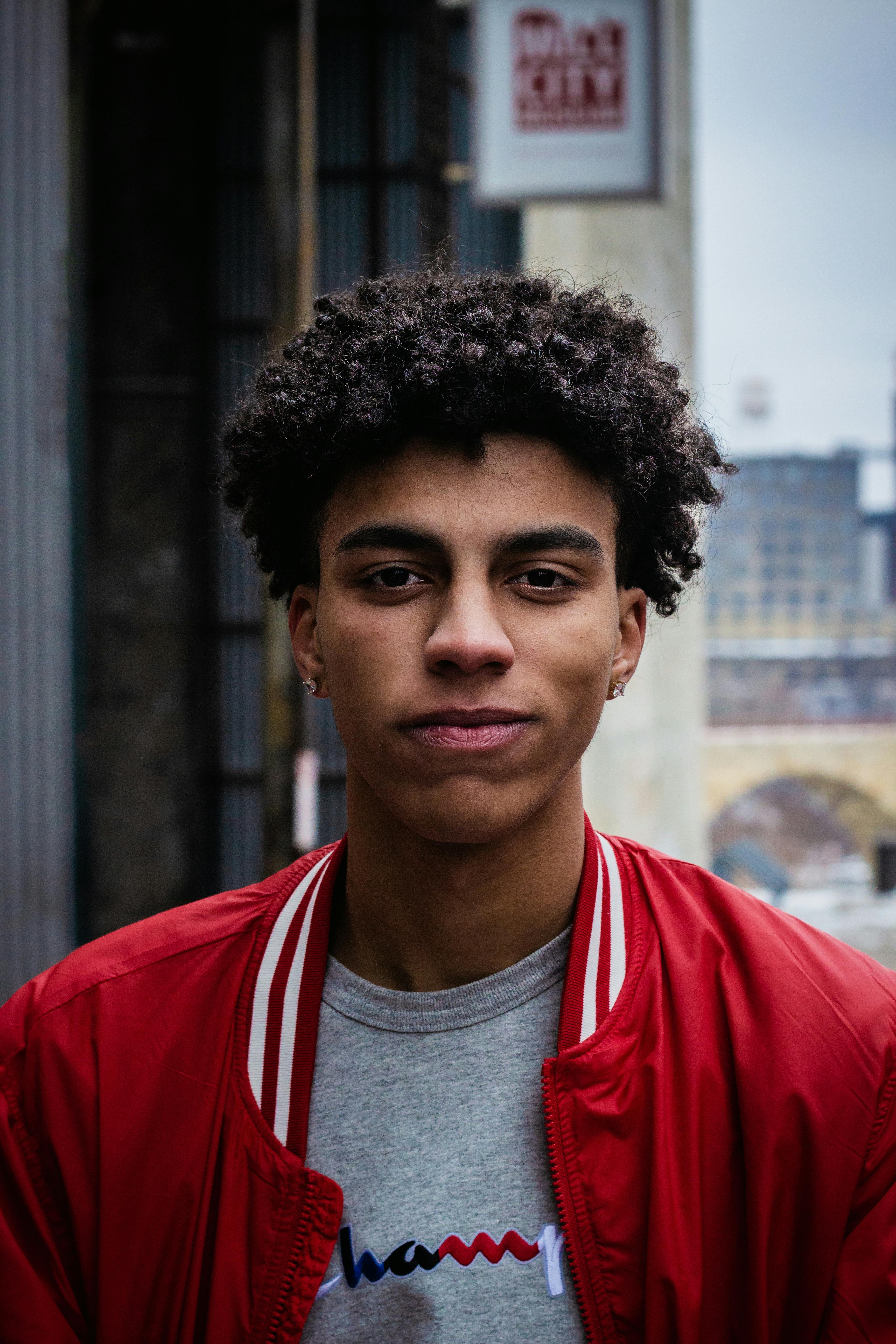

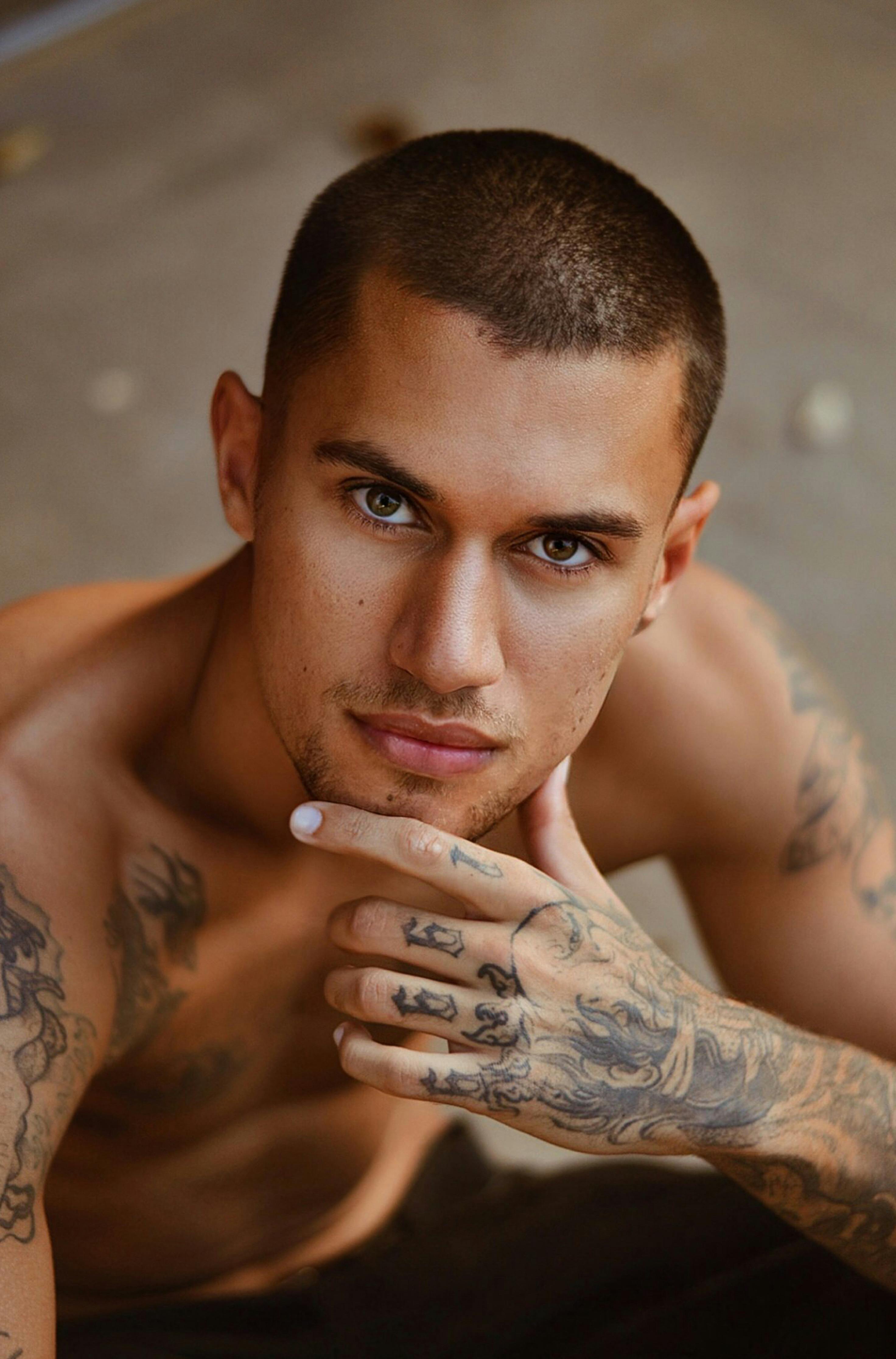
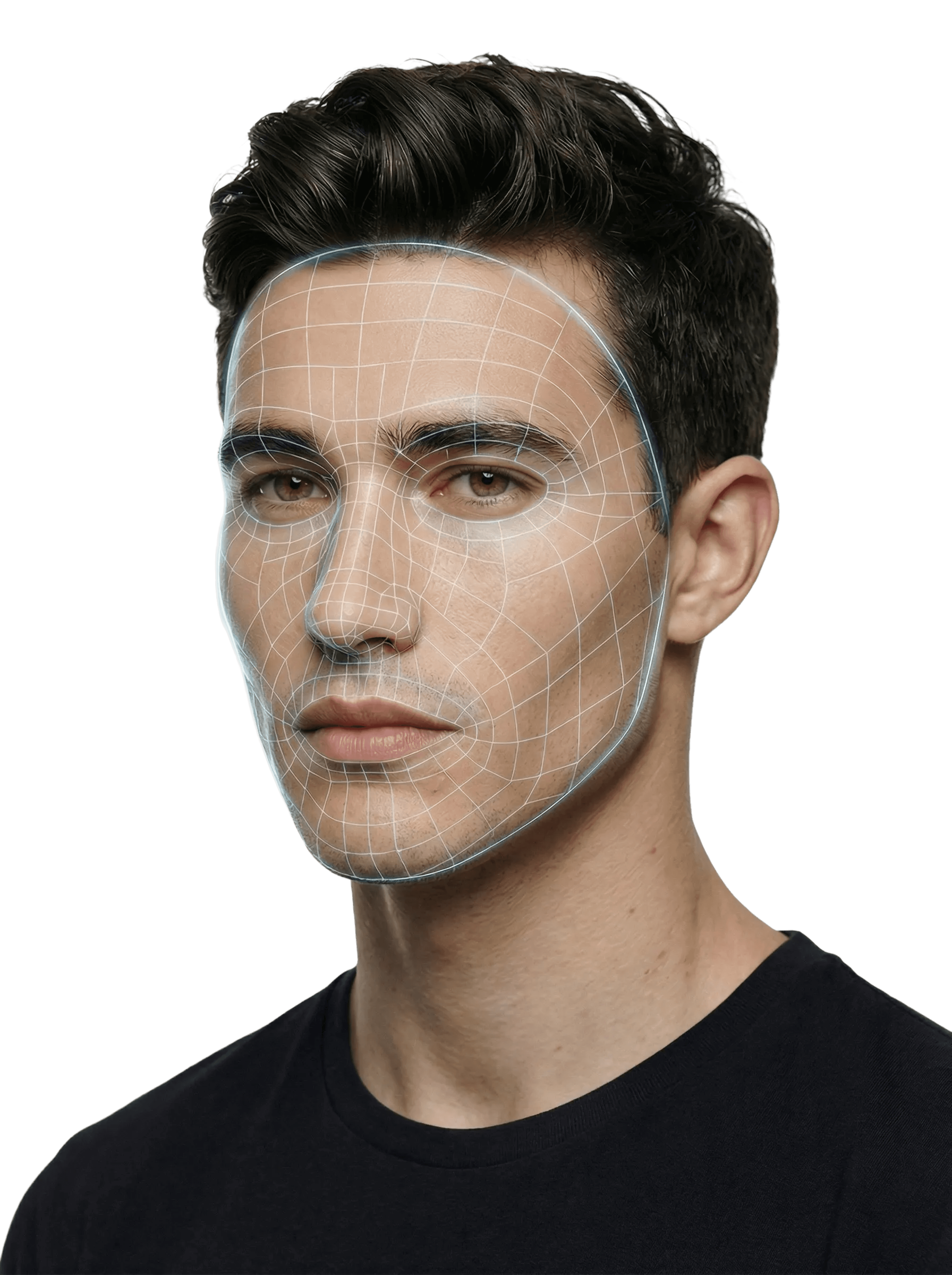
Hunter Eyes: What They Are and How to Tell If You Have Them
Hunter eyes is a looksmaxxing term for a set of eye-area traits: deep-set eyes, a low and prominent brow ridge, little visible upper eyelid, and a level or slightly upturned outer corner. Together they create a narrow, focused gaze that most people read as intense — and while the term is mostly used about men, women can have it too.
Most of the look comes from bone structure, so hunter eyes are one part of how your face reads, not a verdict on it. To see how your eye area fits with the rest of your features, start with our facial feature analyzer guide. For an overall read on your face, try an attractiveness test.
What Are Hunter Eyes?
Hunter eyes are eyes that sit deep under a low brow, show little or no upper eyelid, and have a level or slightly upturned outer corner. The term comes from looksmaxxing forums and describes a combination of traits, not one eye shape — so most people land somewhere on a spectrum instead of simply having them or not.
In practice, when someone says "he has hunter eyes," they usually mean:
The eyes look set back — shadowed by the brow rather than sitting flush with the face
The upper lid barely shows — the skin under the brow covers most of it
The eye looks long and narrow — more horizontal than round
The outer corner doesn't droop — it sits level with or a little above the inner corner
The opposite end of the spectrum is called "prey eyes": rounder, more open eyes with a visible upper lid, more white showing, and often a downturned outer corner.
Where the Name Comes From
The name borrows from animal biology. Predators tend to have forward-facing eyes with a wide overlap between the two visual fields, which helps with depth perception, while many prey animals have side-facing eyes that give them a wider, more panoramic view (Casares-Hidalgo et al., 2019).
In humans, the analogy is only skin-deep. Every person has forward-facing eyes, so "hunter" and "prey" don't describe how you see — they describe how your eye area looks to other people.
The term itself took shape on early looksmaxxing forums in the mid-2010s: an archived 2015 post already described hunter eyes as narrow eyes under a big brow ridge. By 2018, the "hunter vs prey eyes" comparison had become a meme, and from there it spread to TikTok, Instagram, and YouTube (GQ, 2026).
Is "Hunter Eyes" a Compliment?
Usually, yes. In looksmaxxing spaces and on TikTok, telling someone they have hunter eyes means their eye area looks striking and confident. Outside those spaces, plenty of people won't know the term, and a very intense gaze can also come across as serious or stern — so how it lands depends on who's saying it.
What Do Hunter Eyes Look Like? The 5 Traits
Hunter eyes come from five traits working together: deep-set eyes, a low and prominent brow ridge, little visible upper eyelid, a level or slightly upturned outer corner, and a long, narrow eye opening. One or two of them alone don't create the look — it's the combination that reads as "hunter."

Trait | What it looks like | What creates it | Can it change? |
|---|---|---|---|
Deep-set eyes | The eyeball sits back in the socket, shadowed by the brow | The depth of the eye socket and the tissue around the eye | Mostly fixed |
Low, prominent brow ridge | The brow bone projects forward and the brows sit close to the eyes | The bone above the eye socket, plus where your brows sit | Bone: fixed in adults. Brow shape: grooming helps |
Little visible upper eyelid | Little or no lid shows between the lashes and the crease | Brow position, eyelid skin and fat, crease height | Partly — puffiness and tiredness make it look heavier or lighter |
Level or slightly upturned outer corner | The outer corner sits level with or a bit above the inner corner (a neutral to positive canthal tilt) | Where the eyelid tendons attach to bone | Not without surgery |
Long, narrow eye opening | The eye is wide horizontally and short vertically, with no white showing under the iris | Eyelid shape and tension | Mostly fixed |
A few of these traits are coded as masculine for a reason. The brow ridge is one of the most sex-typed parts of the skull — anthropologists use the brow ridges and the area between the eyebrows as key markers when estimating sex from a skull, because they tend to be more pronounced in men (Del Bove et al., 2020). That's why the look is mostly discussed in male faces, but nothing about it is exclusive to men.
Canthal tilt is the trait people measure most often, because it's the only one you can read as a number from a photo. The other four are judged by eye.
What Hunter Eyes Are Not
Not an eye color. "Blue hunter eyes" is a popular search, but color has nothing to do with the label — any eye color can sit in a hunter-type eye area.
Not a squint. Narrowing your eyes on purpose copies the look for a photo, but the traits above describe your relaxed face.
Not the same as "normal" vs "abnormal." Most people fall in the middle: some upper lid shows, the outer corner is roughly level. That's average, not "prey eyes."
Not permanent at every moment. In a sleep-deprivation study, people photographed after 31 hours awake were rated as having more hanging eyelids and more swollen eyes than after a normal night (Sundelin et al., 2013). How tired you are changes how your eye area reads from day to day.
Do I Have Hunter Eyes? How to Check in a Photo
To tell if you have hunter eyes, take a straight-on photo with a relaxed face and check five things: how much upper eyelid shows, the angle of your outer corner, how close your brow sits to your eye, how long and narrow the eye looks, and how deep it sits in profile. The more of them match, the closer you are to the hunter end.
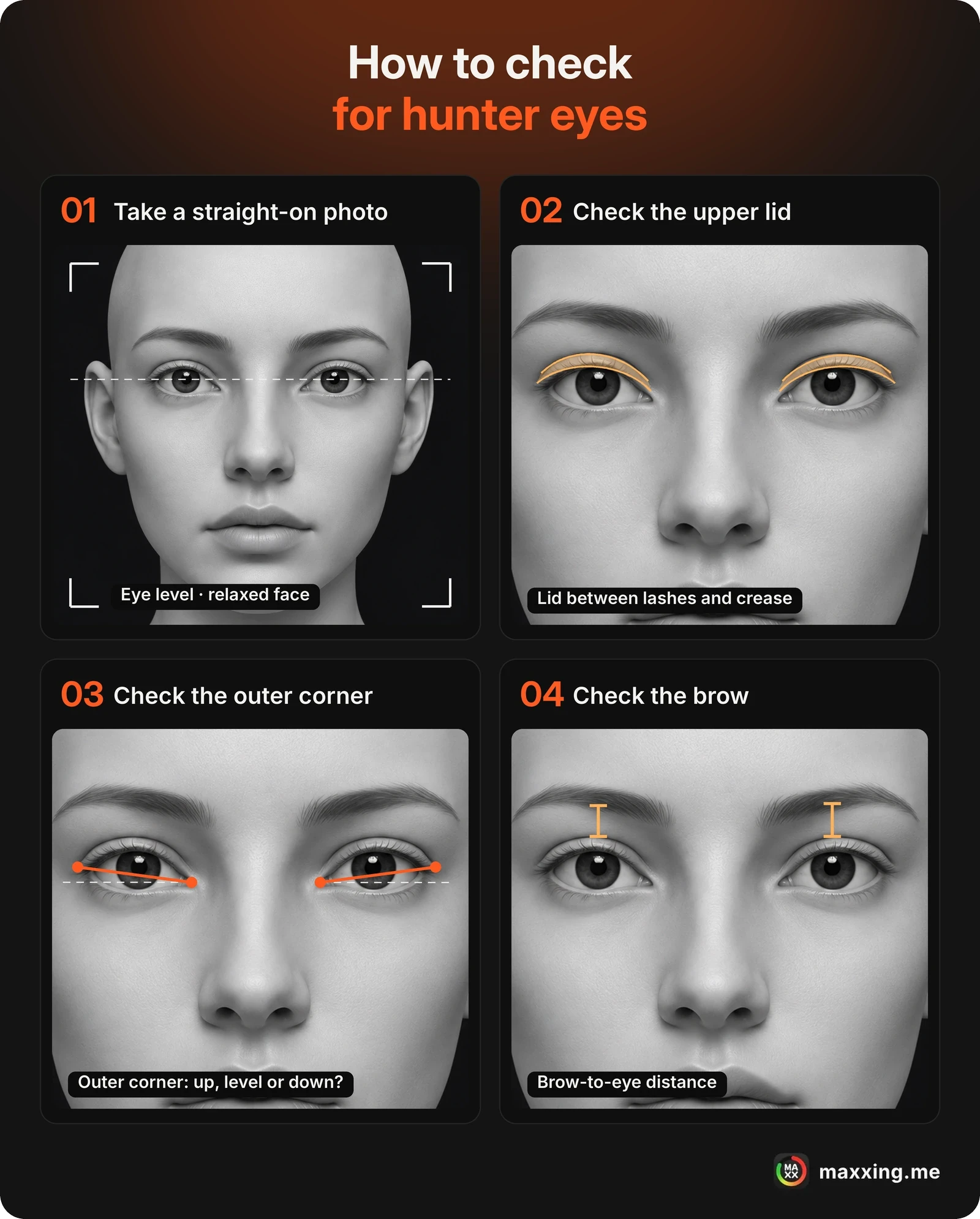
Take the right photo. Hold the phone at eye level, look straight into the lens, and keep your face relaxed — no squinting, no raised brows. Use even light from the front and take glasses off. Head tilt changes how the lid and brow look, which is why eyelid researchers control it when they photograph eyes (Northwestern University study).
Check your upper eyelid. Look at the space between your lashes and your crease. Little or no visible lid points to the hunter end; a wide, clearly visible lid points to the open end.
Check your outer corner. Draw an imaginary line from the inner corner to the outer corner of each eye. If the outer corner sits level or a bit higher, that's a neutral or positive canthal tilt. If it sits lower, the tilt is negative.
Check your brow. Does the brow sit low and close to the eye, and does the brow bone cast a slight shadow? A high, arched brow with a lot of space above the lid reads more open.
Check the shape. Is the eye long and narrow, or round? Is any white visible below the iris when you look straight ahead? Hunter eyes are horizontal, with no white showing underneath.
Check depth from the side. Take a side photo. If the eye sits clearly behind the brow ridge rather than level with it, your eyes are deep-set.
How to Read Your Results
4–5 matches: you're at the hunter end of the spectrum.
2–3 matches: you're in the middle, where most people land.
0–1 matches: your eye area reads open and soft, closer to what forums call "prey eyes."
You'll see exact cutoffs online, like a set number of degrees for canthal tilt. Those come from apps and forums, not from clinical standards, so treat them as rough guides rather than a pass/fail line.
Check Your Face With AI
A mirror shows you traits one at a time; it doesn't show how your eye area works with the rest of your face. The Maxxing scan takes a front and a side selfie and gives you an overall attractiveness score with a breakdown of your features, so you can see where your strengths are. Learn more about how AI face analysis works.
Are Hunter Eyes Attractive? What Research Says
Research supports parts of the hunter eyes idea, not the whole package. No study has tested "hunter eyes" as a label — it's a forum term, not a scientific category. But studies on individual eye traits suggest that a long eye with a slight upward tilt reads as attractive, while pushing any of these traits to an extreme backfires.
Here's what the studies actually found:
A slight upward tilt shows up in attractive faces. When researchers compared attractive Italian men and women with a reference group, the attractive group had longer eye openings, eyes set closer together, and a greater upward inclination of the eye (Sforza et al., 2015).
The famous "93%" study is about something else. It's often quoted as proof that canthal tilt drives attractiveness. In fact, it tested the angle at the inner corner of the eye, only in female faces: edited faces were preferred over unedited ones 93% of the time (Bashour & Geist, 2007). It says nothing about men or about the outer corner.
More lift isn't better. In a study with 2,081 participants, digitally raising the outer corner of the eye lowered ratings of attractiveness and trustworthiness and raised ratings of dominance and threat (Kempa et al., 2025). A separate eye-tracking study from the same group found that an exaggerated lift of the outer corner sharply reduced attractiveness in both male and female faces (Kempa et al., 2025).
The takeaway: a level or gently upturned corner is a plus, but the extreme, heavily slanted look you see in edited TikTok photos tends to read as harsh rather than attractive.
Hunter Eyes in Men
In men, hunter eyes are usually read as masculine and confident, mostly because of the brow. Brow traits carry a lot of weight in how men's faces are judged: in a study of 922 participants, eyebrow thickness and jaw prominence mattered more for perceived attractiveness and masculinity than cheekbones or eye size (Frontiers in Psychology, 2018). When people were asked to place eyebrows in their ideal position, men chose a lower brow with a lower tail and a softer arch than women did (Desired position of the adult eyebrow, 2010).
Do girls like guys with hunter eyes? There's no study that asked this directly. What the research does show is that a low, full brow and a level eye read as masculine — but strong eye-area traits alone don't make a face attractive. They work alongside the jaw, skin, and overall proportions.
Hunter Eyes in Women
Yes, women can have hunter eyes — the anatomy is the same. The difference is in how the traits are read. In the 2,081-person study above, female raters saw a raised brow and a raised outer corner as making a face look less feminine, while male raters didn't (Kempa et al., 2025). At the same time, a gentle upward tilt at the outer corner was one of the strongest cues of femininity in a 763-person survey on eyelid features (Jabbour et al.).
In practice, women with hunter eyes are often described as having a "fox eye" or "cat eye" look: intense and striking, with the upturned corner doing most of the work.
Hunter Eyes vs Prey Eyes
Prey eyes are the opposite end of the same spectrum: rounder, more open eyes with a clearly visible upper lid, a higher brow, and often a downturned outer corner. Most people sit somewhere between the two.

Trait | Hunter eyes | Prey eyes |
|---|---|---|
Depth | Deep-set, shadowed by the brow | Flush with the face or slightly prominent |
Upper eyelid | Little or none visible | Clearly visible |
Outer corner | Level or slightly upturned | Level or downturned |
Brow | Low, close to the eye | Higher, more space above the lid |
Shape | Long and narrow | Rounder |
White below the iris | None | Sometimes visible |
Which is more attractive, hunter eyes or prey eyes? Neither end wins on its own. The research above links attractiveness to specific traits in moderation — a long eye, a gently upturned corner — not to one category.
Hunter Eyes vs Almond Eyes vs Hooded Eyes
Almond and hooded are eye shapes; hunter eyes are a combination of traits that can include both. An almond eye describes the outline of the eye opening. A hooded eye describes a fold of skin above it. Hunter eyes add depth, a low brow, and the angle of the outer corner on top of that.

Hunter eyes | Almond eyes | Hooded eyes | |
|---|---|---|---|
What it describes | A set of eye-area traits | The shape of the eye opening | A skin fold over the eyelid |
Key feature | Deep-set eye, low brow, little visible lid, level or upturned corner | Longer than tall, tapering at both ends | Skin under the brow covers part or all of the lid crease |
Visible upper lid | Little or none | Usually some | Little or none |
Outer corner | Level or slightly upturned | Usually level or slightly upturned | Any — up, level, or down |
Can you have it with the others? | Often overlaps with both | Yes | Yes |
Are almond eyes the same as hunter eyes? No, but most hunter eyes are almond-shaped. Think of "almond hunter eyes" as an almond eye that also sits deep under a low brow with little lid showing. An almond eye with a visible lid and a high brow isn't a hunter eye.
Are hunter eyes just hooded eyes? No. Hooding hides the upper lid, which is one of the five traits, but it can come with any canthal tilt and any eye depth. Hooded eyes with a downturned outer corner usually read as tired or heavy rather than intense — the opposite of the hunter look.
Are Hunter Eyes Genetic? Can You Get Them?
Hunter eyes are mostly genetic: eye depth, the brow ridge, and canthal tilt are set by bone and by where the eyelid tendons attach. Facial shape is under strong genetic control — identical twins look nearly alike for a reason (Tsagkrasoulis et al., 2017). What you can change is the soft-tissue side: how heavy or rested the eye area looks, and how your brows frame it.
If you're still a teen, your face isn't finished yet. Facial soft tissue keeps changing between the ages of 12 and 17 (twin study of facial growth), so how your eyes look now isn't how they'll look at 20.
What Can Actually Change
Sleep and puffiness. After a night without sleep, people are rated as having more hanging eyelids and more swollen eyes (Sundelin et al., 2013). A rested eye area shows less heaviness and a cleaner lid line.
Brow grooming. Cleaning up stray hairs and keeping the brows full and fairly straight makes them read lower and stronger without changing any bone.
Makeup. Liner and shadow can visually lengthen the eye and lift the outer corner — see the steps below.
What Doesn't Work — or Isn't Safe
Mewing. No study has tested whether tongue posture changes the eye area. Claims that mewing gives you hunter eyes come from before-and-after photos, not research.
Eye pulling and squint "exercises." There's no evidence that tugging on the outer corner or training yourself to squint moves the canthal tendons or bone. Repeated pressing and rubbing around the eyes isn't harmless either: the American Academy of Ophthalmology names eye rubbing as a risk factor for keratoconus, a condition where the cornea thins and changes shape (AAO).
Taping or stretching the lids. Same problem: the result disappears when you stop, and you're putting repeated strain on delicate tissue for nothing.
DIY procedures. Some forum users have posted videos of cutting the skin at the corner of their own eye or inserting threads under the skin at home to change their eye shape (GQ, 2026). Don't. The eyelids protect the eye and keep it moist — even in professional eyelid surgery, problems like dry eye are common, and at home there's no sterile setup, no anesthesia, and no one to fix a mistake.
What About Surgery?
The procedures marketed for a "hunter eye" look include lateral canthoplasty or canthopexy (repositioning the outer corner of the eye), upper eyelid surgery, and brow bone or orbital rim implants. These are real operations on the eyelid and orbit, not cosmetic tweaks. Published complications of cosmetic lateral canthoplasty include scarring, a misaligned outer corner, an everted lower lid, and exposed conjunctiva — the pink inner lining of the eyelid (Zhang et al., 2020; a 2016 study of 236 patients).
Dry eye is one of the most common side effects. In a review of 892 eyelid surgery patients, 26.5% reported dry eye symptoms afterward — most cases were temporary, but the risk may go up when the outer corner is also tightened or repositioned (Zhang et al., 2020).
Remember the research above: an exaggerated lift of the outer corner made faces look less attractive, not more. Anyone considering eye-area surgery should talk to a board-certified oculoplastic surgeon, who specializes in the eyelids and orbit, and go in with realistic expectations.
Makeup for Hunter Eyes
Makeup for hunter eyes works by stretching the eye horizontally, adding shadow under the brow, and keeping the outer corner lifted rather than round. Here's how to fake the look:

Set the brows first. Fill them in fairly straight and full, with a soft arch at most. A high, sharp arch opens up the eye area — the opposite of what you want.
Add depth to the crease. Sweep a matte taupe or medium-brown shadow into the crease and the outer corner in a sideways V. This creates the shadow a deep-set eye would naturally have.
Line the upper lash line. Keep the line thin near the inner corner and thicker toward the outer corner. Tightlining — pressing liner into the upper lash roots — makes the lid look smaller.
Draw a flat, elongated wing. Extend the line horizontally or slightly upward, not into a sharp cat-eye flick. Smudge the edge so it reads as shadow, not graphic liner.
Smudge only the outer third of the lower lash line. Use the same brown shadow. Skip white or nude liner on the lower waterline — it makes the eye look rounder and more open.
Focus mascara on the outer lashes. Concentrate it on the outer half of the upper lashes to pull the eye outward. Go light on the lower lashes.
Skip shimmer in the middle of the lid. Shine on the center of the lid makes it look rounder. If you want highlight, keep a touch under the tail of the brow.
For guys who don't wear makeup: brushed-up, tinted, or gelled brows, a little concealer for dark circles and puffiness, and enough sleep get you most of the effect with nothing visible.
FAQ
How rare are hunter eyes?
There's no data on it — no study has counted how many people have all five traits. Because hunter eyes are a spectrum, most people have one or two of the traits, and having all five at full strength is much less common.
Can Asians have hunter eyes?
Yes. Eye depth, brow position, eyelid exposure, and canthal tilt vary from person to person in every population. A monolid or a low crease means little visible upper lid, which matches one of the five traits — but on its own that doesn't make an eye a hunter eye. The forum checklist was built with a handful of male models as the reference, so it fits some faces more awkwardly than others.
Which celebrities have hunter eyes?
You'll find long lists online, but they're unreliable. Whether a face looks "hunter" in a photo depends on the camera angle, lighting, expression, and retouching — the same person can look hunter-eyed in one shot and open-eyed in the next. Checking the five traits on your own face tells you more than comparing yourself to a celebrity photo.
Do hunter eyes change with age?
Some of the traits do. A review of studies on eyebrow position found that the inner part of the brow tends to sit higher in people over 50, while the brow above the outer corner of the eye stays stable (review of eyebrow aging studies, 2019). And if you're a teenager, your face is still developing, so your eye area may look different in a few years.
Can AI tell if I have hunter eyes?
AI can measure angles and proportions from a photo faster than you can by eye, but its results are estimates from a model, not an objective verdict — and "hunter eyes" isn't a clinical category to begin with. The Maxxing scan doesn't label your eyes as hunter or prey. It gives you an overall attractiveness score and a breakdown of your features, so you can see how your eye area fits with the rest of your face. Try it with our face analysis.
Sources
Casares-Hidalgo et al. (2019): Taking a look into the orbit of mammalian carnivorans
GQ: Why Men Are Risking Their Vision for 'Hunter Eyes' (2026)
Del Bove et al. (2020): Sexual dimorphism in the modern human frontal bone
Sundelin et al. (2013): Cues of fatigue — effects of sleep deprivation on facial appearance
Effect of sagittal head tilt on periorbital appearance (PMC8830303)
Sforza et al. (2015): Soft-tissue orbital morphometry in attractive and normal Italian subjects
Bashour & Geist (2007): Is medial canthal tilt a powerful cue for facial attractiveness?
Kempa et al. (2025): Eyebrow and lateral canthal height and perception of character traits
Kempa et al. (2025): Facial regional changes after excessive aesthetic treatments
Frontiers in Psychology (2018): Facial traits and perceived attractiveness and masculinity
Desired position, shape, and dynamic range of the normal adult eyebrow (2010)
Jabbour et al.: Eyelid morphology and periocular features in perceived femininity
Tsagkrasoulis et al. (2017): Heritability maps of human face morphology
Twin study of facial soft tissue growth at ages 12 and 17 (PMC10286752)
American Academy of Ophthalmology: Can excessive eye rubbing cause keratoconus?
Zhang et al. (2020): Conjunctival sac fistula after cosmetic lateral canthoplasty
Zhang et al. (2020): Cosmetic blepharoplasty and dry eye disease — a review
Eyebrow height changes with aging: systematic review (2019, PMC6908395)