

Am I Ugly? Take the Test and Understand Your Result
An "am I ugly" test can't tell you whether you're ugly. It shows how an AI model scores the features in your photo — proportions, symmetry, skin, jawline — and that score is the model's estimate, not a fact about your face.
Many people who search this are comparing a feeling to a number. That's a fair thing to do, as long as you know what the number is and what it leaves out. For a broader read on how scores like this work, see the attractiveness test guide.
Am I Ugly Test: How to Take It
The Maxxing am I ugly test is a photo test with three steps: enter your gender and age, upload two selfies (front and side), and read your report. You get an attractiveness score out of 100 and separate scores for features like skin, jawline and symmetry — an AI model's estimate, not a verdict.
If you're feeling low about your looks right now, skip the test for today and read "If the Thought Keeps Coming Back" below first.
Enter your gender and age. The test asks for both before the scan.
Upload a front selfie and a side selfie. The face scan uses both.
Read your report. It shows an overall attractiveness score out of 100, plus scores for face symmetry, skin, jawline, cheekbones, nose, lips, hair and chin, each with a short explanation.
The photos decide most of what you get, so take them carefully:
Look straight at the camera with a neutral face.
Use even, natural light. Avoid overhead light and light from one side.
Hold the phone at eye level and shoot from a few feet away if you can, using a timer or a friend. Close-up selfies distort the face (more on that below).
Skip filters and beauty mode.
Pull your hair back so your forehead and jawline are visible.

One result isn't final. If you want to compare, retake the photos in different light and see how much the score moves.
What an Am I Ugly AI Test Measures (and What It Doesn't)
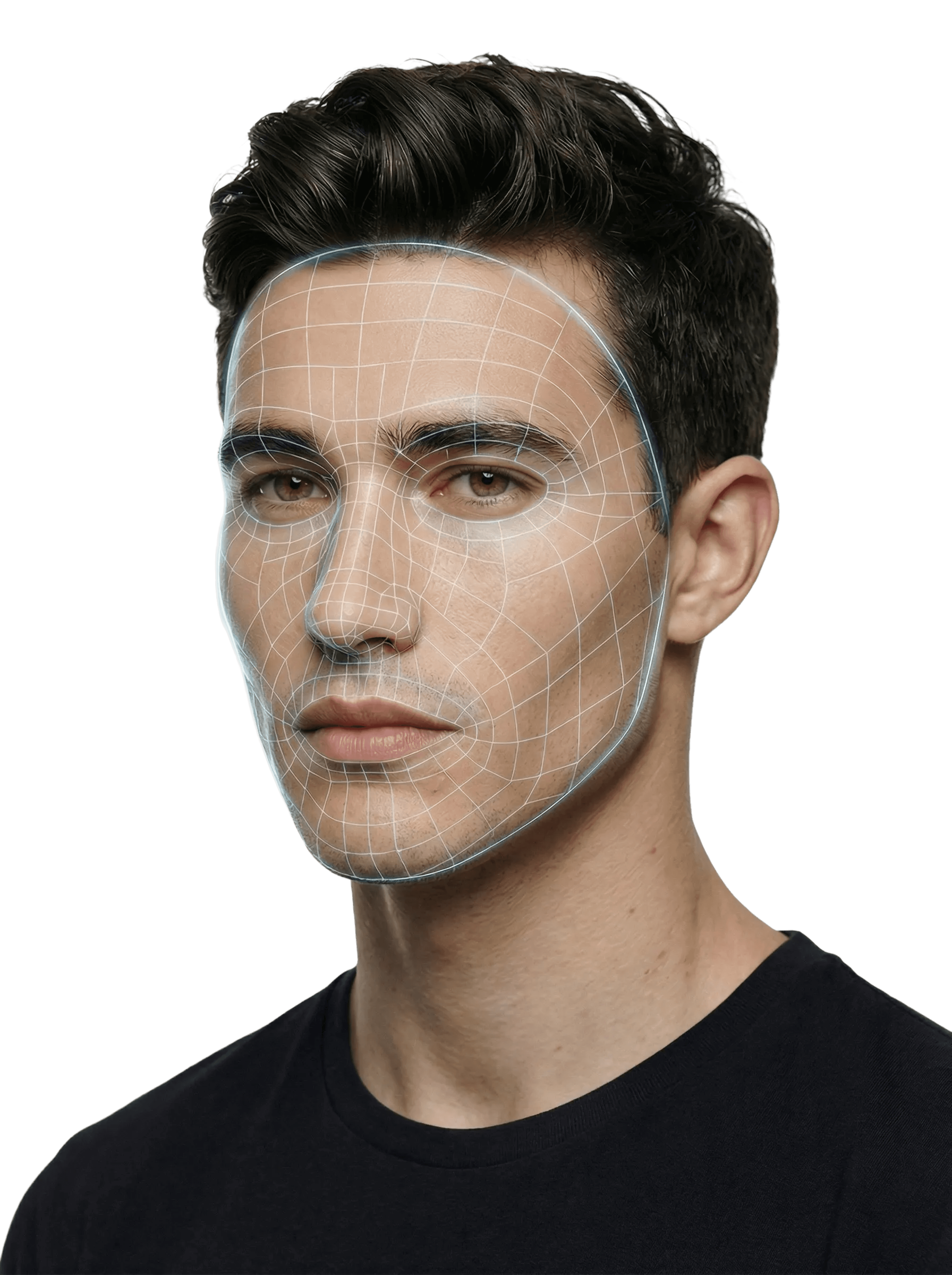
An am I ugly AI test is a face-analysis model. It measures features in your photo, such as symmetry, proportions and skin, and turns them into a score. It doesn't measure personality, charm or how you look in person, and the score is an estimate for that one photo, not a fact about you.
What the scan looks at in the photo:
Face symmetry
Jawline and chin
Cheekbones
Nose and lips
Skin
Hair
What it can't see:
How you move, talk and smile in person
Your style, voice and personality
How the people who know you see you
What different people find attractive, since tastes vary by person and culture
How much a filter or beauty mode changed the photo
Anything the photo hides, from bad light to a stretched angle
That last point matters most. The same face can score differently in two photos, so a result tells you about the photo as much as about you. If you want to see how scores like this are built, the attractiveness scores breakdown goes through it.
How to Tell If You're Actually Ugly or Just Judging Yourself Harshly
No test or quiz can confirm that you're ugly. If you want to check whether your view of yourself is harsher than what others see, a few questions help: do you mostly criticize close-up photos, do you fixate on one feature nobody mentions, and does your opinion swing with your mood?
Check yourself against these:
Your verdict changes by source. You look fine in photos others take but bad in your own selfies.
You zoom in on one feature. It's the only thing you see, and other people never bring it up.
Your opinion follows your mood. Bad day, bad face; good day, no problem.
You compare yourself to edited photos. Filtered or retouched images of other people set a standard no real face meets.
You judge close-ups. Selfies taken from a short distance change how features look (see the next section).
If most of these fit, how you're looking may matter more than what you're looking at. If it keeps happening, see "If the Thought Keeps Coming Back" below. For more on how self-perception differs from how others see you, read about self-perception and appearance.
Why You Look Different in Photos and in the Mirror
A selfie taken at about 12 inches (30 cm) makes the nose look roughly 30% larger in men and 29% in women than a photo taken from further away, according to a 2018 study in JAMA Facial Plastic Surgery. At about 5 feet (1.5 m), the researchers found essentially no difference.

Three things add to the gap between what you see and what others see:
Camera distance. The closer the phone, the more the features nearest the lens stretch.
A flipped mirror. A mirror shows your face reversed left to right. Cameras and other people see it the other way round, and no face is perfectly symmetric, so the two views can look different.
Light and lens. Harsh or uneven light and wide-angle lenses change shadows and proportions.
For a fairer photo, shoot from a distance and use a plain, even light.
What Changes How Your Face Reads
Your bone structure and eye shape stay the same, but a few things change how your face comes across in photos and in person. These are the ones you can control:
Lighting and distance. Soft, even light and a camera held further away show your face with less distortion.
Skin. Start with the basics: a gentle cleanser, a moisturizer and daily sunscreen.
Hair. A cut that suits your head shape and hair type is worth getting right. A barber or stylist can tell you what works.
Brows. Tidying stray hairs is enough; there's no need to reshape them.
Expression. Try a relaxed, natural expression instead of a held or forced one.
For a longer list of ways to improve how you look, see the looksmaxxing guide. For more on how the photo itself changes a rating, see how photo ratings work.
If the Thought Keeps Coming Back
If thoughts about how you look take over your day, cause real distress or make you avoid people or photos, talk to a doctor or a licensed mental health professional. A constant preoccupation with flaws that look slight or invisible to others is the core of body dysmorphic disorder (BDD), a recognized condition that affects about 2–3% of people, according to a 2021 clinical review.
Only a professional can diagnose it. BDD is treatable: the review names cognitive-behavioral therapy (CBT) tailored to BDD and serotonin reuptake inhibitors as first-line treatments. It also notes that cosmetic procedures rarely help and can make symptoms worse.
If you're thinking about hurting yourself, call or text 988 (the Suicide & Crisis Lifeline in the US) or your local emergency number.
FAQ
How do I know if I'm attractive or ugly?
No single test can tell you. Compare photos other people took of you, ask people who know you, and notice whether your opinion changes with your mood or with the camera distance. The signs in the section above can help you tell harsh self-judgment from what others see.
Am I actually uglier than I think?
Not necessarily. How you see yourself is shaped by your mood and by close-up selfies, and a 2018 study found that a selfie at 12 inches makes the nose look about 30% larger. A test can't settle it either way.
Can AI tell me if I'm attractive?
An AI face scan scores the features in one photo. That score is a model's estimate for that photo, not an objective fact, and it changes with light, angle and lens.
Am I pretty or ugly?
Neither label is a measurement. A beautiful or ugly test shows where one photo scores, not what you are. For the other side of the question, see the pretty or not guide.
What makes you look uglier in photos?
A short camera distance, harsh or uneven light and wide-angle lenses. In the 2018 study, a phone held about 12 inches from the face made noses look roughly 30% larger.
Are you prettier or uglier in the mirror?
Neither view is the real you. A mirror shows your face reversed and from a different distance than a camera does, and a close selfie stretches the features nearest the lens (see the 2018 study above). Photos taken from further away show less of that distortion.
Is an am I ugly quiz accurate?
No quiz can settle whether you're ugly. A written quiz measures your own answers, and a photo test measures one image. Treat both as a starting point, not a verdict.
Sources
Nasal Distortion in Short-Distance Photographs: The Selfie Effect — Ward et al., JAMA Facial Plastic Surgery, 2018
Body Dysmorphic Disorder: Clinical Overview and Relationship to Obsessive-Compulsive Disorder — Phillips and Kelly, Focus, 2021