


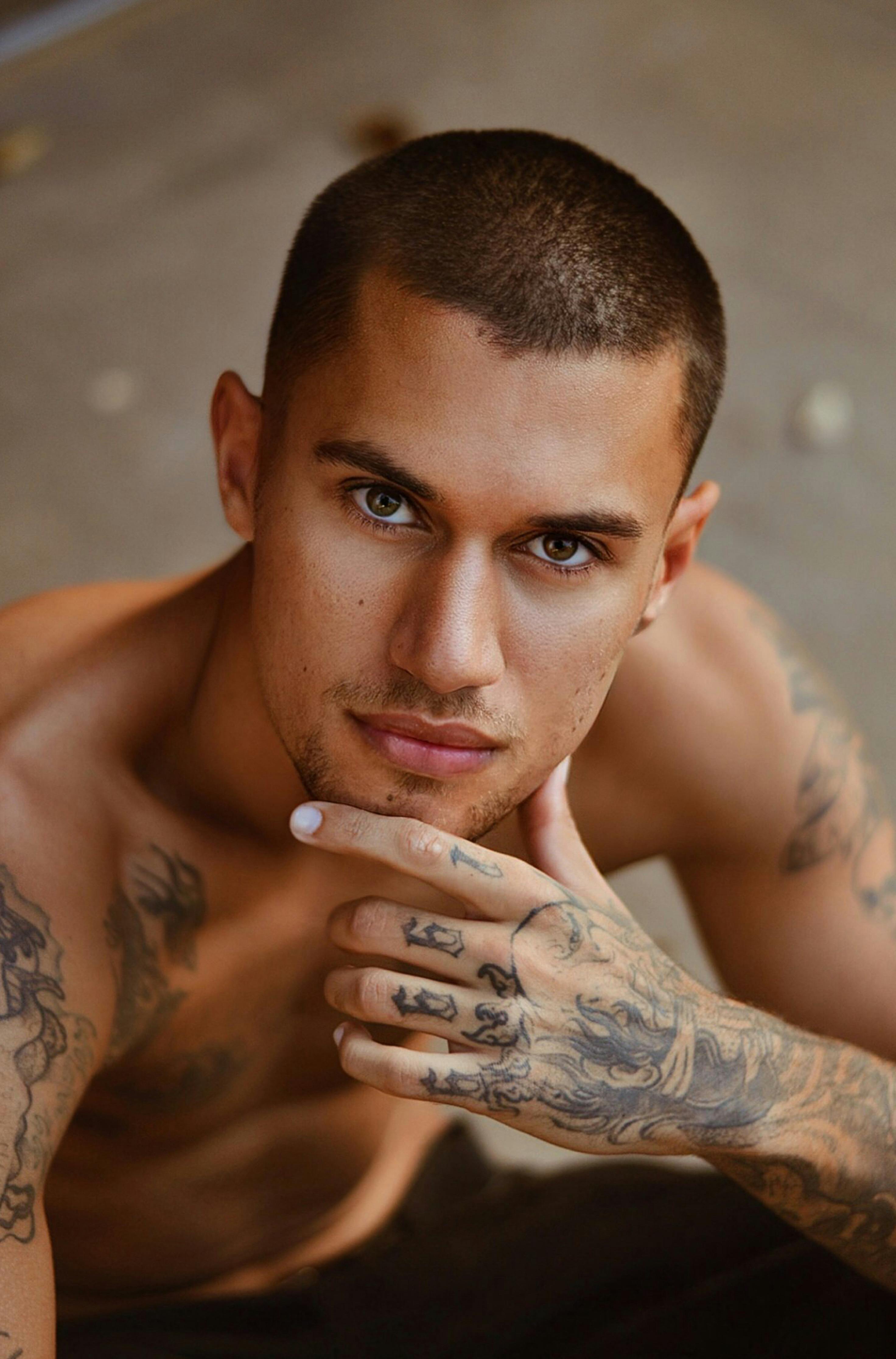
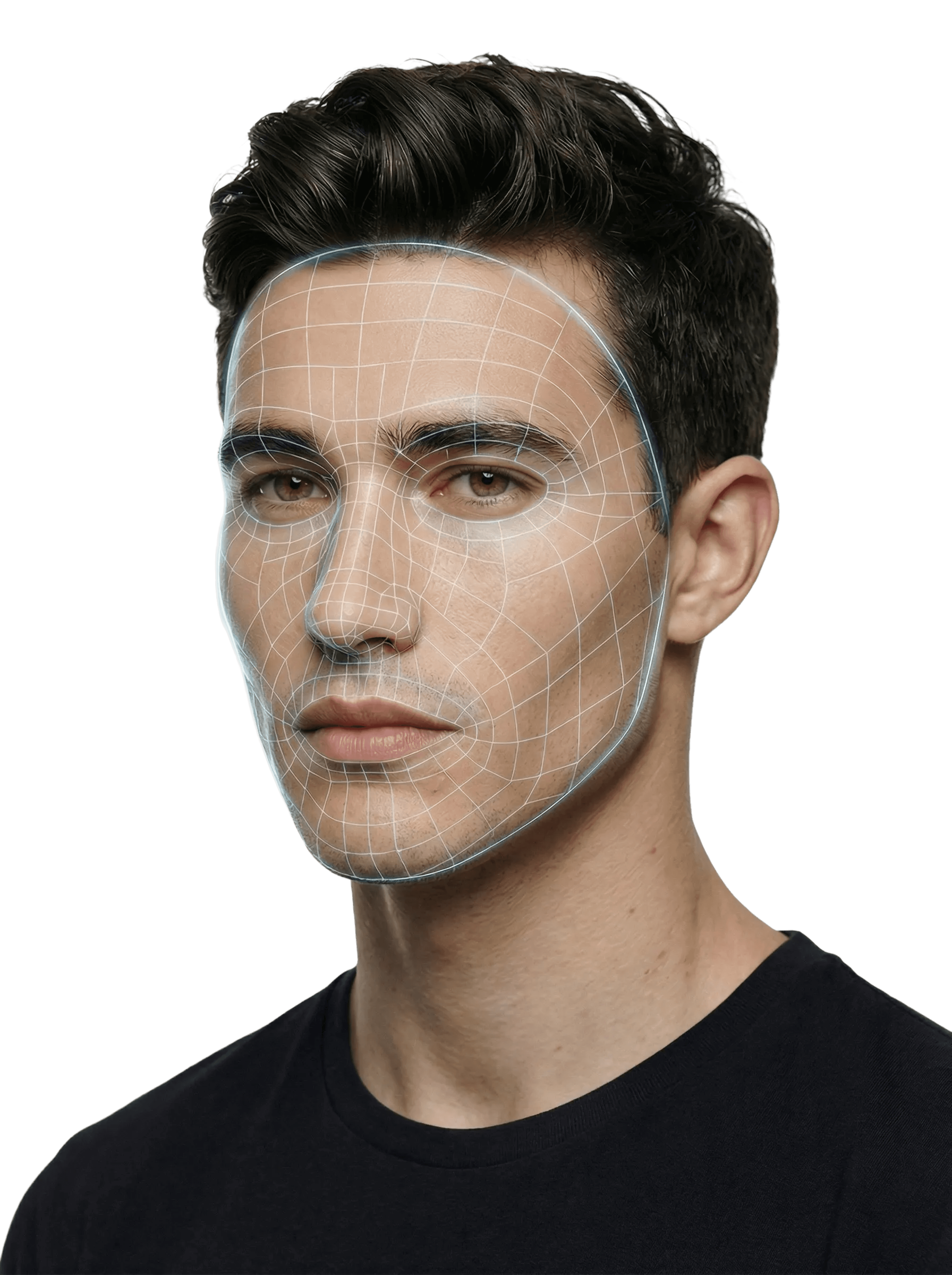
Hunter Eyes vs Prey Eyes: What's the Difference?
Hunter eyes are deep-set, narrow eyes under a low brow with little visible upper eyelid. Prey eyes are rounder and more open, with more visible lid and a higher brow. They are the two poles looksmaxxing uses to describe the eye area, and most people sit somewhere in between.
This guide puts the traits side by side, explains the terms you will see in looksmaxxing threads, shows how to tell which end you are closer to, and covers what you can and cannot change. To see how your eyes fit with the rest of your face, take an attractiveness test. For a deep dive into one side, read our guide to hunter eyes.
Hunter Eyes vs Prey Eyes: Side-by-Side Comparison
Hunter eyes combine deep-set eyes, a low straight brow, little upper eyelid, and a level or slightly upturned outer corner. Prey eyes sit at the other end: rounder, more open eyes with a visible lid, a higher brow, and a level or downturned corner. Both are informal labels, not medical categories.

Trait | Hunter eyes | Prey eyes |
|---|---|---|
Depth (eye support) | Deep-set, shadowed by the brow ridge | Flush with the face or slightly prominent |
Upper eyelid (exposure) | Little or none visible, hooding is common | Clearly visible |
Outer corner (canthal tilt) | Level or slightly upturned | Level or downturned |
Brow | Low, close to the eye | Higher, more space above the lid |
Shape | Long and narrow | Rounder |
White below the iris (scleral show) | None | Sometimes visible |
Overall look | Intense, focused | Open, soft |
Mixed eyes are the norm
Most people combine traits from both columns. Here is how a few common mixes tend to read (our interpretation, not a study result):
Your combination | Tends to read as |
|---|---|
Deep-set eyes, high brow | Focused but approachable |
Almond shape, visible upper lid | Sharp shape, softer expression |
Little visible lid, downturned outer corner | Heavy or tired rather than intense |
How Do You Know If You Have Hunter or Prey Eyes?
To see which end you are closer to, take a straight-on photo at eye level with a relaxed face and check three things: the eyelid, the outer corner, and the brow and eye shape. Little lid, a level or raised corner, and a low brow point to hunter eyes. The opposite points to prey eyes.

Take the photo. Hold the phone at eye level, look into the lens, and keep your brows relaxed. Use even front light and take glasses off.
Check the upper eyelid. Little or no lid between lashes and crease points to hunter eyes. A wide, visible lid points to prey eyes.
Check the outer corner. Imagine a line from the inner to the outer corner of each eye. A corner that sits level or higher points to hunter eyes; one that sits lower points to prey eyes. This angle is called canthal tilt; here is how to measure it.
Check the brow and eye shape. A brow close to the eye and a long, narrow opening lean hunter. A higher brow, space above the lid, and a rounder opening with white below the iris lean prey.
How to read your result:
Mostly hunter traits: you are at the hunter end.
Mostly prey traits: you are at the prey end.
A mix: the most common result. See the mixes above.
For the full five-trait check, including how deep the eye sits in profile, use our hunter eyes checklist.
If a tool gives you numbers, compare them only with the range from the same tool, since cutoffs differ between apps and articles. For scale, a study of 76 Korean adults (mean age 23) measured an average canthal tilt of about 8° from standardized photos (Lee et al., 2020). Treat any average as a reference point, not a cutoff.
A mirror shows traits one at a time, not how your eye area works with the rest of your face. The Maxxing face scan takes a front and a side selfie and returns an overall attractiveness score with a breakdown of your features.
Which Look Is More Attractive, Hunter Eyes or Prey Eyes?
Neither type wins on its own. Studies of single eye traits point in different directions: longer, more upward-inclined eyes appeared among attractive faces, while digitally raising the outer corner lowered attractiveness and trustworthiness ratings and raised dominance and threat.
Longer, more upward-inclined eyes. In a study of attractive Italian adults (a white sample, 34 men), eye openings were longer and more upward-inclined than in ordinary subjects (Sforza et al., 2015).
A raised outer corner. In a rating study with 2,081 participants who judged one digitally edited unisex face, raising the outer corner of the eye lowered ratings of attractiveness and trustworthiness and raised ratings of dominance and threat (Kempa et al., 2025).
These studies tested single traits, not the two labels. How your eye area fits with the rest of your face matters more than which label it gets, and you can check how your features work together.
Hunter eyes vs prey eyes in men
In the same Italian study, attractive men did not show the larger eye area seen in attractive women: orbital height (the vertical size of the eye area) was reduced on the right side and unchanged on the left compared with ordinary subjects (Sforza et al., 2015). A longer, more upward-inclined eye opening was the pattern both genders shared. Eye traits alone do not decide how a face is rated.
Hunter eyes vs prey eyes in women
Women can have hunter eyes: the traits are the same, but they are read differently. In the Italian study, orbital height was increased only in attractive women, a taller eye area that sits closer to the open end of the spectrum in our reading (Sforza et al., 2015). In the 2,081-person study above, female raters saw a raised brow and a raised outer corner as making a face look less feminine, while male raters did not (Kempa et al., 2025).
Where the Terms Come From and What They Mean
Hunter eyes and prey eyes are shorthand from looksmaxxing communities for how an eye area comes across: intense and focused versus soft and open. They are not anatomical or medical categories, and no study has tested them as labels. They describe the way an eye area reads, not a person's value.
Origin. The labels come from early looksmaxxing forums. By 2018 a meme compared hunter eyes with "prey eyes" (GQ, 2026), and the terms later spread to TikTok, Instagram, and YouTube.
Use. In these communities, hunter eyes are often treated as the more desirable look, especially in men (GQ calls it a gold standard in some online communities), and prey eyes as the softer, more approachable one.
Clinical view. Clinicians have noticed the trend: a 2024 ENT conference poster lists the hunter eye as a dominant, masculine look with a positive canthal tilt, little to no visible eyelid, deep-set eyes, and straight eyebrows.
Terms you will see in threads about the eye area:
Term | What it means |
|---|---|
Canthal tilt | The angle of the line from the inner to the outer corner of the eye. Positive means the outer corner sits higher |
Scleral show | The white of the eye visible between the iris and the eyelid, usually below the iris |
Hooding | A fold of skin from the brow area that covers part of the upper eyelid, so less lid shows |
Brow ridge | The bony ridge above the eye sockets |
Orbital rim | The bony edge of the eye socket |
Softmaxxing | Non-invasive changes: grooming, skincare, sleep, makeup, styling |
Hardmaxxing | Invasive changes: procedures and surgery |
Do Humans Have Hunter Eyes or Prey Eyes?
In the biological sense, humans have neither. Every person has forward-facing eyes and round pupils, so these labels describe how an eye area looks to other people, not how a person sees. The terms borrow animal vocabulary for traits like eyelid exposure and brow position.
Human eyes. Human pupils are round (Elsevier Complete Anatomy), and human eyes sit at the front of the face with a wide binocular field (Gibaldi et al., 2021).
Animals. A study of 214 land species found that vertical-slit pupils are strongly associated with ambush predators, while horizontally elongated pupils are associated with prey animals whose eyes sit on the sides of the head (Banks et al., 2015).
A common myth. Some articles claim that human hunter eyes have vertical pupils. They do not: pupil shape plays no part in the human terms.
Not a clean rule. A 2019 study of 192 skulls from 107 carnivoran species found no clear association between the orientation of the eye socket and ecology in that group (Casares-Hidalgo et al., 2019).
Can You Change Your Eye Type? Softmaxxing vs Hardmaxxing for the Eye Area
Eye depth, the brow bone, and canthal tilt are set by bone structure and by where the eyelid tendons attach, so they do not change without surgery. Brow habits, grooming, sleep, puffiness, makeup, and camera angle can shift how the eye area reads, in either direction.
The goal is to work with your natural anatomy, not to turn one type into the other.
Leaning hunter comes down to three habits: relaxing your forehead so your brows stop lifting, keeping your brows full and fairly straight, and getting enough sleep. Our guide on whether you can get hunter eyes covers what moves and what does not.
Softmaxxing: leaning open (prey)
Curl your upper lashes and put mascara on them.
Keep your brows softly arched, with space above the lid.
Use light shadow on the center of the lid and skip heavy shading in the crease.
Use a light liner on the lower waterline to open the eye.
For photos, keep the camera at eye level and your eyes fully open.
These are styling tips, not changes to your anatomy.
Hardmaxxing and mewing
Mewing, eye exercises, bone smashing, and DIY procedures do not change the eye socket or brow bone, and some of them can cause injury. Anything that changes the eyelid or orbit belongs with a board-certified oculoplastic surgeon.
FAQ
Is the hunter vs prey eyes split real or just a meme?
It is a community framework, not a scientific one. The traits it lists, such as eyelid exposure, brow position, and canthal tilt, are real and measurable, but the two-type split is informal.
Which is more attractive, hunter eyes or prey eyes?
Neither wins on its own. Studies of single eye traits point in different directions, as covered above.
What eye shape is the most attractive or seductive?
There is no single answer. Studies look at individual traits such as eye length, tilt, and brow position, and the results depend on the faces and raters involved. See the research above.
Is "hunter eyes" a compliment?
Mostly yes, in looksmaxxing spaces and on social media, where it signals a sharp, intense eye area. Outside them, most people do not know the term, and a very intense look can read as stern.
How rare are hunter eyes?
Nobody has counted. Because the labels describe a spectrum, most people have a few hunter traits, and having all of them at full strength is uncommon.
Which celebrities have hunter eyes?
Looksmaxxing coverage keeps returning to the same names. A GQ feature points to Robert Pattinson and Chris Hemsworth as examples of the look and says the community studied male models such as Sean O'Pry and David Gandy (GQ, 2026). The examples there are all men. These are the community's picks, not measurements: camera angle, light, expression, and retouching change how an eye area looks, so the same person can read as hunter in one photo and open in another.
What are the four types of eyes?
There is no standard number. Cosmetic guides list anywhere from four to eight eye shapes, commonly including almond, round, hooded, monolid, upturned, and downturned. Hunter eyes and prey eyes are not shapes on that list: they describe a combination of traits, such as eyelid exposure, brow position, and outer corner angle. A hooded or almond eye can fall on either end of the spectrum.