



Am I Mixed Race Test: Explore Your Background and Results
An am I mixed race test can help you explore your family background, but no online quiz can decide your racial identity. Being mixed race generally refers to identifying with more than one racial background; your family history and how you identify matter more than what you look like. Understanding the difference between race, ethnicity, and nationality can help you make sense of your background.


Am I Mixed Race Test: How to Check
Start with what you know about your parents, grandparents, and other relatives. A quiz can organize the questions, but it cannot prove that you belong to a particular race. For a clearer picture, compare family accounts with records and distinguish ancestry from personal identity.
Ask relatives which places, communities, and backgrounds are part of your family history.
Look at family documents, such as birth and marriage records, where available.
Identify the differences between multiple racial backgrounds, multiple ethnic backgrounds, or both.
Treat online quiz results as prompts for further exploration—not a final classification.
Maxxing's ancestry experience asks about family background and offers AI-generated regional appearance matches. Those matches are estimates; they cannot verify your race, DNA, or family origins.
What Qualifies as Mixed Race?
Mixed race, or multiracial, commonly describes someone who identifies with more than one racial group. Biracial usually refers to two racial backgrounds, while multiracial can refer to two or more. There is no universal percentage cutoff that determines whether someone is allowed to identify as mixed race.
In the United States, race categories are social classifications, and people can select more than one race in Census reporting. The U.S. Census Bureau explains that its racial categories reflect self-identification rather than biological or genetic definitions. A person’s ethnicity, nationality, and ancestry are related but different concepts.
Can You Tell If You're Mixed Race by Looking at Your Face?
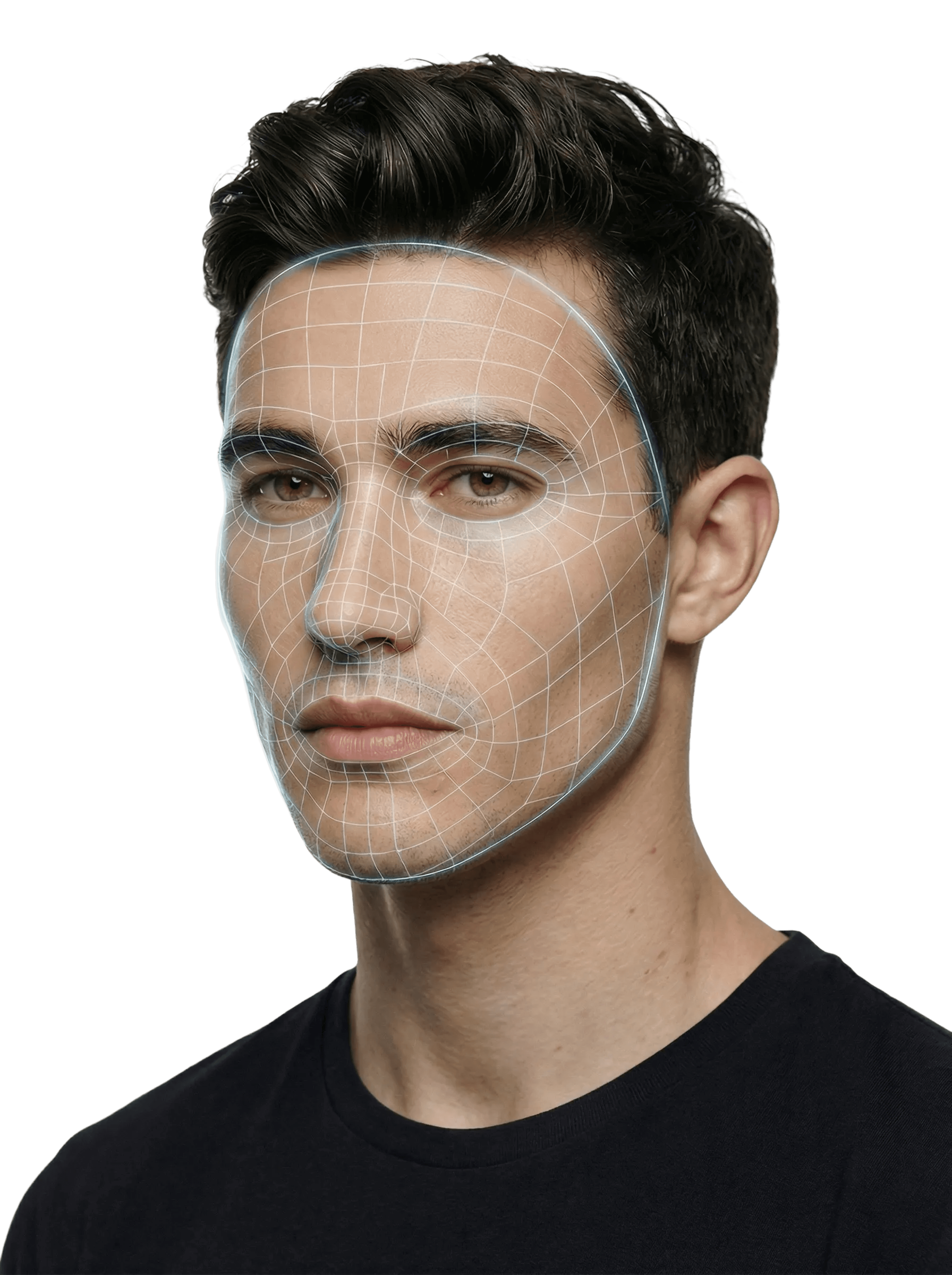
No. Skin tone, hair texture, eye shape, and other facial traits cannot reliably tell you whether someone is mixed race. People with similar appearances can have different family histories, and relatives can look very different from one another. A photograph is not evidence of DNA or racial identity.
An AI ethnicity guesser may return regional appearance matches, but those are model-generated comparisons rather than verified ancestry. For a closer look at those limits, read our guide to AI ethnicity estimates.
Can a DNA Test Tell You If You're Mixed Race?
A consumer DNA ancestry test can estimate genetic similarities to reference populations. It cannot assign your race or determine how you should identify. As MedlinePlus Genetics explains, ancestry estimates may differ between providers because their reference databases and methods vary.
DNA results may add clues to family research, but they are not a substitute for relatives’ accounts, historical records, or your own understanding of identity. A small ancestry percentage also does not establish a universal rule about whether someone is mixed race.
FAQ
How do I know if I'm mixed race?
Explore your family history and consider how you identify. A quiz can guide the process, but it cannot certify your racial identity.
What is my race if I am biracial?
Biracial generally means identifying with two racial backgrounds. You may identify with both, or describe your identity in another way that fits your experience.
Can a mixed-race person look white?
Yes. Appearance varies widely, and looking white does not establish or rule out a mixed-race family background.
Is 25% ancestry considered mixed race?
There is no universal DNA percentage that determines racial identity. An ancestry estimate describes genetic comparisons, not a fixed racial classification.
Can AI guess my ethnicity?
AI can generate appearance-based guesses, but a face cannot establish ethnicity, ancestry, or DNA. Treat such results as speculative.