



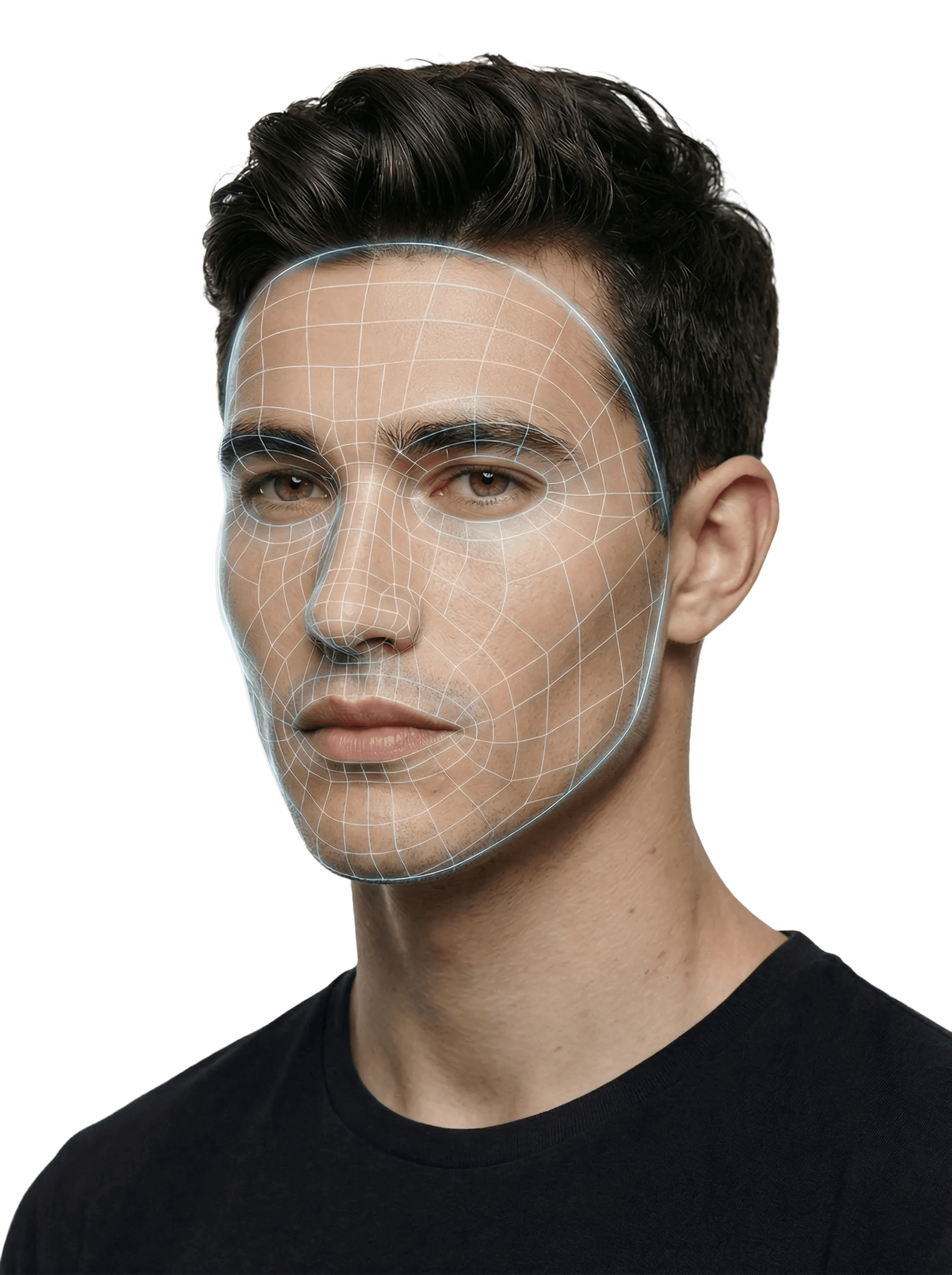
AI Face Age Detector & Estimator
An age detector is a tool that estimates how old a face looks from a photo or live camera feed. The output is an estimate of perceived age — the age most people would guess from appearance — not a guaranteed real age.
If the goal is a result that’s about your face (and why the estimate comes out that way), start with a personalized scan that breaks down the drivers of age perception instead of giving a random number. Try Maxxing’s age detector.
What is an age detector
“Age detector” is an umbrella term for:
Age estimator tools (one-time estimate from an uploaded photo)
Face age detector online tools (web-based photo upload)
Age detector camera tools (live age detection using the camera)
Age detector app tools (mobile apps that run one of the above)
Most age detectors are built on face-image age estimation models from computer vision research. A well-known approach is deep learning for apparent age (how old someone looks) rather than only real age (source: DEX: Deep EXpectation of Apparent Age from a Single Image).
Perceived age vs real age
Age detection is often misunderstood because people assume the tool is “detecting” an objective truth. In reality:
Real age is chronological age.
Perceived age is a visual judgment made from cues like skin, contrast, and facial fullness.
Most “AI age detector” results are closer to perceived age, because many training datasets and benchmarks include either apparent age labels or age inferred from public metadata (source: IMDB-WIKI dataset overview).
This is why two people who are both 30 can get very different outputs, and why the same person can fluctuate between estimates across photos.
AI age detector: what it looks at
A face age detector typically relies on patterns that correlate with age perception. In practical terms, the estimate is influenced by:
Skin texture and clarity (fine lines, uneven tone, dryness)
Facial fullness vs leanness (puffiness can read younger or older depending on distribution)
Eye area contrast (dark circles, hollowing, and shadowing)
Overall facial contrast (brows, lashes, hairline, facial hair)
An age detector does not “understand” your lifestyle. It detects visual signals that often reflect lifestyle.
If you want the broader view of why you look a certain age, pair the estimate with a how old do I look explanation rather than relying on a single score.
Age detector by photo: how to get a stable result
Photo-based age estimation is usually more stable than live camera detection because the image conditions are fixed.
To reduce noise, use a photo that matches these constraints:
Front-facing, minimal tilt
Neutral expression
Indirect daylight (window light is ideal)
No beauty filter, no face smoothing
Camera at eye level (not below)
If you want to compare photos over time, keep conditions consistent and treat the tool like a measurement device. Using a structured face age test format makes comparisons more meaningful.
Face age detector online free: what “free” usually means
Many “free online age detector” tools are designed for quick novelty. Common patterns include:
One free estimate, then pay to unlock details
A vague output without explanation
Overconfident “exact age” claims
A useful age detector does two things:
gives a perceived age estimate, and
explains which features are pushing the estimate up or down.
If the tool only gives a number, the user still doesn’t know what to change.
Age detection with camera: why it jumps around
Live camera age detection tends to fluctuate because the input changes every frame:
Lighting shifts as you move
The face is partially occluded (hair, glasses, hand)
Auto-exposure and HDR change contrast
The model sees micro-expressions
Camera age detection is best used for quick demos. For a serious estimate, upload a controlled image and compare results across 2–3 shots.
If you prefer a clearer, single-image approach, use age estimation from photo workflows like estimate age from photo.
Age estimator vs age calculator
People search for “photo age calculator” and “picture age calculator,” but there are two different product types:
Photo age estimator: predicts age from a face image.
Lifestyle age calculator: predicts a biological/statistical age from habits.
If the question is “How old do I look?”, photo age estimation is the relevant tool.
Why results differ across apps
If one app says 22 and another says 30, it doesn’t automatically mean one is “wrong.” It usually means:
Different training data (celebrity-heavy vs everyday faces)
Different preprocessing (face alignment, cropping)
Different output style (single age vs range)
Different sensitivity to makeup, beards, and lighting
The best way to interpret age detector AI is as a signal, not a verdict. Treat the number as directionally useful, then focus on the drivers of age perception.
Privacy and photo handling
Age detector tools vary widely in privacy behavior. A safe default is to assume that any online tool may store or process uploaded images on a server.
If privacy matters:
Prefer tools that clearly state data retention behavior
Avoid uploading highly identifying photos unless you trust the provider
Avoid tools that require social login for a simple estimate
A practical approach is to use photo-based estimation for a specific purpose (perceived age), and combine it with broader appearance mapping via an AI face analysis.
Why age detection matters for first impressions
Perceived age influences how people interpret maturity, health, and attractiveness. Looking significantly older than your age can change dating outcomes and social reactions.
Perceived age is also tightly connected to the same visible traits that drive attractiveness ratings, which is why people often move from age tools into an attractiveness test.
What to do if an age detector says you look older
If an age detector consistently estimates you older than your real age, the fastest “levers” usually involve:
improving skin consistency and texture
reducing tired look around the eyes
tightening grooming choices that add harsh contrast
improving body composition if facial puffiness or heaviness is a factor
This is where prioritization matters. Instead of chasing small flaws, focus on high-impact areas first — the core logic behind looksmaxxing.
A better way to use an AI face age detector
A good workflow is:
Take 2–3 controlled photos.
Run the estimate and look for a stable range.
Identify the drivers of perceived age (skin, eye area, facial fullness, grooming).
Track changes monthly using the same conditions.
Maxxing is built around steps 3 and 4. It turns “age detector results” into a prioritized plan instead of leaving you with a number you can’t act on.
If you want a personalized answer tied to your face — and a clear idea of what to fix first — start here: Use the age detector.
Related age tools and questions
Age detector searches often lead to related queries:
AI age guesser for a broader “how old do I look” framing
guess my age for comparison-style tests
what do I look like for wider appearance perception beyond age
An age detector is most useful when it produces a stable estimate and helps you understand what visual cues are driving that perception.