
PSL Test: How to Find Your PSL Rating From a Photo
A PSL test is a photo-based estimate of facial attractiveness on the PSL scale, a rating usually scored from 1 to 8 that came out of online looksmaxxing forums. There is no official PSL test: every online result is an estimate from a model or a rater, and different tools give different numbers for the same face. To check your PSL rating, upload a clear front-facing photo to a PSL tool and treat the score as a rough reference, not a verdict.
What Is a PSL Test?
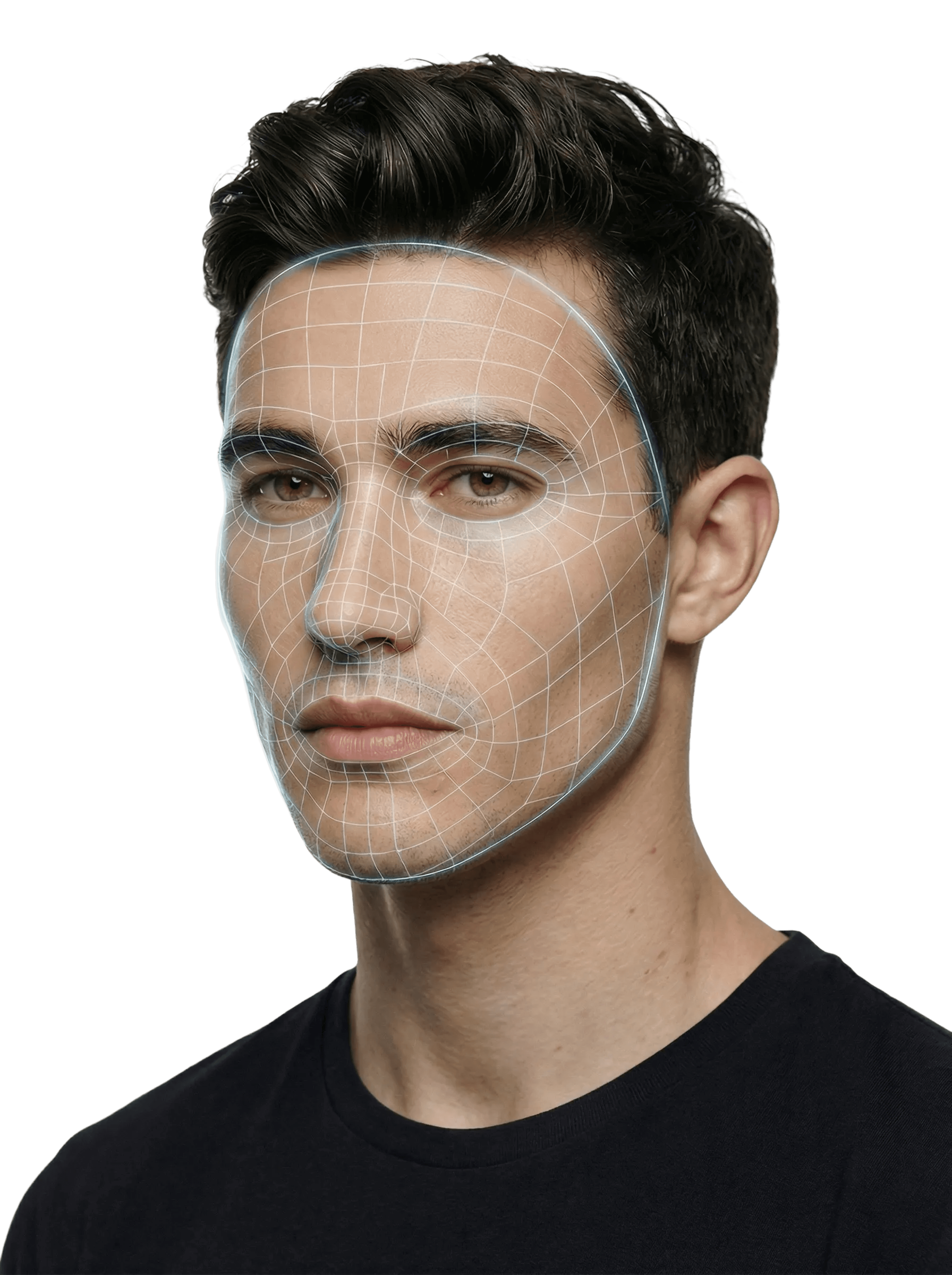
A PSL test estimates where your face would land on the PSL scale, a rating that looksmaxxing communities use to talk about facial attractiveness. Online versions run a photo through software that measures things like symmetry and facial proportions, then convert the result to a number. None of them is an official or validated test.
What you get: a single score, often with a short breakdown by feature.
What you don't get: a standard method. Each tool sets its own formula and its own version of the scale.
Online, the same thing goes by several names: PSL scale test, PSL rating test, PSL score test, and PSL face test. Some tools call it a PSL attractiveness test or a PSL looksmaxxing test. The method differs from tool to tool, but the idea is the same: turn one photo into an estimate.
If you want a general rating that isn't tied to forum terms, the attractiveness test is a simpler place to start.
What Is My PSL Rating? How to Take a PSL Test
To find out your PSL rating, upload a clear front-facing photo to a PSL tool and read the score it returns as an estimate. The photo matters more than most people expect: angle, distance, and lighting can shift the result, so take it carefully before you compare anything.
Choose a tool that explains its scale. Versions of 1–8, 0–8, and 0.25–8 exist, so the same number can mean different things.
Take one front-facing photo using the rules below.
Upload it and note the score and any feature breakdown.
Take a second photo on a different day or in different light.
Compare the two results before drawing any conclusions.
What's your facial proportions score?
Upload one front-facing photo and get an estimated score in seconds.
For a better estimate
- Look straight at the camera
- Relaxed face, mouth closed
- Even light, no wide-angle selfie
- Hair off the face
Your photo is processed in your browser. This tool doesn't upload or save it.
 Example of a good photo
Photo Rules for a PSL Test
Face the camera straight on, chin level, neutral expression, mouth closed.
Keep your forehead, eyebrows, and jawline visible. Pull hair back if it covers them.
Use soft, even light from the front. A window works. Avoid overhead light and hard shadows.
Shoot from about 4–5 feet away and crop, or use the phone's timer. In a Caltech study published in PLoS ONE, photos taken from about 1.5 feet (45 cm) were rated as less attractive than photos of the same faces taken from about 4.5 feet (135 cm). The authors traced the effect to perspective distortion alone: up close, the nose looks relatively larger and the ears smaller.
Turn off filters, beauty mode, and portrait blur.

Free PSL Test Online: Apps, Checkers, and AI Raters
Free PSL calculators usually work the same way: you upload a photo, an AI model places landmarks on your face, and a formula turns the measurements into a score. What differs is how the tool is built, what it does with your photo, and what it charges for.
Before you use a free PSL rating website, app, or score checker, look for these:
Method: does the tool say what it measures and how the score is calculated? A PSL rating calculator that shows nothing about its method is a black box.
Scale: does it state which version of the PSL scale it uses?
Photo handling: does it say how long your photo is stored and whether it is used to train models?
Free vs paid: many tools show a basic score for free and charge for the full report. Check what the free result includes.
AI claims: a PSL rating AI tool is still an estimate. “AI-powered” does not make the number more accurate.
Why Your PSL Score Changes From Test to Test
Your PSL score changes between tests because there is no standard formula behind any PSL rating test or PSL score test. Each tool picks its own measurements, weights, and scale, and reads your photo in its own way. The same face can land on different numbers on different sites without any of them being the “correct” one.
Different scales. Tools use 1–8, 0–8, or 0.25–8 versions. Some calculate a 0–100 geometry score first and then convert it to a PSL-style range.
Different formulas. A few tools publish their weights, for example symmetry at 35%, facial thirds at 25%, facial fifths at 25%, and golden-ratio proximity at 15%. Others share nothing. None of these weightings comes from a validated standard.
Different features. Some tools measure face geometry only. Others add skin quality or how masculine or feminine the features look.
Different photos. Head tilt, expression, lighting, and camera distance change where the software places landmarks, so two photos of you can produce two scores.

If you want to track change, stay with one tool and repeat the same photo setup. Comparing a number from one site with a number from another tells you very little.
How to Read Your PSL Result
A PSL result is a rough estimate of how one tool reads one photo, not a measure of how attractive you are. By convention in looksmaxxing communities, 4 is the midpoint of the scale and higher scores are rarer. The number only means something next to the tool's own method. For the tier names and how the community defines them, see the full PSL tier breakdown.
Don't read much into small differences. A slightly higher or lower number between two photos says more about the photo than about your face.
Check the feature breakdown, if the tool gives one, and see what each feature score is based on.
Remember what a still photo leaves out: expression, voice, movement, style, and how you come across in person.
Re-test under the same setup, not after every small change.
If checking your score turns into a habit that makes you feel worse about your face, step away from the tools. A rating from forums is not a diagnosis or a verdict, and a doctor or therapist can help if worries about your appearance take up a lot of your day.
PSL Test vs Other Ratings
Maxxing does not give a PSL number. Its face scan returns an AI estimate on a 0–100 scale, with separate scores for individual features. Like any PSL tool, it is a model's estimate from photos, not an objective truth.
Rating | Scale | Where it comes from | What you get |
|---|---|---|---|
PSL test | Usually 1–8 (some tools use 0–8 or 0.25–8) | Looksmaxxing forums; each tool uses its own formula | One number, sometimes a feature breakdown |
Casual 1–10 rating | 1–10 | Personal opinion of a friend, a stranger, or an app | One number, no method behind it |
Maxxing face scan | 0–100 | AI estimate from two selfies (front and side) | Attractiveness score, attractiveness potential, and scores for features such as Face Symmetry, Skin, Jawline, Cheekbones, Nose, Lips, Hair, and Chin |
There is no official way to convert a 0–100 score into PSL. A few tools publish their own conversion, but that is the tool author's choice, not a standard. If you only want to rate one photo, see our page on face rating.
What Does Mogged Mean in a PSL Test?
“Mogged” is looksmaxxing slang for being outshone by someone else's looks in a direct comparison, and “mogging” is the opposite. A PSL test scores one photo of one face and does not compare two people, so a result cannot tell you who mogs whom.
PSL Test FAQ
Is there a free PSL scale test online?
Yes. Many tools offer a free basic PSL score, and some charge for a detailed report. Check what the free version includes and how the photo is handled before you upload.
What is a PSL face rating test?
A PSL face rating test, also called a PSL face test, rates your face from a photo. The tool measures features such as symmetry and proportions, then reports a score on its own version of the PSL scale. It works like any other PSL test, and the same limits apply.
Is it safe to upload my photo to a PSL test?
It depends on the tool. Read the privacy policy for how long photos are stored and whether they are shared or used to train models. If you're under 18, ask a parent or guardian first.
How accurate is a PSL test?
A PSL test is not a validated measurement. Symmetry, averageness, and sexual dimorphism are rated as attractive in both male and female faces and across cultures, according to a review in Annual Review of Psychology, but the weights and scales PSL tools use are set by their authors. Photo conditions also shift the result.
What is a good PSL score?
By convention, 4 is the midpoint and scores above it are above average. What a number means still depends on the tool's scale and method, so compare results only within one tool.
Is there a PSL rating scale for women?
There is no single agreed PSL scale for women. Some tools offer a female version or a PSL scale test for women with their own settings, which makes scores even harder to compare across tools. Read any result with the same caution as above.
Can you raise your PSL score?
Part of any change comes from the photo itself: light, angle, and expression. Grooming, skin care, and a haircut can change how a face reads in a photo. Bone structure is not something a routine changes, and questions about procedures belong with a board-certified specialist.
Why does my PSL score differ from what my friends say?
A PSL tool measures geometry in one still photo. Friends see you move and talk, in real context, and they rate on their own scale, so the two numbers measure different things.
Sources
Bryan, R., Perona, P., & Adolphs, R. (2012). Perspective Distortion from Interpersonal Distance Is an Implicit Visual Cue for Social Judgments of Faces. PLoS ONE, 7(9), e45301.
Rhodes, G. (2006). The Evolutionary Psychology of Facial Beauty. Annual Review of Psychology, 57.